Regional Conflict Escalates as Israel and Iran Exchange Massive Aerial Strikes
The death of Ayatollah Ali Khamenei and strikes on 500 targets trigger a multi-front missile offensive across the Middle East.
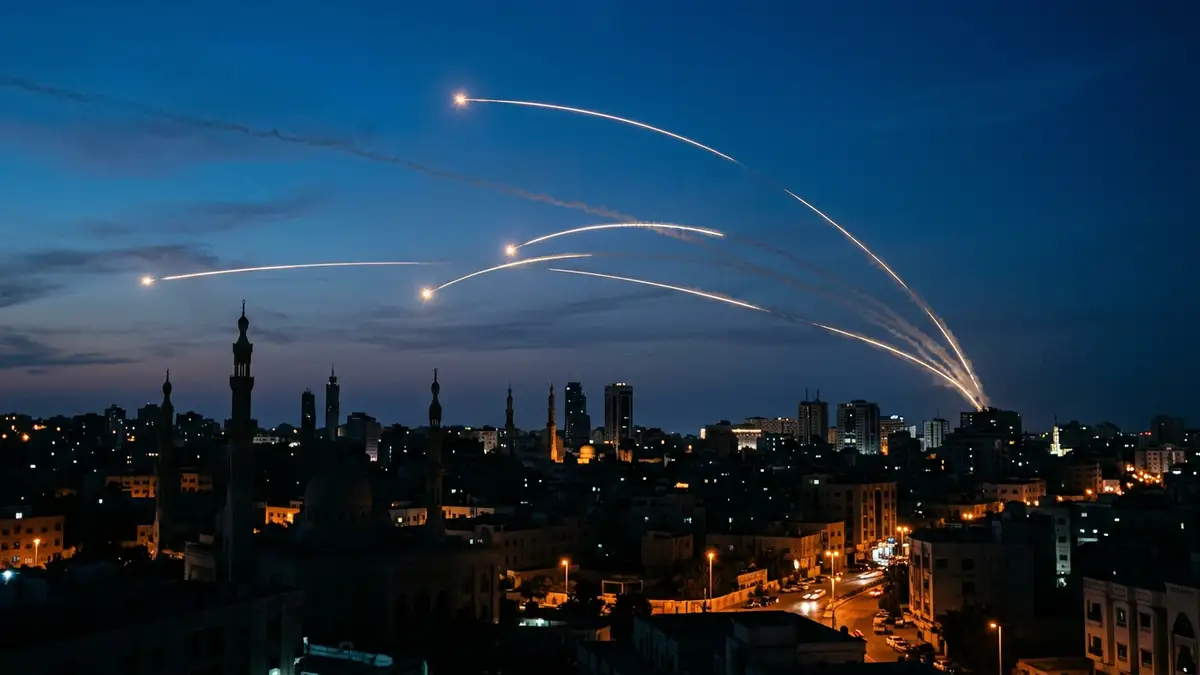
Image: Matt Weston / AI

Callum Smith
Israel is bracing for a new wave of Iranian strikes following a massive aerial operation involving more than 200 fighter jets that hit approximately 500 targets across Iran.
Explosions tore through the skyline of Tehran as Israeli jets executed a relentless bombardment of the Iranian capital. The Islamic Republic News Agency (IRNA) confirmed that the city sustained 60 separate attacks within a single 24-hour window.
Beyond the smoke rising from the capital, the human cost of the kinetic engagement surfaced in grim detail. The Tehran Province Red Crescent Society reported that these specific strikes left 57 people dead amidst the rubble.
Tragedy struck further south in the city of Minab, where Iranian authorities stated that more than 100 children died at a school during the aerial assault. This strike stands as the highest single-incident death toll in the current escalation.
Hundreds of civilians died or sustained injuries in these joint US-Israeli operations.
Data provided by the Human Rights Activists News Agency (HRANA) placed the total civilian toll at 133 killed and 200 injured during the Saturday operations. Amir-Saeid Iravani, the Iranian Ambassador to the UN, confirmed that hundreds of civilians died or sustained injuries in these joint US-Israeli operations.
The most seismic shift occurred when an Israeli airstrike successfully targeted and killed Ayatollah Ali Khamenei, the supreme leader of Iran. His death removes the central pillar of the Islamic Republic’s power structure, a position he had occupied since 1989.
This decapitation of the Iranian leadership triggered an immediate and ferocious response from the remaining command in Tehran. Iran vowed to launch a devastating offensive operation against Israel and United States bases in direct retaliation for the leader's death.
Mohammad Baqer Ghalibaf, the speaker of the Iranian parliament, declared that Benjamin Netanyahu and Donald Trump had crossed a final red line. Following these declarations, Iran unleashed more than 25 waves of missile and drone strikes across the regional theatre.
Benjamin Netanyahu and Donald Trump had crossed a final red line.
These retaliatory strikes bypassed traditional military targets to strike critical infrastructure and high-value economic assets in multiple neighboring countries. Iranian missiles slammed into airports and luxury hotels in Dubai and Bahrain, moving the conflict directly into regional tourism hubs.
Meanwhile, the Kuwaiti Defence Ministry detected 97 Iranian ballistic missiles launched toward the State of Kuwait. This expansion of the combat zone ends the era of shadow wars that defined the past decade.
The transition to open, state-on-state kinetic engagement necessitated an immediate and total closure of regional airspace. International travelers remain stranded in terminals across the globe as flights divert away from the active combat zone.
In Tel Aviv, the piercing wail of air raid sirens interrupted a live broadcast as residents scrambled for cover. The physical reality of the threat sent civilians sprinting toward reinforced structures as incoming fire lit up the night sky.
Internal data indicates a significant infrastructure gap within the Jewish state, as approximately three million Israelis currently lack access to functional bomb shelters. The military continues to prepare for sustained fire from multiple fronts as the regional escalation intensifies.
The deliberate targeting of Dubai represents a calculated strike against the economic stability of the Middle East. By hitting hotels and aviation hubs, the offensive threatens the commercial viability of the entire Persian Gulf region.
Iranian state media continues to broadcast graphic images of the 57 dead in Tehran to mobilize public fury. These broadcasts solidify domestic backing for the ongoing military response against Israel and its allies.
Currently, the United States and Israel have not released a joint casualty count to reconcile with the figures provided by the Red Crescent Society. The lack of a unified data set leaves the full extent of the human cost unverified by Western officials at this hour.
Historically, this level of aerial engagement mirrors the largest conflicts in the region's history, yet the death of a Supreme Leader introduces an unprecedented political vacuum. The removal of Khamenei alters the command structure of the Islamic Republic permanently.
Stakeholders across the Persian Gulf are now reassessing security protocols as the conflict spills into neutral territories like Kuwait and the UAE. Economic pressure mounts as insurance rates for shipping and aviation began a sharp, vertical climb this morning.
Future implications for the region remain tethered to the scale of the promised 'devastating offensive' by Iranian forces. The transition from proxy skirmishes to 200-jet sorties signals a permanent shift in the geopolitical landscape of the Middle East.