Home Secretary Bans Al Quds Day March in London
The Home Office invokes the Public Order Act to halt the IHRC-led rally, citing links to the Iranian regime and risks of serious disorder.
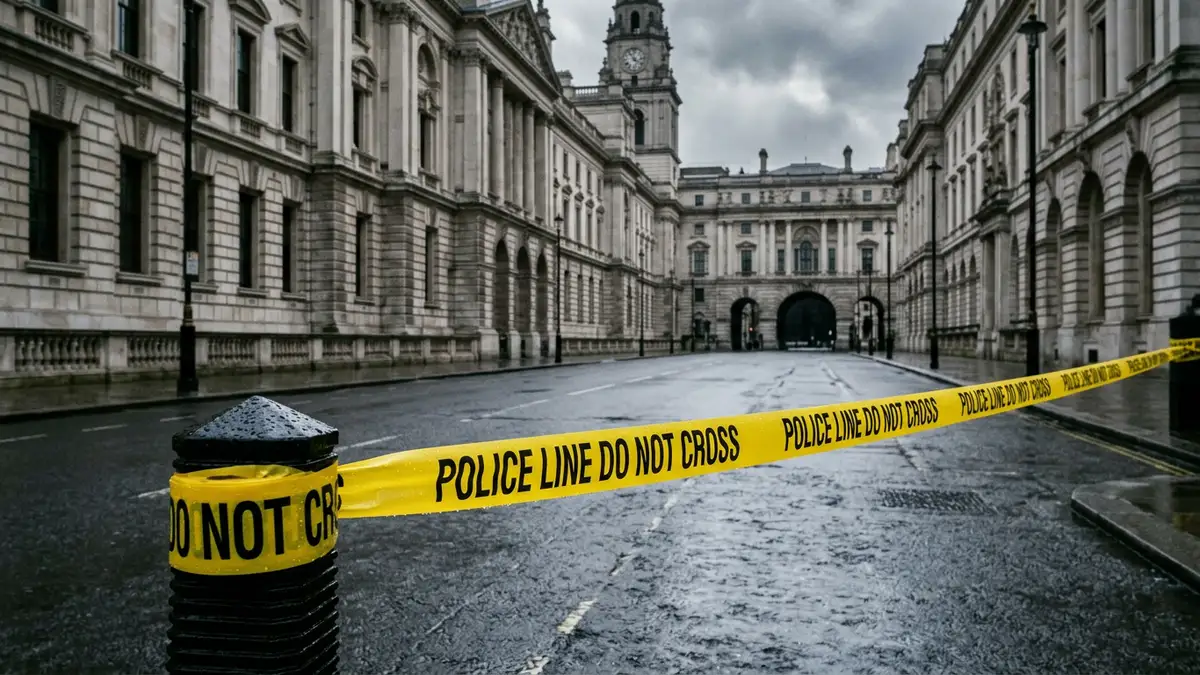
Image: Matt Weston / AI

Callum Smith
The Home Secretary has authorised the first ban on a London protest march in 15 years, blocking the pro-Iranian Al Quds Day procession following a request from Scotland Yard.
The Metropolitan Police triggered the prohibition under Section 13 of the Public Order Act, citing an unavoidable risk of serious public disorder. Home Office officials ratified the move, physically blocking a rally that has occupied the city's heart for forty years.
The Islamic Human Rights Commission (IHRC) has anchored this event to the end of Ramadan since 1979. Organizers frame the demonstration as a platform against colonialism and apartheid.
IHRC spokesman Faisal Bodi stated the demonstration has operated peacefully for 40 years. He maintains the gathering serves as a peaceful assembly for those opposing international oppression.
The march has no place in British society.
Labour MPs and peers have documented specific ties between the IHRC, the Iranian state, and extremist factions. Evidence confirms organizers previously voiced support for the late Iranian leader Ayatollah Ali Khamenei.
Courts Minister Sarah Sackman stated the march has no place in British society. She declared that those backing the malign Iranian regime and the IRGC have no standing on London's streets.
Sackman confirmed that supporters of the Tehran administration will not be permitted to use public spaces for hostility against the United Kingdom. The ban specifically outlaws the physical movement of the procession.
Shadow Home Office Minister Alicia Kearns stated there is no place in the country for the celebration of terrorists. She called the event an insult to Armed Forces currently facing attacks from Iranian-backed proxies.
The Campaign Against Antisemitism stated that permitting the event would signal that Islamists rule the roost in Britain. The group confirmed the ban prevents a 'hate-fest' from occupying the capital.
There is no place in the country for the celebration of terrorists. The event is an insult to Armed Forces currently facing attacks from Iranian-backed proxies.
The Public Order Act 1986 requires a high evidentiary threshold of violence to trigger such a blockade. This intervention ends a 15-year period where no total prohibitions were enacted within the M25 boundary.
Shabana Mahmood stated that if a stationary demonstration occurs, police will apply strict conditions. She expects the full force of the law to strike anyone spreading hatred instead of exercising peaceful protest.
Police commanders now hold the legal authority to intercept any attempt to form a moving column. Officers will patrol stationary gatherings to ensure no prohibited procession takes shape.
This shift follows years of political pressure regarding the rally’s ties to foreign entities. The decision fundamentally rewrites the operational landscape for policing large-scale demonstrations in London.
Government officials confirmed the enforcement of this ban is absolute and non-negotiable. The Metropolitan Police are now deployed to prevent splinter groups from defying the prohibition.
The IHRC continues to defend the march as a legitimate expression of political grievance. They maintain the event remains a necessary gathering for those standing against global oppression.
The Metropolitan Police will funnel significant resources into the boundary between stationary protest and the illegal march. This enforcement marks a return to restrictive policing tactics not seen since the late 2000s.
By invoking these powers, the Home Office has re-established a precedent for curbing movements linked to foreign state influence. London remains under heightened surveillance as the scheduled date for the prohibited march arrives.