Grid Failure Plunges Ten Million Into Darkness Across Cuba
A total system collapse at the Nuevitas thermoelectric plant leaves the island without power as fuel reserves hit zero.
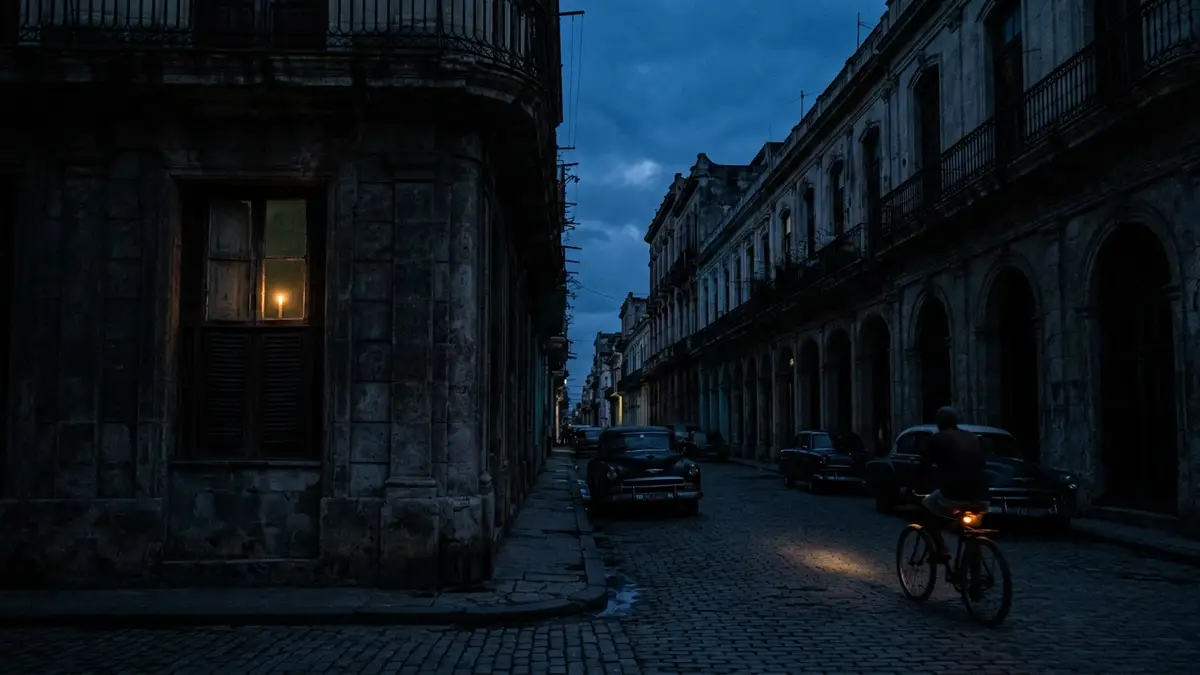
Image: Matt Weston / AI

Callum Smith
A catastrophic failure at the Nuevitas thermoelectric plant has triggered a total system collapse, stripping electricity from more than 10 million people across Cuba.
This failure represents the total disconnection of the national energy sector. Maintenance crews remain on-site at the Nuevitas plant, attempting to repair the mechanical failures that severed the grid.
The collapse follows thirty days of recurring blackouts that strained the island's infrastructure. President Miguel Díaz-Canel confirmed that zero oil shipments have arrived from foreign suppliers for three consecutive months.
Thermoelectric plants lack the crude oil necessary to sustain a consistent electrical load. The Cuban government identifies the United States energy blockade as the mechanism preventing power station operations.
Officials cite the fuel embargo implemented in February 2019 during the Trump administration. This policy blocks foreign oil tankers from docking at Cuban ports like Mariel and Havana.
The depletion of fuel reserves leaves the aging Soviet-era infrastructure unable to meet the 3,000-megawatt demand of the population. Historically, Cuba relied on 55,000 barrels of oil per day from Venezuela to stabilize the grid.
The Cuban government sits on the verge of total collapse.
This Caracas-Havana partnership remains a focal point of U.S. foreign policy and a target for economic restrictions. Former U.S. President Donald Trump stated over several months that the Cuban government sits on the verge of total collapse.
Trump conditioned any potential lifting of the fuel embargo on the removal of Díaz-Canel from power. The energy crisis forces ten million citizens to rely on charcoal and wood for basic cooking.
Families across the island navigate a landscape of darkness and depleted resources. Economic pressure remains constant as the island functions under the restrictions of the 1962 trade embargo.
The systemic fragility of the power grid results from this sustained policy of economic isolation. The Nuevitas plant failure occurred within a broader context of deteriorating machinery and a lack of specialized spare parts.
Years of restricted trade prevented the necessary upgrades to the 15-unit national grid. In the streets, the silence of the blackout breaks only when residents search for wood to fire outdoor stoves.
The industrial sector has ground to a halt, freezing production at nickel mines and cigar factories. The U.S. policy of isolation dictates the rhythm of daily life in Havana and the eastern provinces.
Every hour the grid remains down increases the pressure on the government to secure a logistical breakthrough. Foreign tankers remain absent from the horizon, leaving the thermoelectric plants idle and cold.
The government maintains that the blockade constitutes an act of economic warfare. The failure at Nuevitas is the culmination of months of fuel starvation rather than an isolated mechanical error.
It represents a critical threshold in the ongoing struggle between Havana and Washington. As crews work through the night under flashlights, the prospect of a swift recovery remains uncertain.
The grid requires a steady injection of fuel that currently does not exist within the national borders. The international community watches as the island faces a humanitarian challenge linked to its energy security.
For now, ten million people wait for the lights to return in a country running on empty. The silence across the island is absolute.