Federal Aviation Administration Grounds JetBlue Fleet as Royal Air Philippines Halts Operations
System outages and sudden carrier shutdowns strand thousands of travelers across international hubs.
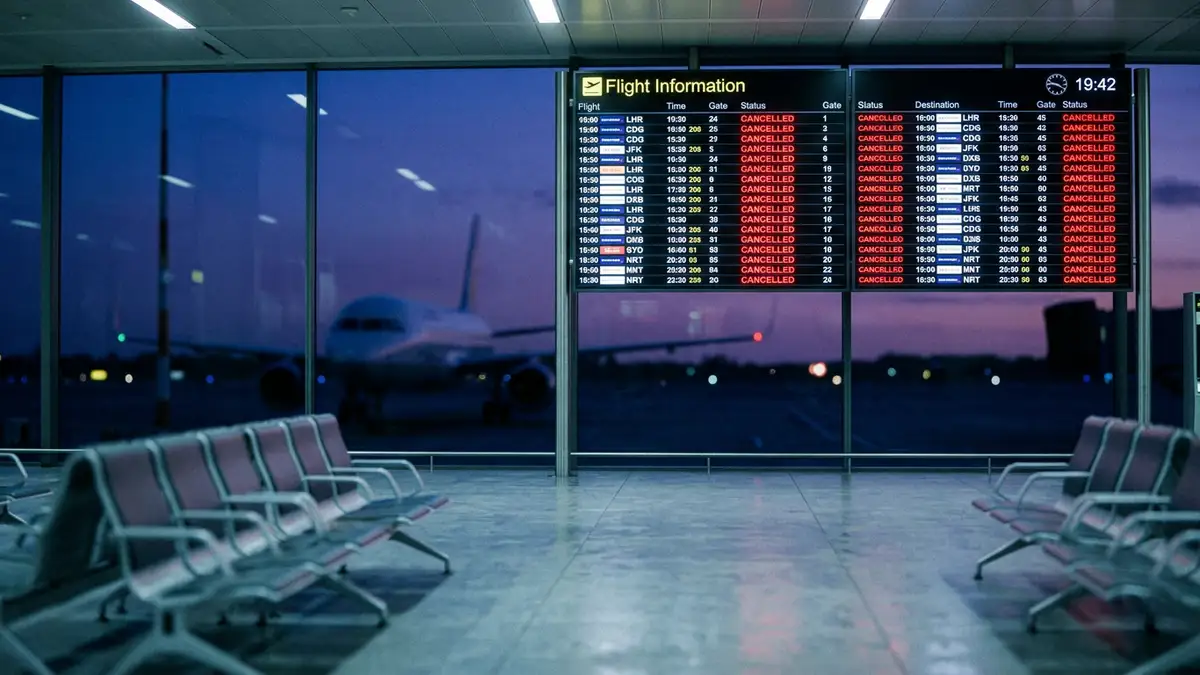
Image: Matt Weston / AI

Sarah Connor
The Federal Aviation Administration grounded all JetBlue flights following a request from the airline, halting operations at airports across the United States.
JetBlue confirmed the resolution of a critical system outage that forced a temporary suspension of its entire flight schedule. This ground stop persisted for less than one hour before the FAA lifted the restrictions and allowed the fleet to move again.
Over 3,500 passengers encountered immediate delays and cancellations as the technical failure paralyzed the airline's digital infrastructure. During the initial grounding, the carrier withheld a specific timeline for the duration of the outage.
Simultaneously, Royal Air Philippines cancelled all commercial flights without prior warning. The Manila-based carrier ceased operations in a sudden move that left its entire fleet stationary on the tarmac.
Between 3,000 and 4,000 travellers holding bookings from January through March now remain stranded across the region. These passengers are currently navigating the process of seeking refunds and alternative travel arrangements to reach their destinations.
This instability mirrors a decade of technical disruptions that have plagued the aviation industry. In 2023, the FAA experienced a NOTAM system failure that grounded more than 10,000 flights in a single day.
Legacy infrastructure frequently buckles under the pressure of integrating modern digital booking and navigation suites. These complex systems must manage millions of data points per hour across sprawling global networks.
Political pressure on the Department of Transportation has intensified following these recurring mass cancellation events. Secretary Pete Buttigieg has previously demanded stricter enforcement of passenger refund mandates to protect consumers.
Economic analysts are monitoring the fallout of these disruptions on carrier stock prices and broader consumer confidence. A mere one-hour ground stop can cost a major airline millions of dollars in fuel, labour, and rebooking fees.
Royal Air Philippines operates within a cutthroat regional landscape dominated by aggressive low-cost carriers. The sudden exit of this domestic player shifts market share toward larger entities like Cebu Pacific and Philippine Airlines.
The FAA maintains the absolute authority to issue ground stops for safety or security reasons. These orders prevent aircraft from entering the national airspace system during periods of technical instability.
JetBlue technicians focused their efforts on restoring the internal systems required for flight dispatch and weight-and-balance calculations. Pilots cannot legally depart without these verified digital manifests in their possession.
Ground crews at major hubs like JFK and Logan International managed surging crowds as departure boards flipped to cancelled status. Airport authorities monitored terminal capacity closely during the influx of displaced travellers.
The future of regional aviation hinges on the financial stability of mid-tier carriers. Rapid liquidations or service suspensions frequently force regulatory bodies to intervene in escalating consumer protection disputes.
Industry experts predict an accelerated shift toward redundant cloud-based architectures to prevent single-point-of-failure outages. These upgrades require significant capital investment from airlines still recovering from pandemic-era losses.
Royal Air Philippines has not yet released a formal restructuring plan for its affected customers. The carrier's website and booking portals ceased processing new transactions immediately following the announcement.
Passengers impacted by the JetBlue outage remain eligible for rebooking under standard carrier policies. The airline continues to process the backlog of flights created by the sixty-minute pause in operations.
The FAA continues to monitor the recovery of the national airspace following the restoration of JetBlue's internal systems. Technical teams remain on high alert for any secondary failures in the digital dispatch network.