Emirates Cancels Birmingham Flights as Middle East Conflict Shuts Airspace
Aviation authorities halt Dubai operations as U.S. and Israeli military actions intensify, leaving thousands of British travellers stranded in the Gulf.
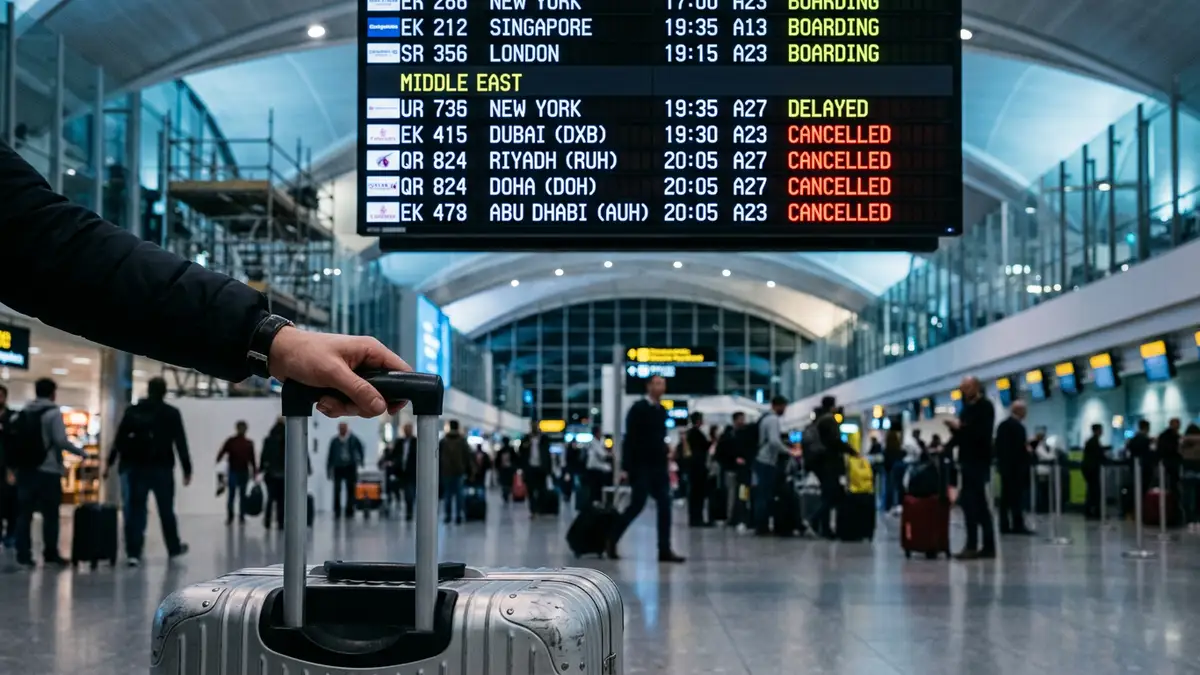
Image: Matt Weston / AI

Callum Smith
A wave of airstrikes across the Middle East forced the grounding of all Emirates flights at Birmingham Airport on Tuesday, triggering a regional aviation shutdown and an emergency travel warning from the Foreign Office.
The closure of Dubai airspace lasted approximately 30 minutes. Officials lifted the initial pause on movements shortly thereafter, though the disruption had already rippled through global schedules.
Dubai International Airport remains operational with limited service as of Tuesday. Despite this, airport authorities instructed passengers not to travel to DXB or DWC without explicit flight confirmation.
Travellers are urged to not travel to the DXB or DWC unless they have been contacted by their airline that their flight is confirmed.
"Travellers are urged to not travel to the DXB or DWC unless they have been contacted by their airline that their flight is confirmed," a Dubai Airports statement confirmed. This instruction aims to prevent overcrowding at terminals already struggling with the backlog.
The Foreign Office opened a registry for British citizens to express interest in UK Government flights. These emergency departures will facilitate the exit of nationals from the United Arab Emirates as the conflict intensifies.
U.S. President Donald Trump described the military situation on Tuesday, stating the war in Iran is "very complete, pretty much." His assessment follows a rapid escalation of kinetic operations across the theatre.
U.S. Defence Secretary Pete Hegseth announced that attacks on Iran will ramp up Tuesday. These are expected to be the heaviest strikes since the conflict began 10 days ago.
Historical flight data shows this escalation follows a decade of shifting security protocols in the Gulf corridor. This specific region handles over 100 million passengers annually, making it a critical node in the global economy.
Virgin Atlantic suspended its Dubai service for the remainder of the winter season. The airline will focus its resources on returning existing customers home rather than maintaining new outbound schedules.
Our focus is on ensuring customers are able to return home safely, reliably and with the least possible additional disruption.
"Our focus is on ensuring customers are able to return home safely, reliably and with the least possible additional disruption," a Virgin Atlantic spokesperson stated. This shift prioritises the repatriation of hundreds of travellers caught in the crossfire.
In contrast, Etihad Airways plans to operate 21 outbound and 25 inbound flights. Bookings have opened for more than 70 global destinations as the carrier attempts to maintain a semblance of connectivity.
The airline confirmed that guests with previous bookings will be accommodated on these specific flights as soon as possible. Staff are currently working to re-seat passengers displaced by the initial wave of groundings.
Emirates announced plans to restore full network operations soon, despite the current cancellations at Birmingham and other international hubs. The carrier is monitoring the tactical situation in the skies over the Gulf minute-by-minute.
Travel analyst Simon Calder noted that one airline is currently organising a series of emergency flights. These routes will bridge the gap between the Gulf and the United Kingdom for those with urgent needs.
The economic impact of the shutdown affects a sector that contributes roughly 27 percent to Dubai’s GDP. This massive financial stake involves everyone from global logistics firms to local tourism boards.
Airlines including Qatar Airways and British Airways issued urgent updates as they reroute aircraft. Pilots are navigating around active combat zones to ensure the safety of crews and passengers alike.