Middle East Engulfed in Conflict as US and Israel Strike Iran Following Death of Khamenei
A massive air campaign and regional drone strikes ignite a multi-front war following the end of the Supreme Leader's era
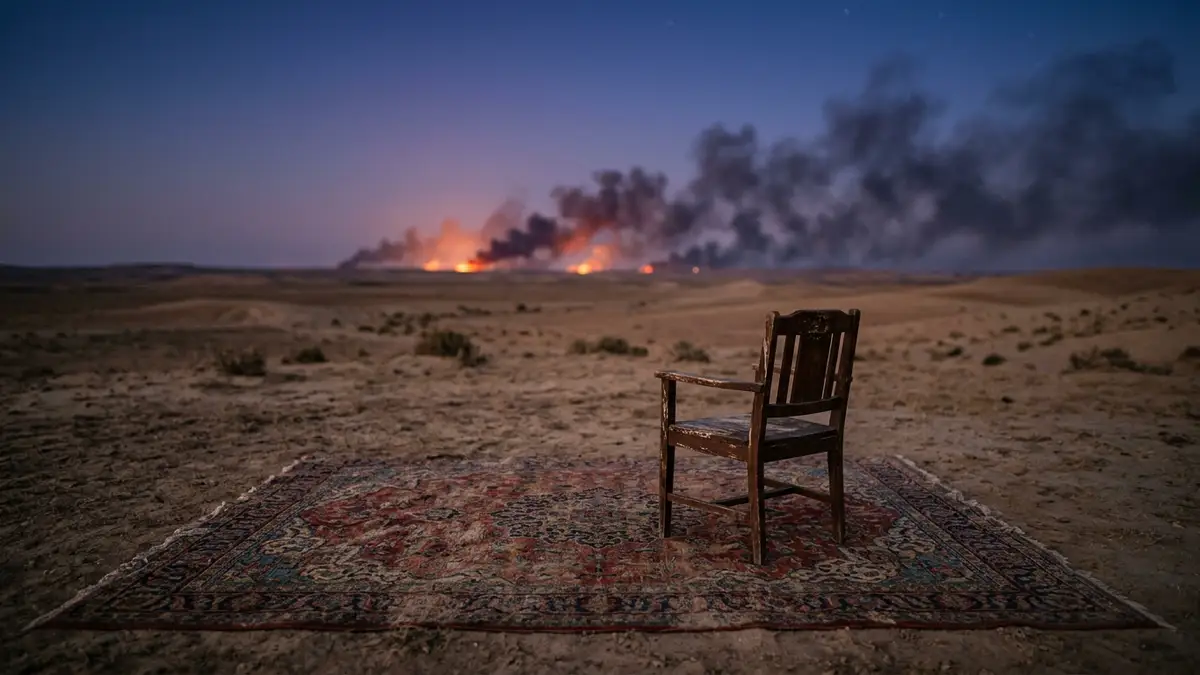
Image: Matt Weston / AI

Callum Smith
The Middle East has descended into a state of total kinetic warfare following the confirmed death of Iranian Supreme Leader Ayatollah Ali Khamenei and a subsequent massive US-Israeli aerial offensive.
During his address, he urged the Iranian people to rise up and surrender their weapons to avoid further bloodshed as the operation commenced.
The joint US and Israeli air campaign has already claimed at least 201 lives. This figure includes 40 high-ranking military commanders embedded within the state's security apparatus.
Israeli military officials confirmed their jets are systematically targeting command-and-control nodes in every major province.
The strikes focus on dismantling the infrastructure of the Islamic Revolutionary Guard Corps.
Iranian Foreign Minister Abbas Araghchi reported that one strike hit a girls' school in broad daylight.
This specific engagement resulted in the deaths of 115 people, the majority of whom were children caught in the crossfire.
The Iranian Red Crescent Society tallied a significantly higher total casualty count, stating that 555 people have been killed across the nation since the campaign began.
The humanitarian organization is currently struggling to manage a massive influx of wounded civilians in major urban centers.
Donald Trump vowed that this military pressure will not relent in the short term. He stated the conflict could continue for the next four weeks until all primary US objectives are achieved.
Retaliation from Tehran and its regional proxies began almost immediately across the Persian Gulf and the wider Levant.
In Bahrain, an Iranian drone struck a US Navy base, igniting a massive fire that illuminated the Manama skyline for hours.
The Islamic Revolutionary Guard Corps (IRGC) claimed responsibility for a direct hit on the USS Abraham Lincoln during the opening salvos of their counter-attack.
They further asserted that three British and American ships were successfully struck in the contested waters of the Persian Gulf.
Iranian forces also claimed to have launched coordinated missile strikes against 27 US bases situated throughout the region.
Reports from the Gulf indicate that British oil tankers were hit by missiles and left burning in open waters, disrupting global energy corridors.
In Lebanon, Hezbollah officially declared an end to the November 2024 ceasefire that had briefly stabilized the border.
The group launched a massive wave of rockets and drones at Israel in direct retaliation for the death of Khamenei.
The Israel Defense Forces responded by striking Hezbollah positions across the length of Lebanon.
Military commanders ordered immediate evacuations in the southern suburbs of Beirut as the exchange of heavy fire intensified throughout the night.
Operational risks have already resulted in significant hardware losses for the Western coalition during these high-intensity sorties.
In Kuwait, a US F-15 warplane crashed, with preliminary reports suggesting the aircraft may have been accidentally shot down by friendly or hostile fire.
The UK Ministry of Defence confirmed the unprecedented scale of the Iranian counter-offensive currently testing regional shields.
British and allied air defenses intercepted 165 ballistic missiles and over 540 Iranian drones over a frantic 48-hour window.
Explosions have now been reported in major economic hubs, including Dubai, Abu Dhabi, and Doha, as the conflict spills into the UAE and Qatar.
The war is entering its third day with no signs of de-escalation in the vital maritime corridors of the Hormuz strait.
Prime Minister Keir Starmer confirmed that the United States will utilize British sovereign bases at RAF Fairford and Diego Garcia for the duration of the campaign.
These strategic installations will support long-range missions designed to destroy Iranian missiles at their source.
A scorched earth strategy aimed at destabilizing the entire global economy.
Starmer characterized the Iranian military response as a 'scorched earth strategy' aimed at destabilizing the entire global economy.
He clarified that while the UK provides essential logistical support, it was not involved in the initial wave of offensive strikes.
The British base at RAF Akrotiri in Cyprus sustained limited damage from a suspected drone strike launched from the east.
Authorities reported no casualties at the facility, though security protocols have been heightened across all Mediterranean military assets.
Iranian President Masoud Pezeshkian defended the retaliatory strikes as a legitimate right and a solemn national duty.
Tehran would not stand by while its sovereignty and leadership were under direct assault from foreign powers.
He stated that Tehran would not stand by while its sovereignty and leadership were under direct assault from foreign powers.
Donald Trump claimed that Iran’s new leadership has already expressed a desire to negotiate terms behind closed doors.
This claim was sharply denied by Khamenei adviser Ali Larijani, who stated no negotiations would occur with the United States under current conditions.
Larijani maintained that the Iranian armed forces did not initiate this cycle of aggression.
He emphasized that the military remains in a defensive posture against what he termed illegal Western interference in sovereign affairs.
The violence has spilled over into civil unrest in neighboring nations, sparking deadly confrontations between civilians and security forces.
Twelve deaths were reported during violent clashes in Pakistan’s Gilgit-Baltistan region as protesters reacted to the news of the strikes.
Mass demonstrations against the US-Israeli actions have erupted in Iraq, Kashmir, and Delhi, signaling a broadening of the crisis.
Allied nations are now demanding a definitive long-term plan for Iran as regional stability continues to fracture under the weight of the conflict.