Senate Rejects War Powers Resolution as Iran Strikes Enter Fifth Day
A 47-53 vote preserves executive authority as the Pentagon projects an eight-week timeline for the dismantling of Tehran's security apparatus.
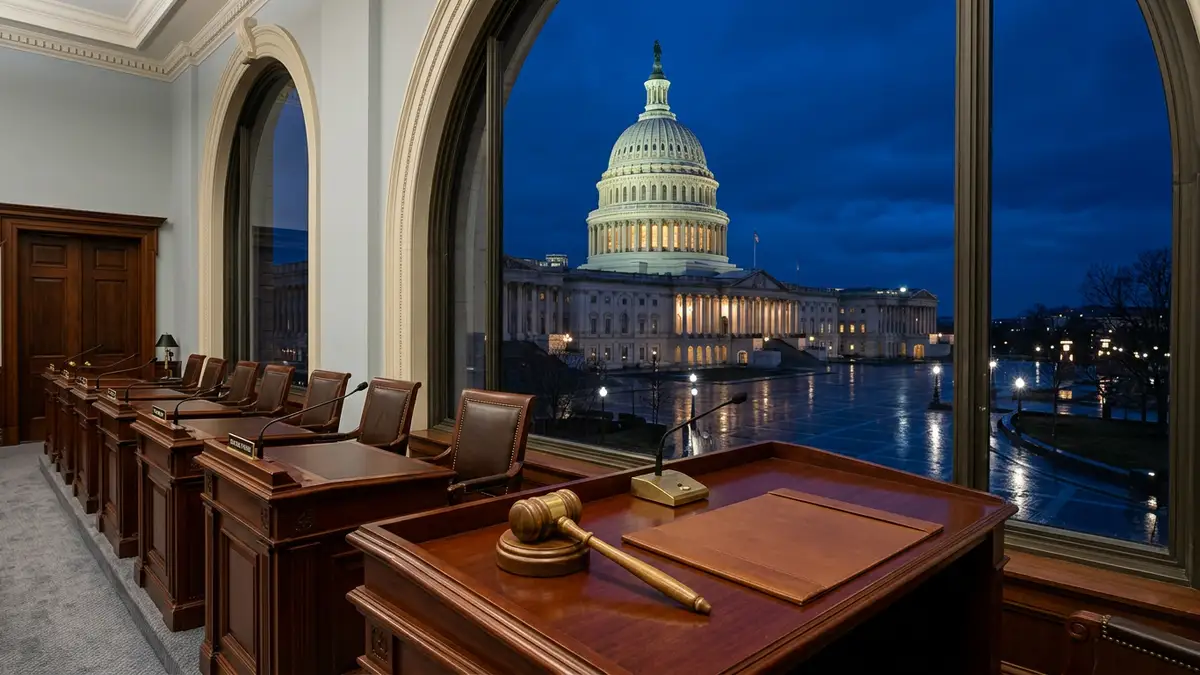
Image: Matt Weston / AI

Callum Smith
The United States Senate defeated a War Powers Act resolution on Tuesday, blocking a legislative attempt to restrict President Donald Trump’s military operations against Iran as a coordinated bombing campaign enters its fifth day.
This victory for the White House secures the trajectory of a mission that U.S. Central Command confirms will dismantle the Iranian regime’s security apparatus.
House Speaker Mike Johnson stated the United States is not engaged in a formal war with Iran but is executing a specific, high-stakes mission.
Stripping the commander in chief of his authority during active operations would be a dangerous and frightening prospect.
He argued that stripping the commander in chief of his authority during active operations would be a dangerous and frightening prospect.
The current offensive follows a pattern of unilateral military actions, including last year’s strikes on Iranian nuclear facilities and the January seizure of Venezuelan President Nicolás Maduro.
These precedents have established a landscape of aggressive executive intervention without prior congressional approval.
Senator Lindsey Graham framed the conflict through a historical lens, asserting that the United States has existed in an undeclared state of war with Iran since 1979.
This long-standing friction now manifests in a high-intensity aerial campaign targeting infrastructure across the region.
Senator Susan Collins reinforced the administration's stance on non-proliferation, stating that Iran cannot be allowed to develop or possess a nuclear weapon.
This objective remains a central pillar of the current military strategy as strikes continue to hit strategic assets.
Representative Brian Mast asserted the president utilized constitutional authority to defend the nation against an imminent threat.
Republican leadership indicated they will continue to block such resolutions unless the scope of the conflict expands further.
Democrats argued the campaign is illegal and risks plunging the United States into a prolonged regional conflict.
They pointed to the lack of a formal declaration of war as a breach of constitutional checks and balances.
Representative Alexandria Ocasio-Cortez stated that the president himself has characterized the situation as a war.
She claimed this admission makes his refusal to seek congressional authorization patently illegal under existing law.
Senator Tim Kaine noted that the conflict has already resulted in the deaths of U.S. soldiers.
He argued that the president requires explicit congressional permission to continue a conflict involving American casualties.
Congressional critics alleged that the administration sidelined the legislature and provided shifting justifications for the military engagement.
They expressed concern over the lack of transparency regarding the long-term costs and objectives of the mission.
Defense Secretary Pete Hegseth projected the conflict could last eight weeks and stated that America is winning the war on Iran.
America is winning the war on Iran.
This timeline suggests a sustained period of kinetic operations rather than a brief retaliatory strike.
White House Press Secretary Karoline Leavitt denied U.S. responsibility for the bombing of an Iranian school during the ongoing operations.
The denial comes amid increasing international scrutiny over civilian infrastructure damage within the strike zones.
President Trump recently signed a proclamation with technology executives regarding artificial intelligence and electricity costs while the military campaign continues.
This move signals an attempt to maintain domestic policy momentum despite the escalating foreign conflict.
The president has expressed his intent to conclude the current bombing campaign within several weeks.
The intensity of the strikes suggests a comprehensive effort to degrade Iranian military capabilities before any cessation of hostilities.
During recent remarks, Trump also commented on global manufacturing, stating that China makes all the windmills.
The comment reflects the administration's broader focus on industrial competition even as the Pentagon manages a multi-front security crisis.
The rejection of the War Powers resolution leaves the executive branch with a clear path to continue the offensive.
Without a legislative mandate to halt, the U.S. Air Force and Navy remain positioned to execute the next phase of the dismantling strategy.