Pepper-Spraying Drones Deployed in School Safety Initiative Across Three States
New aerial technology aims to deter school shooters, raising questions about efficacy and ethical implications amid rising gun violence statistics.
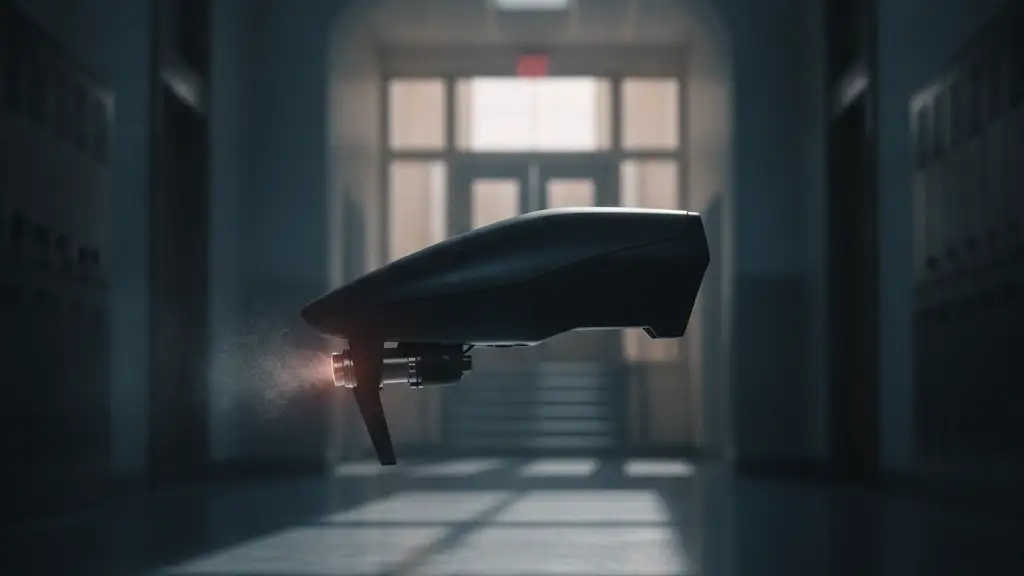
Image: Eddie Pollard / AI

Callum Smith
Pepper-spraying drones are now being rolled out across campuses in three states as part of the Campus Guardian Angel program, marking a significant shift in school security measures.
Deltona High School in Volusia County installed these devices in 2024. Two other schools are linked to a $557,000 scheme funding similar deployments.
John Adams Academy in Colorado is also rolling out this technology, extending its reach across the nation.
The Georgia legislature allocated $550,000 to fund its drone program. This indicates substantial public investment in a controversial security approach.
Campus Guardian Angel claims its drones can engage a shooter within 15 seconds. They are designed to distract until authorities arrive.
Mithril Defense asserts teachers can summon these drones, piloted by 'elite human pilots'. This adds a layer of human oversight to the automated response.
The drones escalate their response based on the situation. They deploy air poppers and issue surrender commands before unloading pepper rounds.
Campus Guardian Angel further claims the drones deliver kinetic energy strikes against a confirmed attacker. The company aims to 'greatly degrade or incapacitate' them.
Campus Guardian Angel indicated that Our strategy involves escalate the effects in waves of 3 or 4 drones, keeping the shooter occupied until he/she can be apprehended by authorized responders.
The company's strategy involves 'escalate the effects in waves of 3 or 4 drones, keeping the shooter occupied until he/she can be apprehended by authorized responders'. This suggests a multi-drone approach.
This rollout occurs against a grim backdrop. Over 398,000 students have experienced gun violence at school since the 1999 Columbine shooting.
The financial commitment is exemplified by the $550,000 allocated in Georgia and the $557,000 scheme linked to Deltona High School. This represents a significant investment in unproven technology.