Iran Signals World Cup Withdrawal After US and Israeli Airstrikes Kill Supreme Leader
Tehran evaluates sporting boycott as regional retaliations follow the death of Ayatollah Ali Khamenei
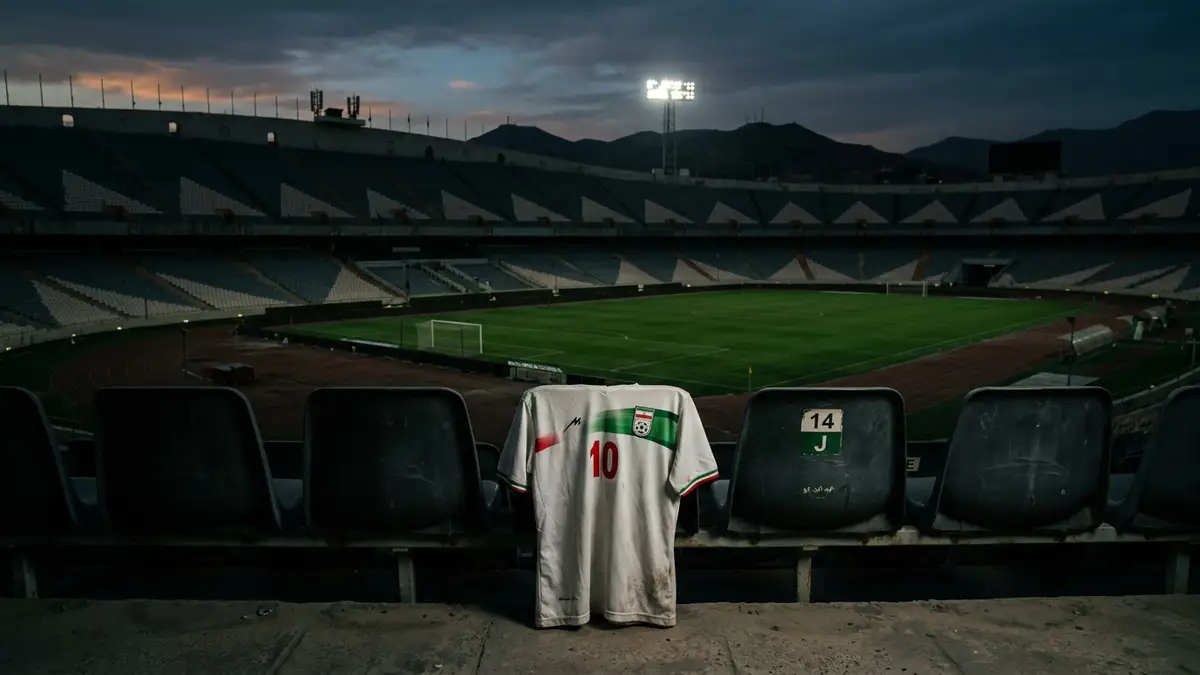
Image: Matt Weston / AI

Carla Rooney
The United States and Israel launched joint airstrikes on Saturday that killed Iran’s Supreme Leader, Ayatollah Ali Khamenei, triggering an immediate threat from Tehran to withdraw its national team from the upcoming World Cup.
The World Cup looms this summer across the United States, Canada, and Mexico. Mehdi Taj, President of the Iranian Football Federation, stated the strike fundamentally altered the team's outlook.
"With what happened today and with that attack by the United States, it is unlikely that we can look forward to the cup," Taj said. He confirmed he does not know if the national team can play matches on American soil under these conditions.
With what happened today and with that attack by the United States, it is unlikely that we can look forward to the cup.
The ultimate responsibility for the decision rests with senior sports officials in Tehran who now convene in emergency deliberations. Taj added that the nation cannot be expected to approach the World Cup with hope following this attack.
The federation has not yet submitted a formal withdrawal notice to FIFA. However, the potential exit would mark the first major sporting boycott resulting from this specific conflict.
The move mirrors historical precedents where geopolitical violence severed international athletic ties. In the United States, the political landscape shifted immediately as news of the operation broke.
Democrats criticized President Donald Trump for proceeding with the airstrikes without obtaining congressional approval. The death of the Supreme Leader has not halted military activity across the region.
Tehran responded by launching retaliatory strikes at various targets throughout the Middle East. British Prime Minister Keir Starmer called for an immediate cessation of hostilities to prevent further regional destabilization.
"Iran can end this now," Starmer said during his address. He urged the Iranian government to refrain from further strikes and to abandon its weapons program entirely.
Iran can end this now. He urged the Iranian government to refrain from further strikes and to abandon its weapons program entirely.
Starmer also called for an end to the violence and repression directed against the Iranian people by their own state. The current geopolitical shift offers no guarantee of immediate political transformation within Iran.
The vacuum left by Khamenei's death creates a volatile environment for both domestic policy and international relations. Economic stakeholders monitor the situation as oil prices and regional trade routes face potential disruption.
The Pentagon has not released specific details regarding the ordnance used or the exact coordinates of the strike. The Iranian Football Federation continues to evaluate its participation as the summer tournament approaches.
Officials remain focused on the safety and political implications of sending athletes to North America. This escalation follows decades of tension regarding nuclear enrichment and regional proxy involvement.
The strike represents a departure from previous containment strategies used by the White House. International observers note that a World Cup boycott would remove one of the most prominent platforms for Iranian national identity.
The team has historically been a point of pride and a rare bridge to the global community. Security protocols at World Cup venues in cities like Los Angeles and New York now undergo rigorous review.
The Department of Homeland Security has not yet issued new guidance following the strike. The United Nations has scheduled an emergency session to discuss the implications of the Supreme Leader's death.
Diplomats from multiple nations seek to prevent a full-scale conventional war. Despite the chaos, the Iranian Football Federation has not officially shuttered its training camps.
Players remain in a state of professional limbo while the political elite in Tehran decide their next move. The absence of Iran from the tournament would force FIFA to restructure group brackets on short notice.
This would create significant logistical hurdles for broadcasters and ticket holders globally. Military analysts suggest the joint nature of the strike indicates a high level of intelligence sharing between Tel Aviv and Washington.
The precision of the attack suggests a long-term planning phase preceded the Saturday operation. As retaliatory strikes continue, the window for a diplomatic resolution appears to be closing.
The world now waits to see if the sporting boycott is the first of many total severances between Iran and the West.
Related Keywords
Football