Glasgow Central Station Closure Halts Rail Traffic Following Fire
Emergency Response at Vape Shop Triggers Multi-Day Service Suspension Across High Level Platforms
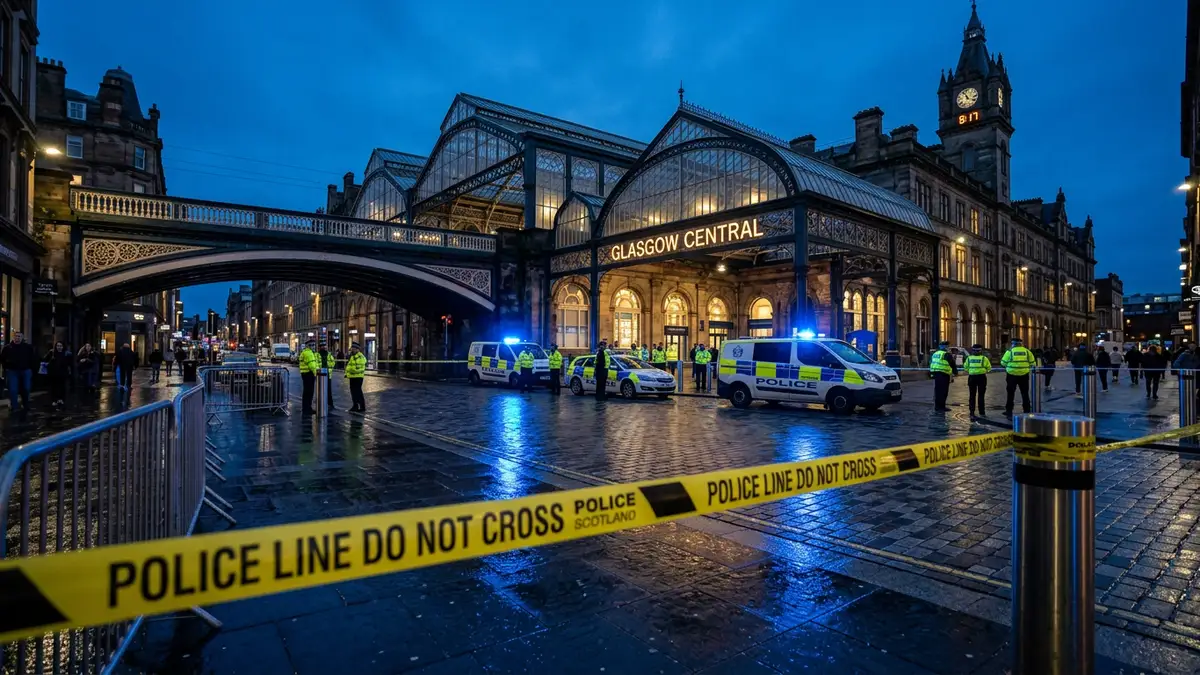
Image: Matt Weston / AI

Sarah Connor
Glasgow Central railway station closed its doors and halted all operations on Tuesday, March 10, after a fire originating in a vape shop spread into the station infrastructure.
The blaze breached the commercial unit and climbed into the station's primary structural framework. ScotRail immediately suspended all services to and from Glasgow Central High Level as emergency crews moved to contain the flames.
This sudden closure paralyzed a primary artery of the Scottish rail network. The disruption hit thousands of commuters during the Tuesday peak, leaving the concourse empty of passengers but filled with emergency personnel.
Firefighters established a strict perimeter around the station while smoke moved through the concourse and adjacent retail units. The Scottish Fire and Rescue Service deployed multiple units to combat the spread within the integrated commercial spaces.
Rail operators confirmed that the disruption will continue for a number of days while safety assessments take place. The 1879-established terminal serves as the busiest railway station in Scotland, handling over 30 million passengers annually.
Engineers now inspect the structural integrity of the High Level platforms and overhead lines damaged by the intense heat. The vulnerability of the Victorian-era iron and glass architecture remains a primary concern for Network Rail recovery teams.
The investigation into the exact origin of the blaze is ongoing.
ScotRail issued a statement advising passengers to expect continued disruptions for several days to come. The suspension of High Level services forces a massive redirection of resources and personnel across the regional network.
Commuters faced immediate cancellations as electronic boards across the city flashed blank or displayed termination notices. The sudden removal of the High Level capacity creates a logistical bottleneck for the entire Central Belt transport corridor.
The Fire Service Spokesperson stated that they cannot speculate on the cause of the fire at this time. Investigators currently focus on the internal wiring and stock within the vape shop where the fire began.
This incident follows historical patterns of urban rail vulnerability where integrated retail units pose specific fire risks to transit hubs. The proximity of highly flammable retail inventory to critical transport infrastructure has historically complicated fire suppression efforts in major UK terminals.
Emergency responders remained on the scene throughout the evening to monitor hotspots within the station walls. Thermal imaging cameras scan the structure to ensure no smouldering embers remain trapped behind the station's heavy masonry.
Network Rail staff began coordinating with local authorities to manage the perimeter and redirect foot traffic away from the Gordon Street entrance. Police cordons remain in place to prevent public access to the affected zones.
The economic impact of the closure hits local businesses and the broader transport economy as the station remains a critical node for cross-border travel. Retailers within the station perimeter face an indefinite period of lost revenue during the forensic and structural cleanup.
Alternative transport arrangements, including bus replacement services, are currently being deployed to mitigate the total loss of High Level access. These measures aim to bridge the gap for passengers travelling toward Ayrshire, Inverclyde, and the south.
The Fire Service Spokesperson confirmed that the investigation into the exact origin of the blaze is ongoing. Forensic teams will enter the retail unit once building engineers declare the structure safe.
They cannot speculate on the cause of the fire at this time.
The closure impacts not only local transit but also the West Coast Main Line, a vital link for freight and passenger traffic between Glasgow and London. Any prolonged outage at the High Level platforms threatens to de-stabilise the precision scheduling required for cross-border operations.
Public pressure mounts on transport authorities to provide a definitive timeline for the reopening of the concourse. For now, the gates at Gordon Street and Hope Street remain locked to the public.
The incident serves as a physical demonstration of the risks inherent in multi-use transit environments. Safety protocols regarding the storage of lithium-ion batteries and e-liquid chemicals in station-adjacent shops face renewed scrutiny.
Engineers specifically monitor the overhead line equipment, which can warp or lose tension when exposed to the temperatures generated by a building fire. Until these lines are certified, no electric rolling stock can move through the High Level throat.
The Scottish Fire and Rescue Service continues to coordinate with British Transport Police to secure the site. A final report on the structural damage follows the conclusion of the on-site dampening down process.