BAFTA Broadcast Under Fire After Racial Slur Disrupts Ceremony
Wunmi Mosaku and Jayme Lawson condemn production failures as John Davidson expresses mortification over televised outburst.
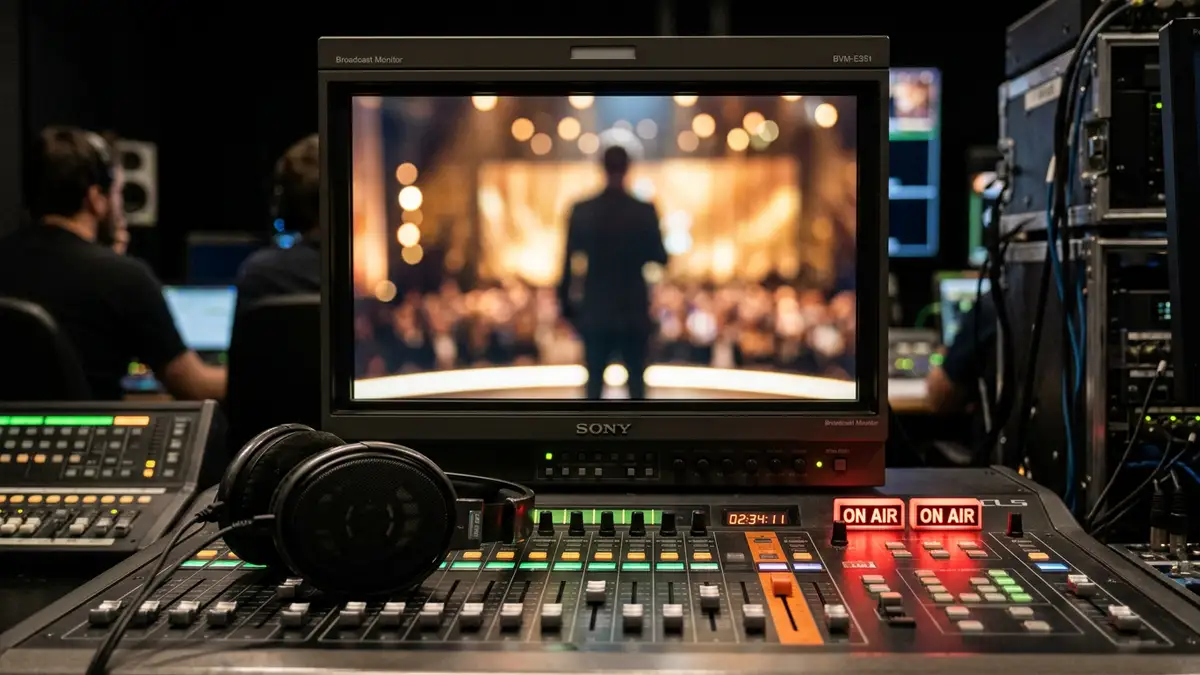
Image: Matt Weston / AI

Callum Smith
The BBC faces intense scrutiny following the broadcast of a racial slur during the BAFTA Film Awards in London.
Beyond the immediate shock in the room, Wunmi Mosaku—who secured a major award during the ceremony—confirmed the incident "really tainted" her celebration.
The unedited slur reached millions of households, bypassing every layer of the BBC's broadcast censorship and delay protocols.
Really tainted
Defending their oversight, producers at the BBC maintained they did not hear the specific language as it occurred. This explanation follows a surge of public criticism regarding the network's failure to intercept the broadcast before it hit the airwaves.
Jayme Lawson condemned the BBC as "careless" for allowing the transmission to proceed with the slur intact. Furthermore, Lawson alleged that BAFTA "exploited" Davidson by placing him in a high-pressure environment known to trigger his condition.
Reflecting on the disruption, John Davidson stated he was "deeply mortified" by the involuntary vocalisation. He remained a visible figure in the auditorium, seated among the global film industry's most influential power players.
Deeply mortified
Since its establishment in 1949, the BAFTA Film Awards have functioned as a bastion of rigid decorum and British prestige. This breach of standards marks a violent departure from the organisation's historical commitment to high-society elegance and controlled presentation.
For decades, the British Academy has positioned itself as the gold standard for international cinema. The failure to filter offensive language during its flagship event now challenges a long-standing reputation for meticulous production and technical excellence.
Stakeholders across the industry are now demanding total transparency regarding live-delay protocols and audio-filtering software. Political and public pressure mounts as advocacy groups examine the intersection of disability rights and broadcast liability.
The economic stability of these ceremonies relies heavily on advertiser confidence and consistent viewership metrics. Incidents of this nature threaten the 12% average viewership growth observed across recent international award cycles.
Broadcasters now fear that a perceived loss of brand safety will drive lucrative sponsors toward more controlled digital environments. The financial stakes remain high as traditional networks compete for a rapidly shrinking pool of live-television advertisers.
In a separate development across the industry, the Sinners ensemble secured the top prize at the Actor Awards. The cast accepted the trophy for Outstanding Performance by a Cast in a Motion Picture during a night of shifting fortunes.
Delroy Lindo also claimed an individual Actor Award during the same cycle. He delivered an impromptu acceptance speech after a technical failure rendered the teleprompter useless in front of the live audience.
The Actor Awards ceremony reached its global audience via a Netflix stream, bypassing traditional airwaves entirely. This pivot to digital platforms represents a broader industry transition away from linear television networks like the BBC.
The BBC's failure to censor the London event stands in stark contrast to the digital-first approach of its modern competitors. Industry analysts note that streaming services often utilise sophisticated delay mechanisms to prevent such lapses in real-time.
Despite the disruption, Wunmi Mosaku’s victory remains a significant milestone for the performer. She stood among the night's primary honorees before the broadcast controversy began to overshadow the list of winners.
The future of live broadcasting now hinges on the implementation of more robust, AI-driven audio-filtering technology. Societal expectations for immediate accountability are driving these rapid shifts in global production standards.
BAFTA officials have yet to release a formal statement addressing the exploitation claims levelled by Lawson. The organisation continues to face intense questioning regarding its vetting process for ceremony attendees and guests.
Delroy Lindo’s performance in the Sinners ensemble proved pivotal to the film's sweep of the major categories. The production successfully beat out four other nominees to claim the night's final and most coveted trophy.