Poland Scrambles Jets as Russian Missiles Strike Ukraine, Raising Border Tensions
Air raid sirens blared across Lublin as NATO member Poland deployed fighter aircraft in response to a wave of Russian ballistic missile and drone attacks across Ukraine.

Callum Smith
Air raid sirens sounded across Lublin, eastern Poland, today as Russia launched a wave of ballistic missiles and drones across Ukraine overnight, killing at least seven people.
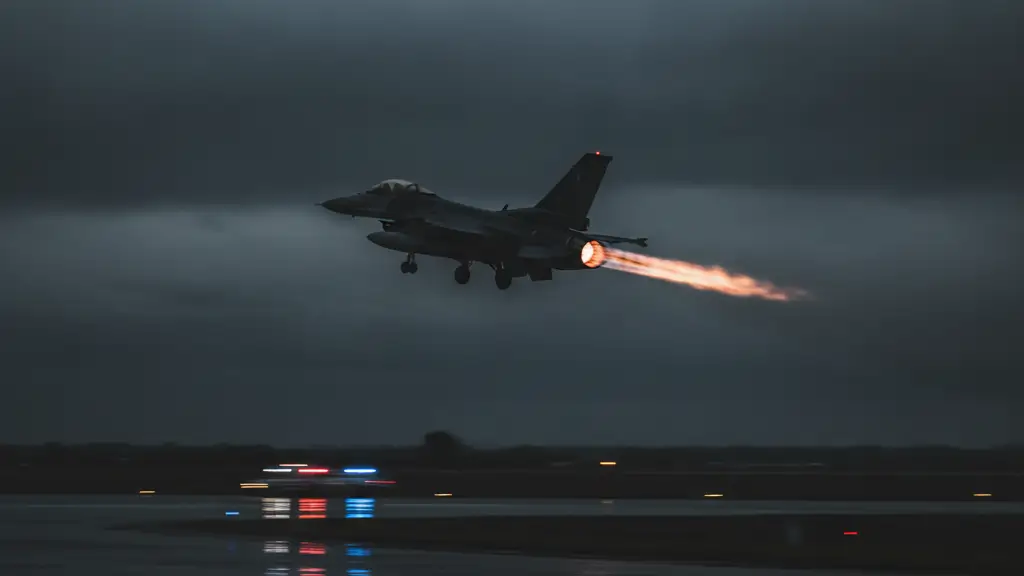
Poland's Armed Forces confirmed the immediate operational deployment of "Fighter aircraft and an early warning aircraft," with ground-based air defense systems and radar reconnaissance systems simultaneously achieving a state of readiness.
The Polish armed forces explicitly stated these actions were of a preventive nature, as a British tourist recounted the harrowing experience: "3.50am. Sirens going off. As a British tourist this scared the hell out of me."
3.50am. Sirens going off. As a British tourist this scared the hell out of me.
The sirens later ceased, and no further alerts emerged in Poland; however, social media channels buzzed with unverified reports of a Russian missile entering Polish airspace, alongside other claims of a missile crossing into Poland.
Across the border, Ukrainian cities endured a brutal assault, with explosions rocking Kyiv and forcing residents into underground shelters.
The attack's epicenter struck near Kryvyi Rih, the hometown of Ukrainian President Volodymyr Zelensky, where eight additional individuals sustained injuries, including two children.
Russian air attacks damaged residential buildings in Lviv, with dozens of homes, civilian businesses, and critical infrastructure facilities suffering destruction or significant damage.
Volodymyr Zelensky had previously met with the US President in Washington, where he issued a stark warning of an impending “massive attack” by Moscow.
Zelensky also asserted a “high probability” that Vladimir Putin would execute the planned strike; Eastern European security, particularly for nations bordering Russia, dictates a zero-tolerance policy for airspace violations.
high probability
Past incidents, such as the 2022 missile strike in Przewodów that killed two individuals, reinforce this unwavering stance; stakeholders across the political spectrum, from Warsaw to Brussels, monitor these developments with acute focus.
Public pressure within Poland demands robust defense, while economically, the region braces for further disruption.
A Ukrainian drone attack ignited a Wildberries warehouse in Penza, Russia, injuring one person and necessitating the evacuation of approximately 200 individuals.
A regional official confirmed the overnight attack on the retailer's warehouse in Penza; meanwhile, a helicopter crew discovered a 10-meter-wide crater from an unidentified object near the village of Tarnawa-Kolonia, approximately 80 km from the Polish-Ukrainian border.
The future landscape suggests an intensified arms race and increased NATO presence along its eastern flank, as nations like Poland invest heavily in modernizing their air defense systems, including Patriot missile batteries.
This strategic shift follows years of underinvestment in some European defense sectors, a trend now rapidly reversing.
The collective security architecture of Europe faces its most significant test since the Cold War.