Regional Escalation Strands Thousands as Airstrikes Disrupt Dubai Infrastructure
The UK Foreign Office mobilises for a massive consular crisis as drone strikes and falling wreckage ignite fires at luxury resorts and global shipping ports.
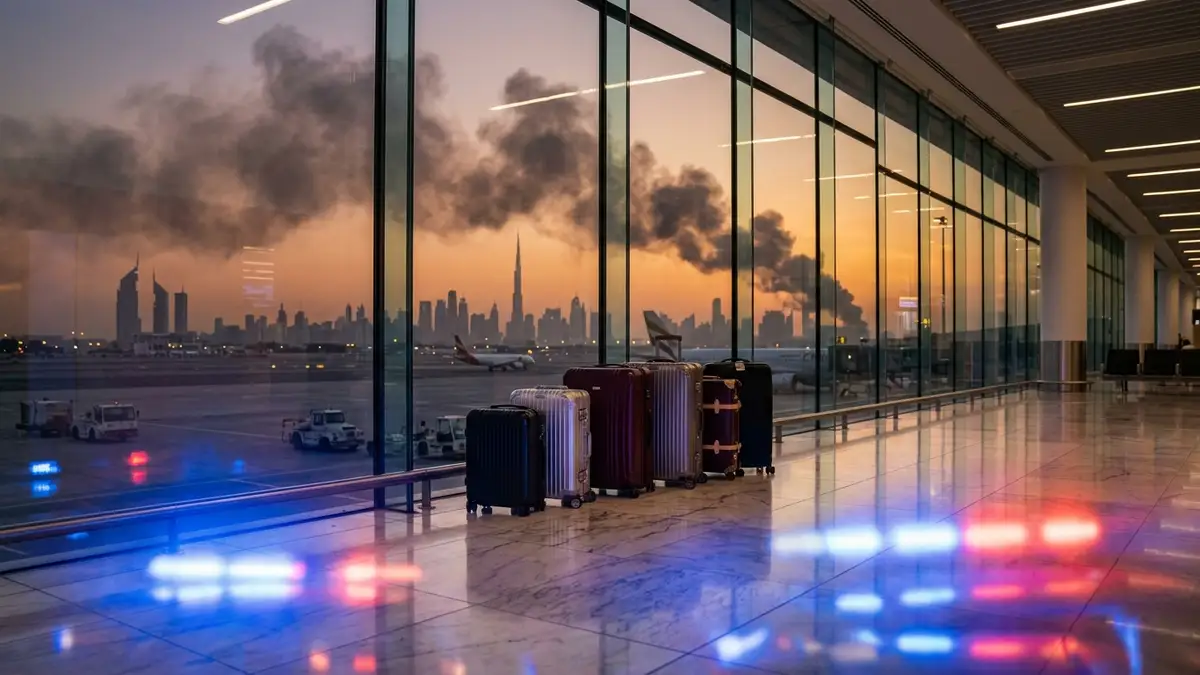
Image: Matt Weston / AI

Carla Rooney
A massive military escalation involving United States and Israeli strikes on Iran has shuttered Gulf airspace, leaving over 100,000 British nationals stranded in Dubai as debris strikes hit the city's financial and tourism hubs.
Explosions tore through Dubai International Airport and triggered a secondary fire at Jebel Ali Port. These strikes targeted the primary nodes of the UAE’s logistics and transit infrastructure, halting the flow of global commerce.
Military pressure intensified on March 9 when a swarm of drones struck the immediate vicinity of the airport. The impact sparked a fresh blaze and forced the emergency evacuation of the surrounding residential and commercial areas.
How much have you been paid to keep on posting government propaganda?
This pattern of destruction continued on March 13 when debris from intercepted projectiles struck a building in the Dubai International Financial Centre. The financial hub serves as the primary gateway for global capital in the Middle East, housing over 4,000 active companies.
The Foreign Office deployed significant resources to address the 138,000 citizens currently caught in this logistical deadlock. This figure represents one of the largest concentrations of UK nationals facing an active conflict zone in recent history.
While wreckage fell upon the financial district, influencer Soudi Al Nadak maintained that the environment remained static and silent. She stated that she felt safe because 'we know who protects us.'
We know who protects us.
Followers of Al Nadak immediately challenged this narrative across various social media platforms. One user questioned the influencer directly, asking, 'How much have you been paid to keep on posting government propaganda?'
Critics of the digital response noted that influencers continue to post luxury lifestyle updates and sun-drenched photographs. These updates appear in stark contrast to verified reports of damaged infrastructure and port fires.
Al Nadak characterised individuals attempting to leave the city as ungrateful for the local security measures. She continues to share content focused on luxury and stability despite the March 9 drone strikes and subsequent evacuations.
The Jebel Ali Port fire disrupted operations at one of the world's busiest shipping terminals. This facility handles millions of containers annually and serves as a critical link between European and Asian markets.
Historically, the February 28 strikes ended a period of relative regional stability and shifted the focus of the US-Israel military partnership toward direct Iranian targets. This strategic shift immediately altered the risk profile for civilian aviation across the entire Gulf.
The 100,000 stranded Britons now face an indefinite wait as airlines struggle to navigate the closed corridors of the UAE. Consular officials have not yet provided a definitive timeline for the reopening of the regional skies.
The Dubai International Financial Centre remains a focal point for the city's economic resilience amidst the chaos. However, the March 13 debris strike marks the first time the district has sustained physical damage from regional combat operations.
This escalation signals a profound shift in the security landscape of the Middle East. The physical damage to Jebel Ali Port and the financial district underscores the vulnerability of global trade hubs to modern kinetic warfare.
The Foreign Office continues to monitor the 138,000 registered nationals as the logistical deadlock persists. No commercial carriers have announced a resumption of services into Dubai International Airport.