Israel Launches Ground Invasion of Lebanon and Decapitation Strikes in Tehran
IDF Forces Cross Northern Border as Air Operations Target Iranian Leadership and Enrichment Facilities
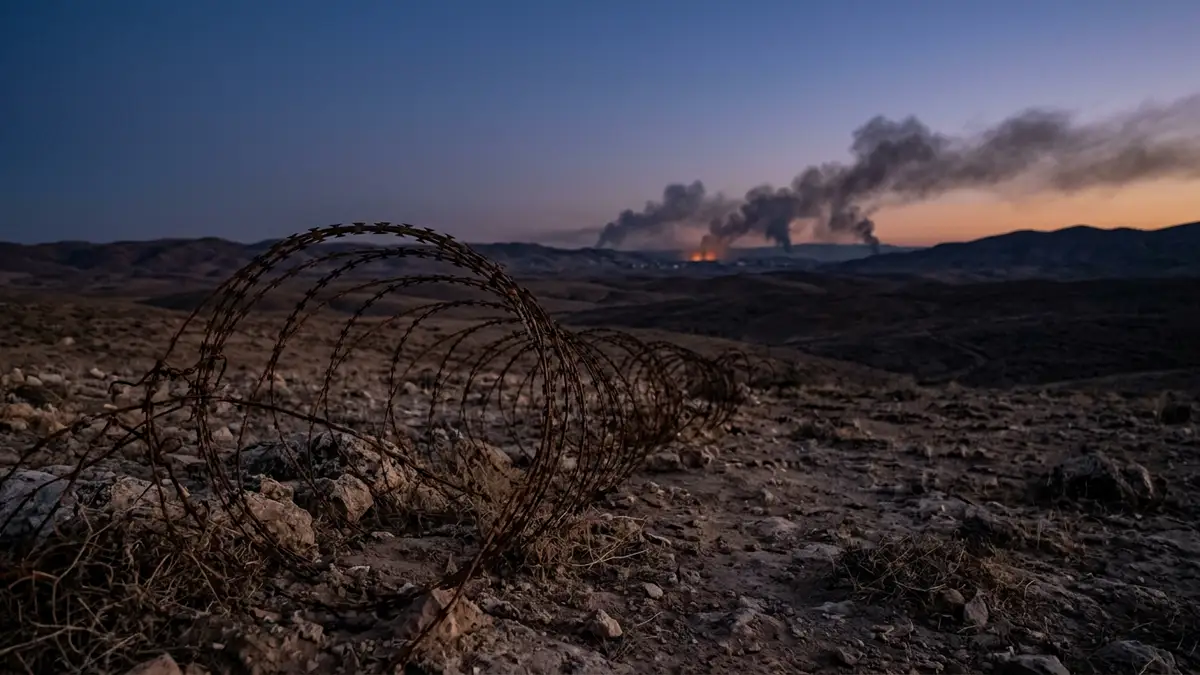
Image: Matt Weston / AI

Callum Smith
Israeli ground forces crossed into southern Lebanon today, marking the start of a direct land offensive against Hezbollah positions while simultaneous airstrikes decapitated the Iranian leadership in Tehran.
This operation represents a seismic shift in regional history. It echoes the most significant decapitation strikes of the last century.
Beyond the political leadership, the strike package claimed the lives of Army Chief of Staff General Abdol Rahim Mousavi and Defense Minister General Aziz Nasirzadeh.
The IDF maintains that these targeted hits successfully severed the heart of the Iranian military and security command structure.
Regime targets in Tehran shattered under overwhelming force. This action ensures the total degradation of enemy capabilities.
Simultaneously, the International Atomic Energy Agency confirmed that an Iranian enrichment site cracked under the weight of the heavy aerial bombardment.
This specific strike coincides with a broader, high-intensity air campaign targeting 49 high-ranking Iranian leaders and security officials across the country.
Israeli Defense Minister Israel Katz stated that regime targets in Tehran shattered under overwhelming force. This action ensures the total degradation of enemy capabilities.
He confirmed the operation will continue with full momentum for as long as necessary to secure the borders of the Jewish state.
Meanwhile, in Lebanon, the health ministry reported at least 31 deaths and numerous injuries following a series of intense strikes on Beirut.
Hezbollah militants claimed responsibility for several overnight drone attacks launched against Israeli territory. These were in direct response to the ongoing ground incursion.
Across the Atlantic, President Donald Trump characterized the target as a 'sick and sinister regime' as the air war commenced.
This stance signals a hardening of Washington's position as the conflict expands across multiple international borders.
The hardest hits from the U.S. military are yet to come.
U.S. Secretary of State Marco Rubio reinforced this position. He stated that the hardest hits from the U.S. military are yet to come.
The regional landscape shifted further as Israeli soldiers began active operations across the southern Lebanese border. This marks a new phase of the conflict.
In a sign of escalating tension, U.S. embassy staff in Oman received instructions to seek cover and prepare emergency supplies immediately.
Security forces in Tehran continue to monitor the smoking wreckage of the obliterated presidential compound as the dust settles over the capital.
Iranian media countered with reports that a drone and missile attack destroyed a United States air base in the Middle East.
The Fars news agency stated that fuel tanks exploded after a command and staff building was hit during the retaliatory strike.
The IRGC Navy conducted the fourteenth wave of Operation True Promise 4 at dawn. They utilized an extensive drone and missile array.
This operation specifically targeted the U.S. air base in Bahrain's Sheikh Isa region as part of a coordinated regional response.
Earlier in the day, Iranian drones struck the U.S. embassy in Riyadh. This further widened the geographic scope of the hostilities.
Tehran continues to launch waves of retaliatory strikes across the Gulf and toward Israel as ground operations intensify in the north.
The economic stakes of this escalation are reflected in the immediate threat to energy corridors in the Persian Gulf.
Stakeholders in the global oil market are monitoring the proximity of these strikes to critical infrastructure that fuels the world economy.
Historically, the crossing of the Litani River line has served as a flashpoint for protracted and bloody regional conflict.
This ground offensive marks the first major land movement into Lebanon in years. It breaks a long-standing tactical stalemate.
Public pressure within Israel has mounted for a permanent buffer zone to protect northern communities from persistent Hezbollah rocket fire.
The current military movement addresses these security demands through direct kinetic action and the dismantling of border fortifications.
The destruction of the Tehran compound effectively removes the central node of the Axis of Resistance.
This vacuum in leadership creates an unprecedented shift in the geopolitical landscape of the Middle East. It may take decades to resolve.
Future implications for the Nuclear Non-Proliferation Treaty remain uncertain following the damage to the enrichment site.
The IAEA continues to assess the environmental and technical impact of the strike. They are monitoring for potential radiation leaks.
Regional actors in Saudi Arabia and the UAE are heightening their defensive postures as missiles traverse their sovereign airspace.
The targeting of diplomatic missions in Riyadh marks a severe escalation in the scope of Iranian retaliation against Western allies.
On the ground, IDF forces are currently engaging Hezbollah militants in close-quarters combat across the rugged border terrain.
These tactical maneuvers aim to dismantle the tunnel networks and launch sites used for cross-border raids into Israeli territory.
As the sun sets over the smoking ruins of the Tehran presidential complex, the full extent of the regime's collapse begins to emerge.
The operation remains active with no immediate timeline for a cessation of hostilities. There is no return to the status quo.