Federal Judge Halts Justice Department Probe into Federal Reserve Operations
Judge James Boasberg blocks prosecutor Jeanine Pirro’s data demands as Senate Republicans stall Kevin Warsh’s confirmation
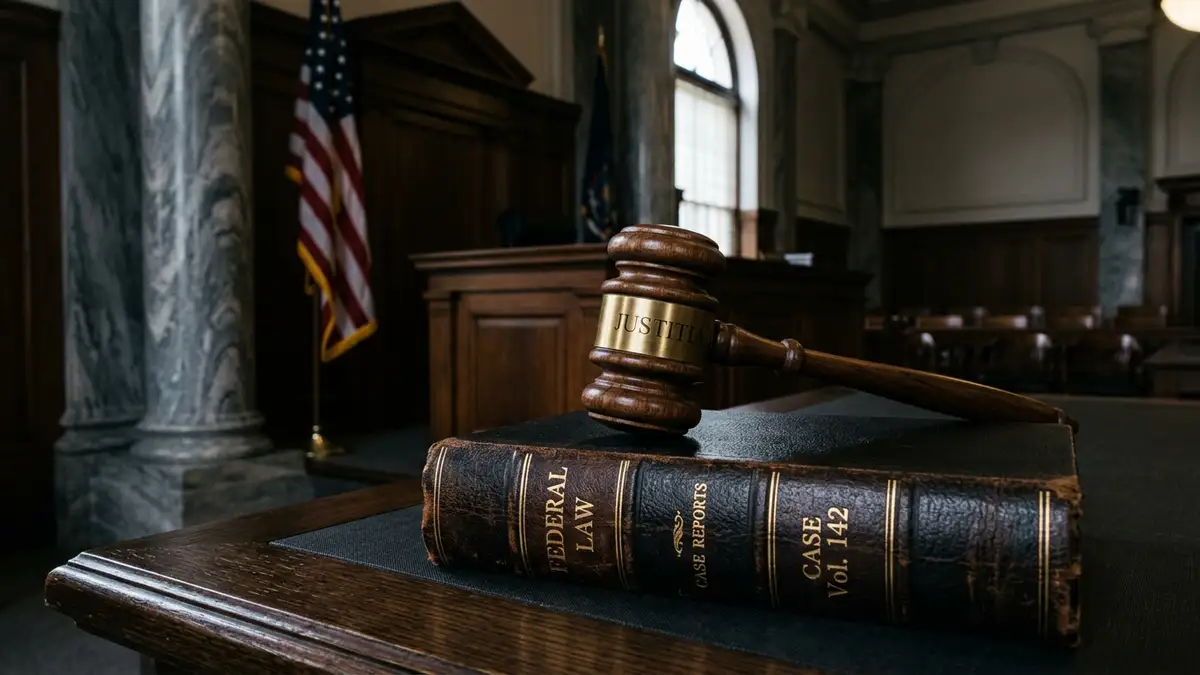
Image: Matt Weston / AI

Callum Smith
Judge James Boasberg blocked a Department of Justice investigation into the Federal Reserve, ruling that federal prosecutors failed to provide evidence justifying the seizure of internal central bank data.
Judge Boasberg delivered the decisive blow to a legal campaign led by U.S. Attorney Jeanine Pirro. She moved to scrutinize the inner mechanics of the Federal Reserve.
The court found the legal basis for the inquiry insufficient to override the statutory protections that have shielded the central bank for over a century. These protections prevent executive interference in monetary policy.
Following the ruling, Pirro confirmed she will appeal the decision. She argued that the court has effectively dismantled her office's capacity to conduct a legitimate criminal probe.
Jerome Powell is now bathed in immunity.
She stated the decision had neutered her ability to investigate potential wrongdoing within the institution. This leaves her investigators without a viable path forward.
"Jerome Powell is now bathed in immunity," Pirro declared on the courthouse steps. She maintained that the current legal standing of the central bank lacks a proper foundation to resist federal oversight.
Beyond the courtroom rhetoric, the Department of Justice must now produce specific documentation of criminal activity. This is required to bypass the high evidentiary bar set by the court.
Without the discovery of new, concrete evidence, the investigation into the Federal Reserve remains at a total standstill. This judicial barrier reinforces the historical independence of an institution that has operated with autonomy since its inception.
The ruling signals that the shield protecting the central bank requires more than a standard inquiry to pierce. Historically, the Federal Reserve Act of 1913 established the bank as an independent entity to prevent political cycles from dictating policy.
In the halls of Congress, the legal battle has triggered a secondary crisis regarding the leadership of the global financial system. The friction has halted the standard transition of power.
Key Republican senators announced they will block Kevin Warsh, President Trump’s nominee to replace Jerome Powell. This blockade remains in place until the investigation reaches a final resolution.
This legislative blockade ties the executive appointment process directly to the outcome of the appellate court's future decision. The standoff has created a significant bottleneck in the Senate.
Senator Thom Tillis characterized the court's decision as a necessary validation of the Federal Reserve's institutional position. He described the Department of Justice's efforts as a targeted strike against the bank's operational autonomy.
This ruling confirms just how weak and frivolous the criminal investigation of Chairman Powell is.
"This ruling confirms just how weak and frivolous the criminal investigation of Chairman Powell is," Tillis said. He further labeled the probe as nothing more than a failed attack on the bank's independence.
The friction between the U.S. Attorney’s office and the Federal Reserve reflects a broader struggle over the limits of executive power. By blocking Pirro’s access to internal data, the court upheld the precedent that the Fed is not a standard executive agency.
This protection ensures market stability by insulating the central bank from the shifting priorities of the Justice Department. Economic stakeholders and market analysts are now monitoring the Senate's refusal to move forward with Kevin Warsh.
The delay in confirming a new chair introduces a period of leadership volatility that could impact global financial markets. Despite the setback, Pirro remains defiant, insisting that the law does not grant the Federal Reserve total insulation from criminal law.
"This is wrong, and it is without legal authority," she said regarding the judge's interpretation of the bank's immunity. Her office is currently preparing the necessary filings to challenge Boasberg’s ruling in the appellate court.
The outcome of that appeal will determine if the Department of Justice can force the Fed to open its books. Otherwise, the investigation will be permanently shuttered.
Meanwhile, the legislative bloc led by Tillis shows no signs of relenting on the Warsh nomination. They maintain that the integrity of the institution must be cleared of the allegations before a transition of power can occur.
As the legal and political gears grind to a halt, the Federal Reserve continues its operations under the shadow of an unresolved federal inquiry. The next phase of this confrontation moves to the appellate level, where the definition of central bank immunity will be tested again.