Supreme Court Strikes Down Trump Tariffs in Landmark Six-to-Three Ruling
The judiciary dismantles the administration's use of emergency powers as the White House pivots to a 'Plan B' for global trade enforcement.

Sarah Connor
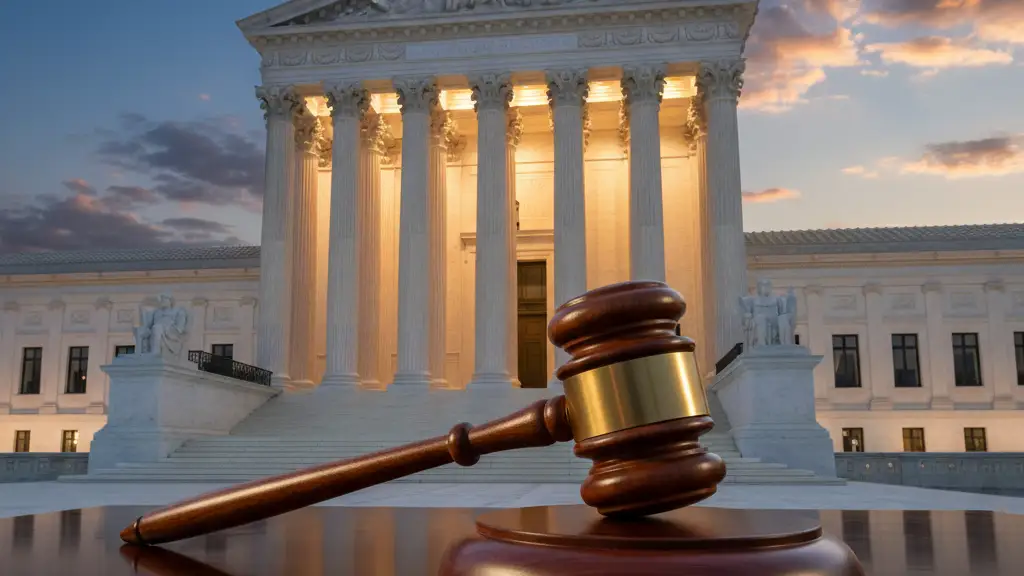
The U.S. Supreme Court dismantled the cornerstone of President Donald Trump’s trade agenda on Friday, ruling six-to-three that his administration lacked the authority to impose sweeping global tariffs under the International Emergency Economic Powers Act of 1977.
The court sided decisively with a coalition of states and businesses, ruling that the 1977 International Emergency Economic Powers Act does not grant the president the authority to levy broad taxes on foreign goods. This statute, originally forged for national emergencies, served as the bedrock for a declared emergency over the U.S. trade deficit—a move the Penn-Wharton Budget Model estimates generated $175 billion in revenue before its legal expiration.
Inside the White House, the reaction was swift and vitriolic as the president reportedly lambasted the justices during a breakfast with governors. He branded the decision a 'disgrace,' accusing the court of being 'swayed by foreign interests' while claiming that nations who have been 'ripping us off for years' are now 'dancing in the streets.'
The difference between going bankrupt and thriving.
Beyond this rhetorical firestorm, the president further characterised the ruling as 'unpatriotic,' framing the judicial intervention as a betrayal of domestic industry. Despite this stinging legal defeat, the administration signalled it will not retreat from its protectionist stance, with the president maintaining he possesses a 'plan B' to keep levies firmly in place.
Commerce Secretary Howard Lutnick and White House trade adviser Peter Navarro confirmed the administration is already pivoting toward more traditional authorities under existing trade law. They intend to weaponise Section 232 and Section 301 authorities to ensure the flow of import taxes remains uninterrupted by the court's mandate.
The president asserted that the United States would be 'SCREWED' without these duties, arguing the ruling represents the razor-thin 'difference between going bankrupt and thriving.' Top administration officials expect to maintain the current tariff framework by navigating these alternative legal channels, which remain available for trade enforcement.
Lale Akoner, global market analyst for eToro, noted that while the decision removes one specific legal artery, it does not signal the end of the tariff regime but rather a tactical recalibration. This sentiment was echoed by ING analysts Carsten Brzeski and Julian Geib, who stated the president’s agenda is 'here to stay' despite a looming 'messy transition period.'
The president’s agenda is here to stay despite a looming messy transition period.
Justice Brett Kavanaugh suggested during the proceedings that the executive could potentially utilise different statutory laws to achieve these same trade objectives. This legal opening provides a vital lifeline for an administration that has constructed its entire economic identity upon the aggressive use of border taxes.
White House officials privately acknowledged that an adverse ruling was a strong possibility even as they publicly downplayed the significance of the court's intervention. The president remains defiant, claiming the same ruling that restricted his emergency powers actually left him with 'even stronger powers' to impose higher tariffs in the future.
International ripples from the ruling are already surfacing across the Atlantic, with an EU spokesperson confirming the bloc is in close contact with the U.S. administration regarding the shift. The global community is watching with bated breath to see if the removal of the 10 per cent tax will lead to a broader de-escalation of trade tensions or a new era of friction.
Before the ruling, the president claimed Prime Minister Narendra Modi agreed to stop buying Russian oil in exchange for the U.S. lowering tariffs on India to 18 per cent. This deal highlights the transactional nature of the administration's foreign policy, where trade barriers serve as the primary leverage in high-stakes geopolitical negotiations.
India has since indicated it would 'eliminate or reduce tariffs' on all U.S. industrial goods and various agricultural products in response to the changing trade landscape. Such concessions suggest that even a legally wounded tariff regime continues to exert significant pressure on America's trading partners.
The president continues to frame this legal battle as a matter of national survival, warning that any curtailment of his authority constitutes an 'economic and national security disaster.' This rhetoric sets the stage for a protracted conflict between the executive branch and the judiciary over the ultimate limits of presidential power.
By striking down the use of the 1977 Act, the court has forced the administration to return to the slower, more bureaucratic processes of traditional trade law. This shift may satisfy legal purists, but it creates a period of profound uncertainty for global supply chains and domestic manufacturers alike.
The immediate market rally reflects a widespread belief that the era of unpredictable, unilateral trade shocks may finally be waning. However, the administration's commitment to Section 232 and Section 301 suggests that the trade war is merely entering a more litigious and structured phase.
As the White House prepares its next move, the focus shifts to how quickly the Commerce Department can certify new investigations to justify the reinstatement of duties. The ruling has not ended the protectionist era; it has simply demanded a more rigorous legal justification for its existence.