United States Forces Kill Iranian Unit Leader Linked to Trump Assassination Plot
Pentagon confirms the elimination of the operative behind the 2024 conspiracy as Operation Epic Fury dismantles Iranian naval and air assets
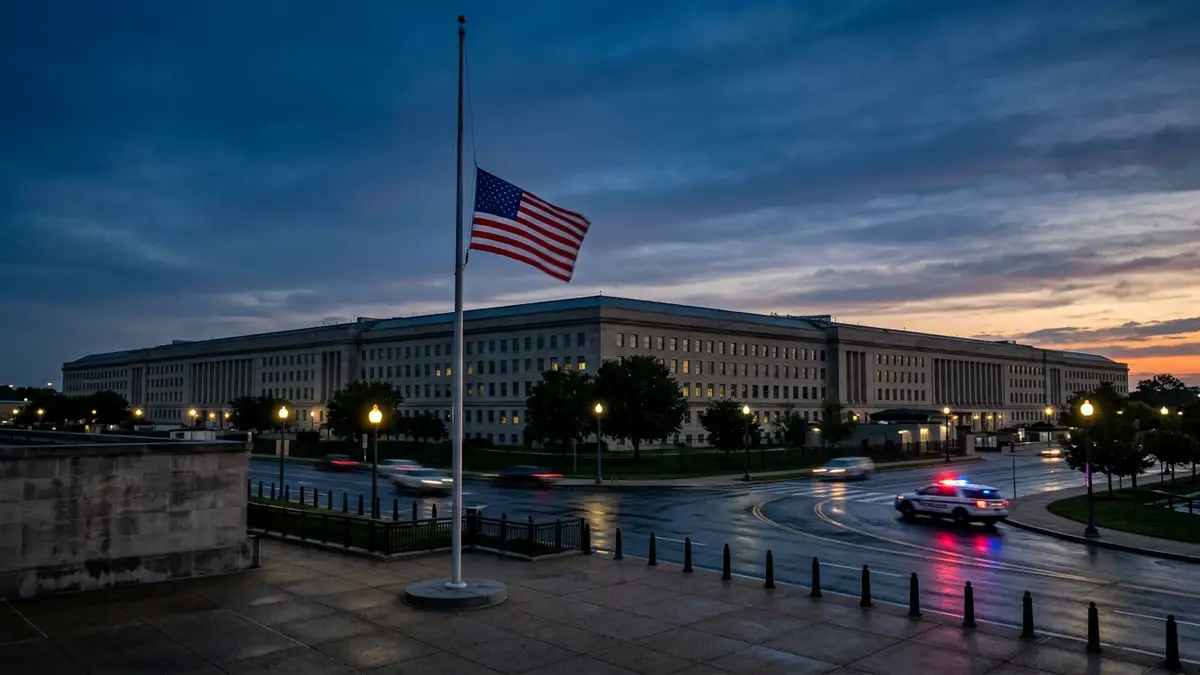
Image: Matt Weston / AI

Sarah Connor
United States military forces have killed the leader of an Iranian unit responsible for a 2024 assassination plot against Donald Trump, marking a significant escalation in the ongoing conflict.
Attorney General Merrick Garland previously identified Farhad Shakeri as the primary asset tasked by the Iranian regime to direct this criminal network. Shakeri managed a sophisticated cell designed to destabilize the American executive branch through targeted violence.
Intelligence gathered during the 2024 campaign confirmed that Tehran specifically targeted Donald Trump during his run for office. The former president survived two separate assassination attempts linked to these Iranian operations before the current military response began.
I got him before he got me
"I got him before he got me," Trump stated following the confirmation of the strike. Despite the evidence presented by the Pentagon, Tehran continues to deny all accusations regarding the targeting of American officials.
The Pentagon disclosed the specific mechanics of the assassination plot during a briefing on 4 March 2026. This revelation coincided with the rapid progression of Operation Epic Fury, a campaign that has fundamentally altered the regional power balance.
General Dan Caine, Chair of the Joint Chiefs of Staff, reported that U.S. forces pulverized more than 2,000 targets across the region. These strikes systematically dismantled the command-and-control centers of the Revolutionary Guard.
Beyond the terrestrial strikes, the maritime offensive shattered the Iranian navy, with upwards of 20 naval vessels destroyed during the engagement. An American submarine sank an Iranian warship on Tuesday night, further depleting the regime's coastal defenses.
Hegseth stated that the Iranian navy now rests at the bottom of the Persian Gulf. This total destruction of the fleet effectively halted the regime's ability to project power or threaten international shipping lanes.
Economic pressure intensified as naval blockades now restrict all movement within the Persian Gulf. The loss of naval assets leaves the Iranian coastline vulnerable to sustained atmospheric dominance by U.S. carrier groups.
The U.S. military established total control of the regional airspace following the dismantling of Iranian air defense networks. Commanders confirmed a transition to deploying massive gravity bombs against remaining ground positions.
Hegseth noted that complete control of the skies was an imminent strategic necessity for the safety of U.S. personnel. The shift in aerial strategy allows for the precision targeting of terrestrial infrastructure belonging to the Revolutionary Guard.
The human cost of the operation includes six American service members who died since the commencement of hostilities. Despite these losses, Hegseth characterized the military campaign as a decisive and devastating victory.
The Revolutionary Guard warned that continued strikes would result in the complete destruction of regional military and economic infrastructure. Iraqi officials echoed this rhetoric, citing American actions as the catalyst for potential regional ruin.
Hegseth maintained that the U.S. military never targets civilian objectives during its sorties. All recent incidents involving non-combatant areas remain under formal investigation by the Department of Defense.
The death of the unit leader marks the highest-profile elimination of an Iranian operative since the start of the current conflict. U.S. officials have not released the specific location of the strike to protect ongoing intelligence methods.
Military analysts pointed to the 2,000 strikes as a massive escalation compared to previous historical skirmishes in the region. The scale of the destruction suggests a permanent shift in the U.S. posture toward Iranian state-sponsored threats.
The Justice Department continues to pursue Shakeri’s associates, who remain subjects of an intensive international pursuit. Federal filings describe the network as a persistent threat to the continuity of the United States government.
Future operations will focus on the remaining terrestrial infrastructure of the Revolutionary Guard to ensure the network cannot reform. Hegseth emphasized that the military will continue to act without mercy against all identified threats to national security.
The 5th Fleet remains on high alert, maintaining the blockade that has choked the regime's primary export routes. This economic strangulation complements the kinetic devastation delivered by the Air Force and Navy over the last 72 hours.
Satellite imagery confirms the total erasure of the Revolutionary Guard's primary logistics hubs near the coast. These concrete results validate the Pentagon's shift toward a policy of total neutralization regarding state-sponsored assassination plots.