Six Dead in Kerzers Bus Fire Following Deliberate Act
Fribourg authorities investigate use of incendiary device and flammable liquid in fatal transit blaze
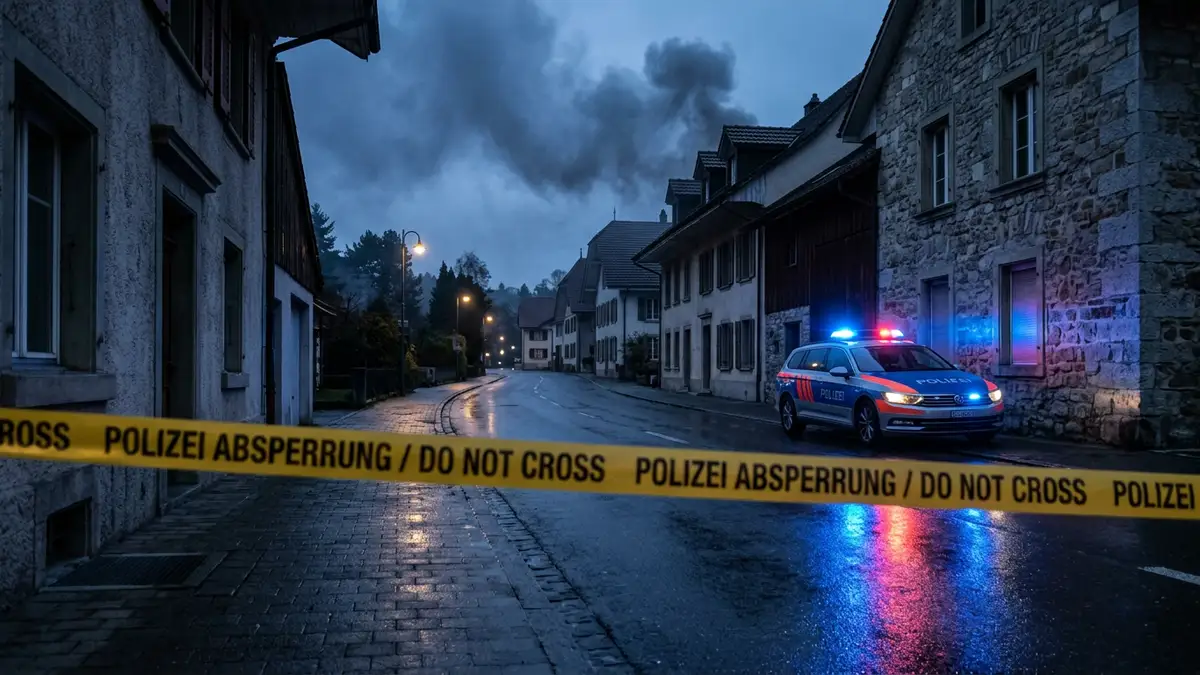
Image: Matt Weston / AI

Callum Smith
Six people are dead after a passenger doused himself in flammable liquid and ignited a blaze that consumed a public bus in Kerzers, Switzerland.
The perpetrator doused themselves in flammable liquid before striking a flame, instantly turning the vehicle into a pressurized firebox. Frédéric Papaux, spokesperson for the Fribourg cantonal police, confirmed witnesses watched the individual act with deliberate intent.
Fribourg Police Representative Christa Bielmann detailed the mechanics of the acceleration, noting the liquid spread across the floorboards before the ignition. The fire consumed the oxygen within the cabin in seconds, trapping occupants behind a wall of heat.
The fire consumed the oxygen within the cabin in seconds, trapping occupants behind a wall of heat.
One witness observed the man emptying a container of petrol across the seating area. An injured survivor corroborated this, describing the specific scent of gasoline moments before the flashover.
The attack occurred at the Kerzers junction, a high-traffic nexus where the Seeland regional lines intersect with local Fribourg transit. This hub handles thousands of commuters daily, funneling traffic between the cantonal borders.
Forensic teams now scrutinize the charred remains of the six victims recovered from the wreckage. Local authorities stated the identification process requires DNA sequencing and dental records due to the thermal intensity of the blaze.
Swiss transit history shows a high safety rating, with mechanical fires occurring in fewer than 0.01% of annual trips. This deliberate act breaks a decades-long period of security stability within the federal transport network.
The incident aligns with a 15% uptick in security breaches involving public infrastructure across Western Europe over the last twenty-four months. Authorities now confront the reality of 'soft target' vulnerability where attackers utilize unregulated accelerants.
Cordon tape now seals the Kerzers station as criminal investigators and technical experts dismantle the bus frame. Detectives are mapping the burn patterns to determine the exact flow of the liquid accelerant through the aisle.
Stakeholders at the Transports Publics Fribourgeois (TPF) face immediate demands to overhaul onboard surveillance and emergency exit hardware. Officials have withheld comment on whether new liquid screening protocols will be implemented at major terminals.
The tragedy forced the immediate suspension of the S52 transit line, disrupting the regional economic corridor. Emergency response costs have surged as the canton deploys specialized trauma units and multi-agency recovery teams to the site.
Cantonal fire departments remain on-site, cooling the structural steel of the station to prevent secondary collapses. Detectives are currently isolating survivors for intensive interviews to reconstruct the perpetrator's final movements.
Investigators are interrogating every individual present on the Kerzers platform during the 14:00 hours arrival window. The bus sat stationary at the curb when the interior transitioned from a passenger cabin to a furnace.
The bus sat stationary at the curb when the interior transitioned from a passenger cabin to a furnace.
The Swiss Federal Office of Transport is evaluating the risk profile of the entire Seeland network following this breach. This event mirrors the 2016 Salez train attack, where flammable liquids were similarly deployed to maximize casualties in confined spaces.
The Fribourg cantonal police continue to process the scene under high-intensity floodlights. They refuse to release the names of the deceased until the forensic lab completes the formal verification for the next of kin.
Technical teams are documenting the melted remains of the onboard electronics to recover any surviving digital footage. This data will dictate the new safety baseline for the Seeland transit network and future vehicle procurement.