Satirical Novel 'The Breakup' Explores Post-Trump America Amidst Health Speculation
Kurt Andersen's latest work envisions a violent 2035, while reports detail former President Trump's health and security concerns during a hypothetical second term.
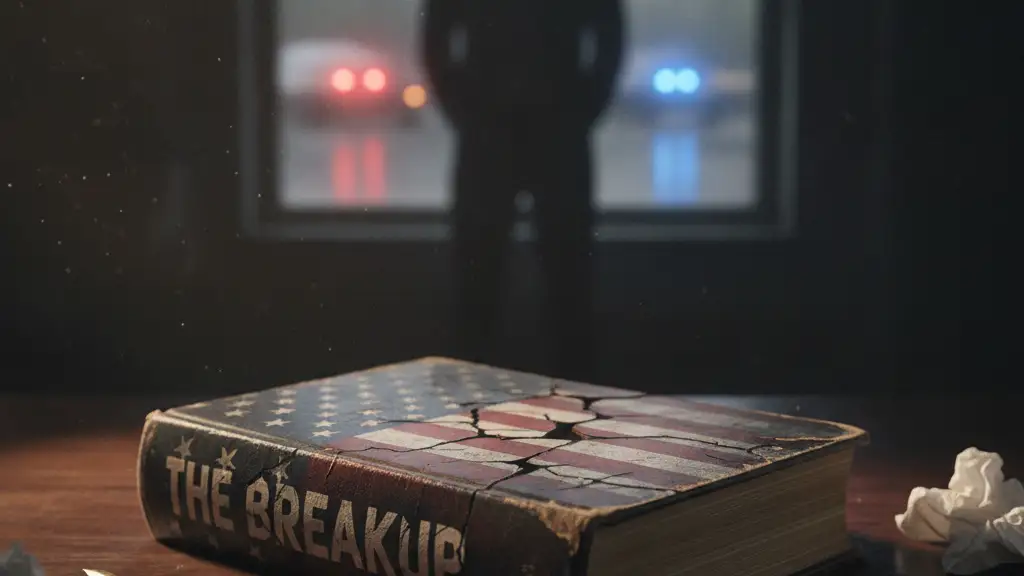
Image: Eddie Pollard / AI

Carla Rooney
Journalist and author Kurt Andersen is releasing a satirical novel, "The Breakup," which depicts a fractured America in 2035 following the death of former President Trump.
Andersen reflected on the writing process, noting, 'This time, the horror show of this term, the nightmare beyond what I expected.' He considered writing a nonfiction book about the future, stating, 'For a while I was thinking, oh, I should maybe, maybe I should write a nonfiction book about what the future could hold.'
The novel's fictional events include a 'spectacular piece of violence, spontaneous violence that then results a year later in an uprising, in a, in a true right-wing uprising, terrorist uprising,' according to Andersen. This scenario unfolds with immediate chaos.
In the novel's backstory, attendees at Trump Tower spread conspiracy theories that Trump's death resulted from a 'deep-state assassination.' Guests gathered at Trump Tower to mark both a birthday and the 20th anniversary of his original campaign declaration, circulating these claims.
This fictional scenario aligns with claims that chaos erupts almost immediately. The narrative became 'much less far-fetched than it seemed when I began' writing the book, Andersen stated.
This time, the horror show of this term, the nightmare beyond what I expected.
Meanwhile, 'Regime Change,' a book by Maggie Haberman and Jonathan Swan, details aspects of a potential second Trump presidency. Haberman and Swan report Donald Trump expressed a desire to be 'done with rallies, done with campaigning' after the 2024 election.
During his first year back in power, Trump was reportedly 'almost entirely housebound,' according to Haberman and Swan. Staff observed Trump nodding off during meetings and exhibiting signs of slight hearing impairment.
Trump reportedly requested reporters to repeat questions and cupped his hand behind his ear. His physical condition remained a persistent topic of conversation throughout his second term.
Haberman and Swan also claim Trump had grown increasingly security-conscious after two assassination attempts. The repeated bruising observed on Trump was first attributed to extensive handshaking before aspirin treatment was cited as the cause.
Haberman and Swan noted Trump spent four years mocking Biden's age and diminished stamina. They stated, 'But the fact that Trump had followed Biden by becoming the oldest man ever sworn into the office of the President did not mean he felt compelled to provide frequent health updates of his own.'
They concluded, 'That he had aged since he last lived in the White House was obvious.' This observation became a point of public discussion.
The historical lens reveals a pattern of political figures facing scrutiny over their physical and mental fitness, a concern amplified in the modern media landscape. Public perception often dictates political viability, regardless of actual capability.
Stakeholders, including political opponents and the public, exert immense pressure for transparency on a leader's health. Economic markets also react to perceived instability, linking a leader's condition directly to financial confidence.
The landscape of political discourse has shifted dramatically, with social media platforms accelerating the spread of both verified information and conspiracy theories. This environment fuels the rapid dissemination of narratives like the 'deep-state assassination' theory depicted in Andersen's novel.
Future political landscapes will likely contend with an aging leadership demographic and the intensified scrutiny that accompanies it. The interplay between a leader's personal health and national stability will remain a critical, evolving challenge.
The novel's premise, while fictional, taps into a palpable public anxiety about political succession and the potential for civil unrest. It projects a future where political divisions deepen, culminating in violent outbreaks.
This narrative reflects the fragility of democratic institutions when confronted with extreme ideological polarization. The events of 2035, as imagined, reflect a culmination of current societal tensions.
The author's decision to 'darken' the plot during Trump's second term indicates a direct response to observed political realities. This artistic choice highlights the perceived escalation of political volatility.
The convergence of a leader's health, public perception, and the rapid spread of information creates a volatile mix. This dynamic shapes both fictional narratives and the real-world political climate.
Ultimately, the novel's vision of a post-Trump America, marked by spontaneous violence and a right-wing uprising, forces a confrontation with the potential consequences of unchecked political division. It presents a future shaped by the echoes of present-day anxieties.