Rembrandt Masterpiece Rediscovered After Sixty-Year Absence
Authentication of Vision of Zacharias in the Temple Follows Two-Year Rijksmuseum Investigation
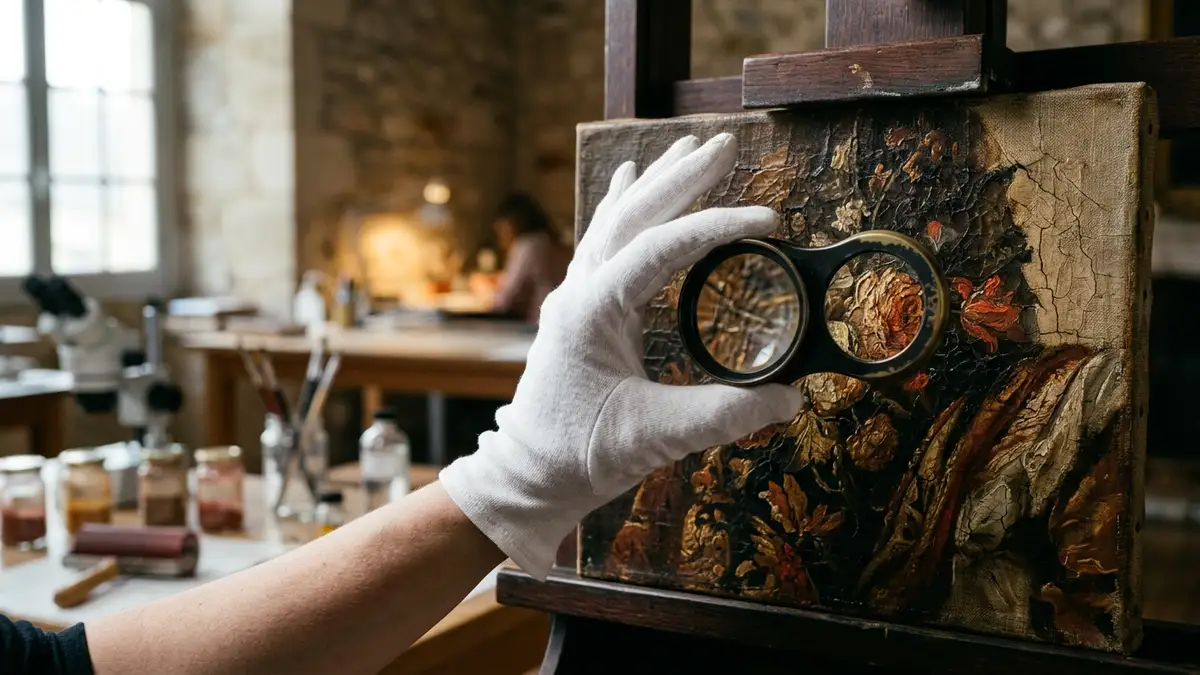
Image: Matt Weston / AI

Carla Rooney
The Rijksmuseum has officially authenticated the painting "Vision of Zacharias in the Temple" as a genuine work by Rembrandt van Rijn, ending a sixty-year exile from the artist's accepted canon.
The painting vanished from the public record immediately after its sale in 1961. This disappearance followed a 1960 decision by scholars to strip the work of its attribution and strike it from the official catalogue.
For six decades, the canvas remained in private hands. Its true identity lay buried under the weight of that 1960 de-attribution.
The current owner initially approached the museum with a limited inquiry. He asked only to confirm if the work originated from a Dutch hand.
This cautious approach focused on geographic origin rather than specific authorship. The museum's statement confirmed the owner's initial hesitation regarding the painting's status as a potential masterwork.
The painting possesses all the hallmarks of Rembrandt at the peak of his early career.
Taco Dibbits, Director of the Rijksmuseum, stated the painting possesses all the hallmarks of Rembrandt at the peak of his early career. He identified the brushwork as characteristic of the artist's most prolific early years.
Beyond the aesthetic triumph, the authentication process fundamentally altered the work's market status. Its valuation climbed from a few thousand pounds to a figure reaching into the millions.
Researchers spent twenty-four months analyzing the canvas and paint layers. They compared the technical execution against known works from the artist's Leiden and early Amsterdam periods.
The physical condition of the work allowed for detailed microscopic analysis. These tests provided the specific evidence required to reverse the 1960 scholarly consensus that had dismissed the piece.
Historical records from 1960 capture the exact moment scholars removed the painting from the accepted list of Rembrandt works. The subsequent 1961 auction marked its final public appearance before it entered a sixty-year period of obscurity.
The re-emergence of the work ends decades of speculation regarding its location and survival. It now officially rejoins the canon of seventeenth-century Dutch masterworks held in high esteem by the global art community.
Security protocols are now in place for the Wednesday opening to manage the anticipated crowds. The museum expects high attendance for the first public display of the canvas since the early 1960s.
The technical mastery present in the composition serves as a primary pillar of the new authentication. Dibbits noted the specific handling of light and shadow that defines the artist's signature style during this era.
This discovery impacts the broader landscape of art history by validating the importance of forensic technology in re-evaluating historical dismissals. It highlights a shift in how major institutions verify the provenance of long-lost works.
The Rijksmuseum investigation utilized advanced imaging to peer beneath the surface of the paint. These layers revealed the preparatory marks and adjustments consistent with Rembrandt's known working methods.
Stakeholders in the art market and academic circles have monitored the two-year study with intense interest. The successful authentication restores a missing link in the narrative of the artist's development in the Netherlands.
The 1961 sale price now stands as a historical anomaly compared to the current multi-million pound valuation. This financial leap reflects the gravity of the museum's formal endorsement.
As the doors open this Wednesday, the 'Vision of Zacharias in the Temple' stands as a testament to the enduring nature of Dutch Golden Age portraiture. The canvas remains a rare example of a work returning from total public absence to the center of the art world.