Prince William Joins St Piran’s Day Celebrations in Cornwall
The Prince of Wales visits Gear Farm Pasty Co and Helston Community Fire Station to support local industry and emergency responders.
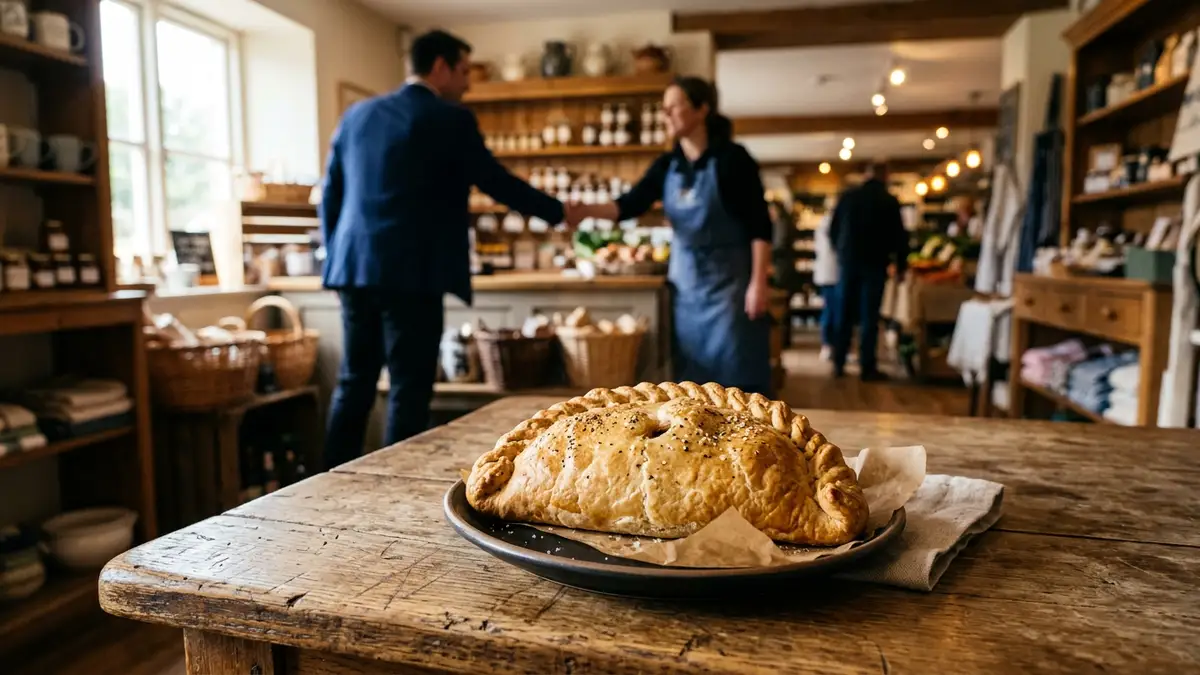
Image: Matt Weston / AI

Callum Smith
Prince William arrived in Cornwall to mark St Piran’s Day through a series of high-profile engagements at local businesses and emergency service hubs.
At Gear Farm Pasty Co, Prince William gripped the raw dough to hand-crimp a traditional Cornish pasty. This specific action connected the heir to a culinary lineage that first took root in the 17th century.
During that era, these thick-crusted pastries functioned as portable fuel for tin miners descending into the dark beneath the Cornish soil. Today, the industry has evolved into a financial juggernaut that injects approximately £300 million annually into the local economy.
More than 2,000 jobs depend on this sector, providing a vital economic anchor for rural villages throughout the county. William further tested the shop’s daily rhythm by answering the telephone to record a customer’s order for the local specialty.
Josie Trounson observed that the caller on the other end of the line struggled to remain coherent during the unexpected exchange with the future King. Despite the momentary confusion, the interaction bridged the gap between the Duchy of Cornwall and the mechanics of local commerce.
The Duchy of Cornwall itself commands a formidable private estate, established in 1337 to provide the Prince of Wales with an annual income of roughly £23 million. This sprawling portfolio encompasses more than 128,000 acres of land across 20 different counties.
Beyond the bakery’s counters, William transitioned to Helston Community Fire Station to meet with the region's first responders. This facility operates as a primary node for the Cornwall Fire and Rescue Service, which oversees emergency safety across 1,300 square miles.
Firefighters stood before the Prince to detail the specific logistical hurdles triggered when Storm Goretti tore through the coastal infrastructure. The storm’s passage left a trail of debris and flooding that pushed the county’s emergency resources to their operational limits.
Cornwall Chief Fire Officer Ms. Billing shared a personal history that intertwined the two stops on the royal tour. She informed William that her career began in the food industry, where she successfully crimped in excess of 10,000 pasties.
I successfully crimped in excess of 10,000 pasties.
Ms. Billing confirmed her intention to recount the details of this high-level meeting for years to come. Her professional trajectory from the bakery to the fire service reflects the versatile nature of the modern Cornish workforce.
Meanwhile, political stakeholders in Cornwall continue to press for increased infrastructure funding to counter the rising tide of extreme weather. These advocates argue that the frequency of events like Goretti necessitates a permanent, robust investment in coastal defences.
Local officials seized the moment of the royal visit to demonstrate the critical need for specialized rescue equipment in isolated rural pockets. These communities frequently face total isolation when flooding or fallen debris severs primary transport links.
The Prince’s visit concluded with a technical demonstration of the station’s latest rescue vehicles and flood-response hardware. These tools remain essential for a service that must navigate vast and often inaccessible terrain during peak crisis windows.
This engagement served as a physical manifestation of the Crown’s administrative and economic ties to the southwestern territory. By visiting both the £300 million pasty trade and the fire service, William touched the two pillars of regional stability: heritage and safety.
As the Duchy manages its 128,000-acre landholding, the focus remains fixed on how these traditional landscapes survive modern environmental pressures. The display of flood-response gear offered a concrete look at the evolving reality of regional disaster management.
The Prince examined the heavy-duty hydraulics and high-volume pumps required to clear the arterial roads of the peninsula. These machines represent the thin line between community connectivity and total regional paralysis during the winter surge.
Economic analysts point to the £23 million annual Duchy revenue as a primary engine for local land management and conservation efforts. This capital flow sustains the very environment that the Cornwall Fire and Rescue Service now fights to protect from escalating storm cycles.
The visit concluded as the Prince departed the Helston facility, leaving behind a workforce still grappling with the logistical scars of the recent gale. The intersection of 14th-century land ownership and 21st-century emergency response defines the current state of the Cornish realm.