Missile Strikes Kill Ayatollah Ali Khamenei in Tehran
Western coalition forces decapitate Iranian leadership in a massive aerial operation targeting military infrastructure and the supreme leader's residence.
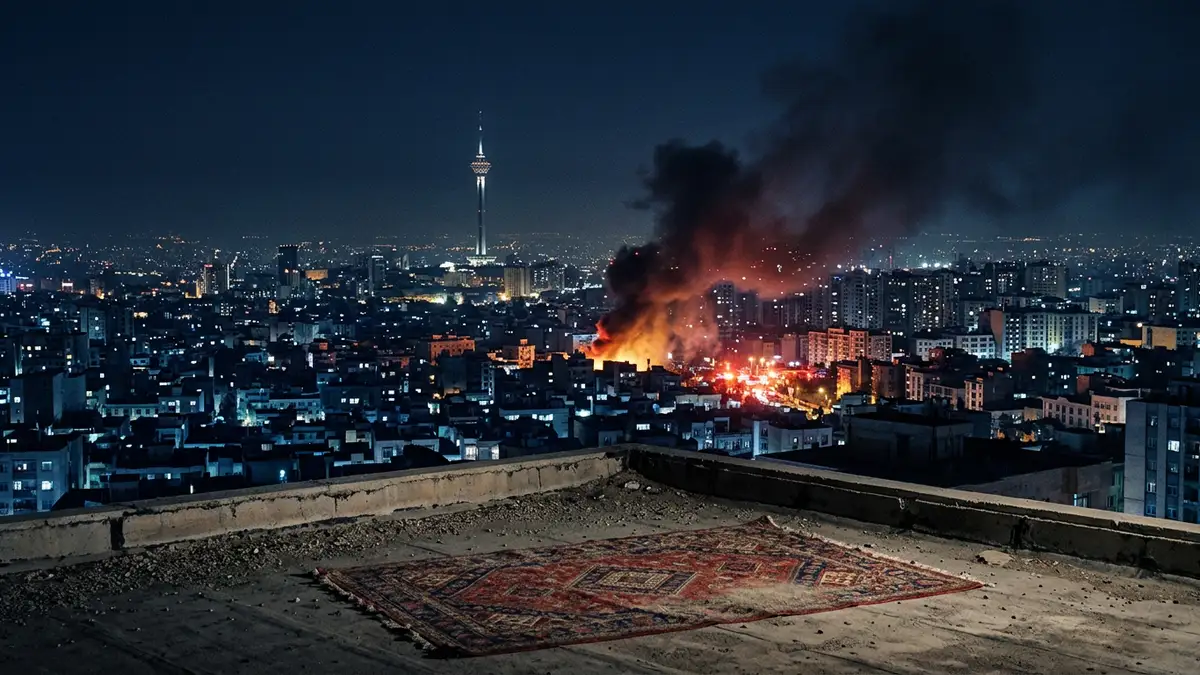
Image: Matt Weston / AI

Callum Smith
A coordinated missile strike by United States and Israeli forces killed Ayatollah Ali Khamenei in Tehran on February 28, marking the most direct assault on the Iranian power structure since its inception.
Military units now patrol the capital's intersections with heavy weaponry. International observers track the rapid movement of Iranian naval assets across the Persian Gulf.
The Strait of Hormuz remains a critical flashpoint for global shipping. The threat to energy corridors intensifies by the hour.
Economic markets reacted with immediate volatility. Crude oil futures surged within minutes of the confirmed strikes.
This economic instability follows the physical destruction of the regime's most protected assets. Trade routes across the region show immediate disruption.
Every leader appointed by the Iranian terror regime will be a target for elimination.
Israeli Defence Minister Israel Katz addressed the future of the Iranian leadership with absolute finality. He declared that every leader appointed by the Iranian terror regime will be a target for elimination.
Katz stated that this policy of elimination extends to every level of the regime's hierarchy. This stance establishes new engagement rules between the Western coalition and the Islamic Republic.
In Manchester city centre, a candlelit vigil to commemorate the late leader transformed into a flashpoint for physical confrontation. Pro-regime and anti-regime protesters clashed in the streets, forcing police intervention to separate the factions.
Kayam Hussain, a witness at the scene, stated that the killing of Khamenei is one of the biggest mistakes that people have made. He noted that the event will not go down well in the world.
Hussain described the current situation in Iran and the Middle East as chaotic. He asserted that the conflict is going to bring damage to the entire world.
The whole world is gonna get affected from this and we're getting close to something catastrophic.
"The whole world is gonna get affected from this and we're getting close to something catastrophic," Hussain said. He warned of the global implications following the strike.
The Iranian Head of the Judiciary issued a stern warning to the domestic population following the assassination. He stated that those who cooperate with the enemy in any way will be considered an enemy.
The Assembly of Experts is currently holding internal deliberations to manage the crisis. The Iranian government has not yet named a formal successor to the Ayatollah.
Exiled figure Reza Pahlavi claimed he would be uniquely placed to lead a transitional government. He has long positioned himself as the primary alternative to the clerical regime.
Diplomatic channels between the United States and its allies remain active as they monitor the potential for retaliatory strikes. Officials are specifically watching for movement from Iranian-backed proxies in the region.
The 1979 revolution replaced a monarchy with the current theocracy. That structure remained largely unchanged for over forty years.
This operation has physically dismantled the apex of that hierarchy in a single afternoon. The Western coalition continues to maintain a high state of readiness across the region.
Every military asset in the theatre is currently focused on the fallout of this unprecedented escalation. The geopolitical landscape has shifted permanently.
Naval destroyers have taken positions near the Bab el-Mandeb strait to secure commercial transit. Intelligence units report increased chatter among Hezbollah and Houthi commanders.
The physical infrastructure of the Revolutionary Guard's command center lies in ruins. Smoke continues to rise over the northern districts of Tehran as the sun sets.