Mexican Military Kills CJNG Leader El Mencho in Intelligence-Led Strike
Cartel Retaliation Across Eight States Leaves US Tourists Stranded and Raises 2026 World Cup Security Alarms
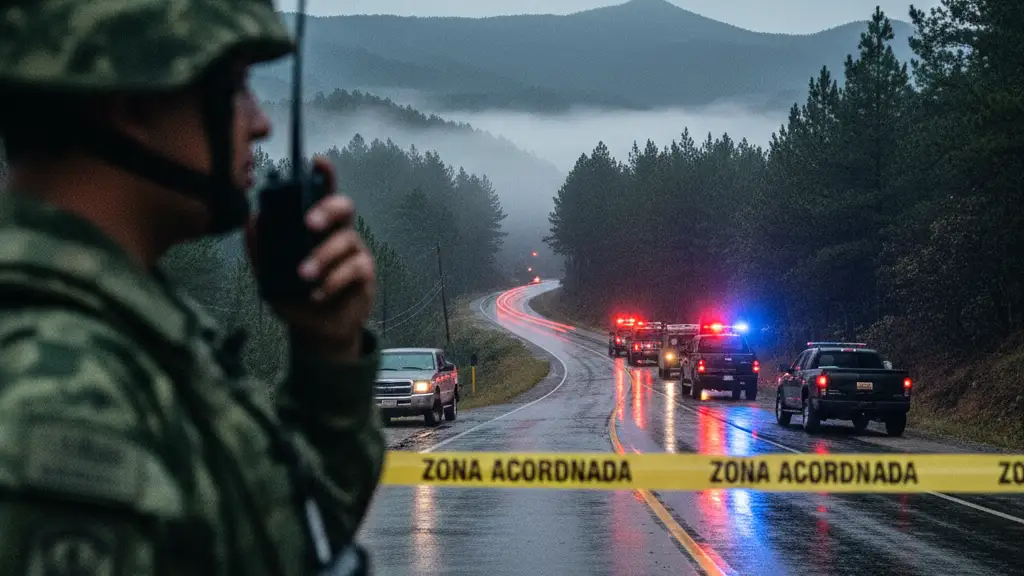
Image: Matt Weston / AI

Sarah Connor
Mexican military forces killed Nemesio Ruben Oseguera Cervantes, the Jalisco New Generation Cartel leader known as El Mencho, during a targeted operation in the municipality of Tapalpa.
Cartel operatives seized transit hubs with coordinated roadblocks and incinerated vehicles, deploying the organization’s signature tactical response to high-level leadership losses. Gunmen stormed the Guadalajara International Airport, forcing hundreds of passengers to scramble across the tarmac as small-arms fire echoed through the terminal.
The violence paralyzed the tourism hub of Puerto Vallarta, where authorities grounded all flights and severed major arterial roads. Katy Holloman, a traveler caught in the lockdown, confirmed that the cartel has shuttered the roads and halted all departures to the United States.
The CJNG has effectively seized control of the streets in Puerto Vallarta.
James Stephens, a visitor from San Diego, reported that the CJNG has effectively seized control of the streets in Puerto Vallarta. Tourist Dan Smith recounted his evacuation from a crumbling building after cartel members detonated propane tanks in the street.
The British Foreign Office issued an emergency directive to holidaymakers, stating that organized crime groups have blocked all primary routes to regional airports. Ground reports indicate hotel guests are currently rationing granola bars and water while hunkering down in fortified lobbies.
The logistical collapse forced thirty inbound flights from the U.S., Mexico, and Canada to reverse course or divert to alternative hubs. This disruption strikes at the heart of a region long dominated by the CJNG’s multi-billion dollar trafficking of fentanyl, cocaine, and methamphetamine.
This operation mirrors the 2016 capture of Joaquin 'El Chapo' Guzman in Los Mochis, which followed a lethal protracted shootout with Mexican Marines. The U.S. State Department previously placed a $15 million bounty on Oseguera Cervantes, marking him as a primary target for bilateral security forces.
U.S. Ambassador Ron Johnson stated that cooperation between the two nations reached unprecedented levels during the execution of the strike. Security analyst David Saucedo warned that the violence observed on Sunday will persist if Oseguera Cervantes’ relatives move to consolidate power.
Observers now monitor for signs of indiscriminate violence against the civilian population as the cartel seeks to exert leverage over the federal government. These security failures cast a shadow over the 2026 World Cup, specifically the high-profile matches scheduled for Guadalajara.
Political strategist Joey Mannarino argued that the tournament cannot proceed in Mexico, asserting that no visitor is safe in a country under cartel influence. In response, the Mexican government deployed 2,500 soldiers to the western region to clear transit routes and engage cartel cells.
The country is at peace and that national activities are proceeding with normalcy.
Military units cleared the primary roadblocks by Monday morning, yet dozens of banks and local businesses remain charred shells following the riots. President Claudia Sheinbaum maintained that the country is at peace and that national activities are proceeding with normalcy.
She emphasized absolute coordination between federal and state authorities despite the visible destruction across the state of Jalisco. The Mexican Defense Ministry confirmed that 25 National Guard members died during the initial operation and the subsequent urban warfare.
Omar Harfuch, Secretary of Security and Citizen Protection, confirmed that 30 alleged criminals also died in the fighting. The CJNG issued a digital communique vowing to continue the carnage until the individuals responsible for their leader’s death are surrendered.
Analysts suggest the elimination of El Mencho provides the Mexican government with significant leverage in upcoming negotiations with the U.S. Trump administration. Christopher Landau, deputy secretary of state, characterized the operation as a major development for the security of the Western Hemisphere.
Despite official claims of restored order, the UK Foreign Office continues to report active security incidents and gunfire across Jalisco. Thousands of international tourists remain stranded in Puerto Vallarta as airlines struggle to reset their canceled flight schedules.
Mexican military patrols now occupy the central plazas of Guadalajara to prevent further incursions by cartel hitmen. The situation remains fluid as the state attempts to reassert its monopoly on force over the cartel’s traditional strongholds.
The economic toll of the weekend's violence is still being calculated as insurance adjusters begin surveying the wreckage of burned-out commercial districts. Military checkpoints remain at five-mile intervals along the highway connecting Guadalajara to the coast.