London Prepares for Rarest Solar Eclipse in a Quarter-Century
City readies for 90% sun blockage, with viewing glasses sold out and clear skies anticipated.

Callum Smith
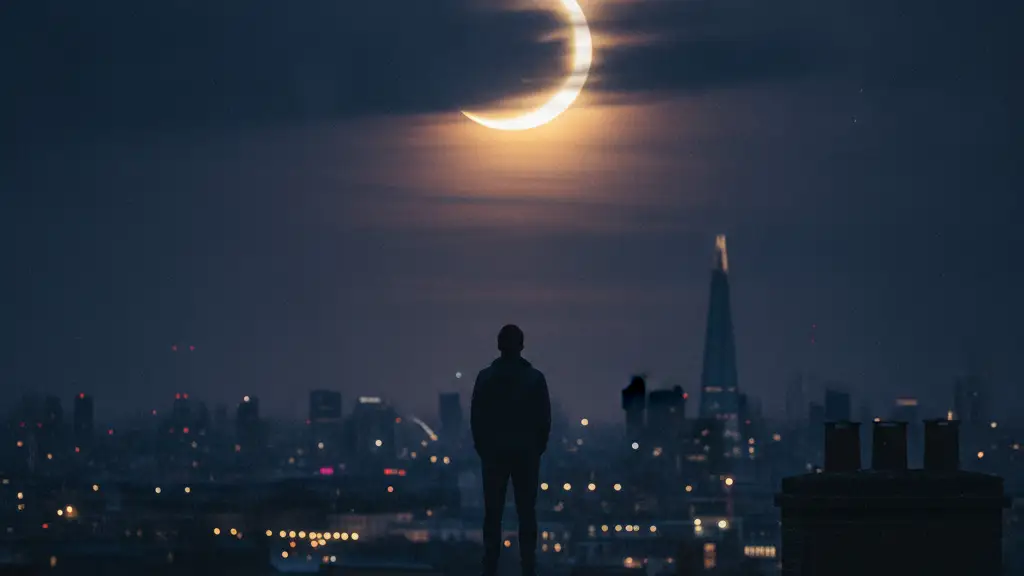
London is set to experience its most complete solar eclipse in over 25 years today.
The moon will pass between the Earth and the sun, blocking approximately 90% of the sun's light.
Looking directly at the sun during this partial solar eclipse without proper eye protection remains unsafe; Britons face warnings that even brief exposure can cause permanent vision damage.
Mohamed Elalfy stated that looking directly at the sun during a solar eclipse can damage the retina, potentially harming the cells responsible for sharp central vision.
Crucially, the retina has no pain receptors, so people will not feel the damage as it happens.
Crucially, the retina has no pain receptors, so people will not feel the damage as it happens, Elalfy confirmed.
The UK Health Security Agency warned that during an eclipse, the sun appears dimmer, making it easier to look at directly.
Symptoms may only become apparent several hours later and can include blurred vision, a central blind or dark spot, distorted vision, reduced colour perception, and increased sensitivity to light, according to Elalfy.
While some people recover over weeks or months, others can be left with permanent visual impairment, Elalfy added.
Experts from the Royal College of Ophthalmologists confirm that standard sunglasses, cameras, and binoculars do not offer adequate protection.
Kyla Black stated it is a common myth that wearing multiple pairs of sunglasses can protect from harmful UV light, confirming this is untrue and should be avoided as only purpose-built eclipse glasses allow safe viewing.
Kyla Black indicated that It is a common myth that wearing multiple pairs of sunglasses can protect from harmful UV light, confirming this is untrue and should be avoided as only purpose-built eclipse glasses allow safe viewing.
Certified solar eclipse glasses have largely sold out ahead of the event, with convenience stores, national parks, and the Royal Greenwich Observatory reportedly exhausting their supplies.
Consumers have been warned against using “knock-off” glasses to watch the event, as eclipse glasses are understood to have sold out across the city.
The safest way to enjoy the eclipse is to observe it indirectly, such as by watching a live broadcast, Mohamed Elalfy advised.
Britons can make a simple pinhole projector using a piece of card or paper for safe viewing; gaps between leaves can also act as natural pinhole projectors.
Nasa has urged Britons not to film the phenomenon on their phones, warning that the sensors in a phone camera could be damaged without a special solar filter.
Potential effects during the eclipse's peak include a sudden drop in temperature and noticeable changes in wind conditions.
The forecast looks extremely promising, with the expectation of clear skies and temperatures in the high twenties, as people rush to find the best place to see the eclipse.
Across London, Greenwich Park, Telegraph Hill, Primrose Hill, Parliament Hill, and Crystal Palace are suggested viewing locations for the phenomenon.
Hours after the eclipse, the Perseid meteor shower is expected to reach its peak on the night of August 12-13.