Former Newham Mayor Sir Robin Wales and Clive Furness Defect to Reform UK
Veteran Labour figures exit the party citing the balkanization of Britain and a failure to represent working-class communities
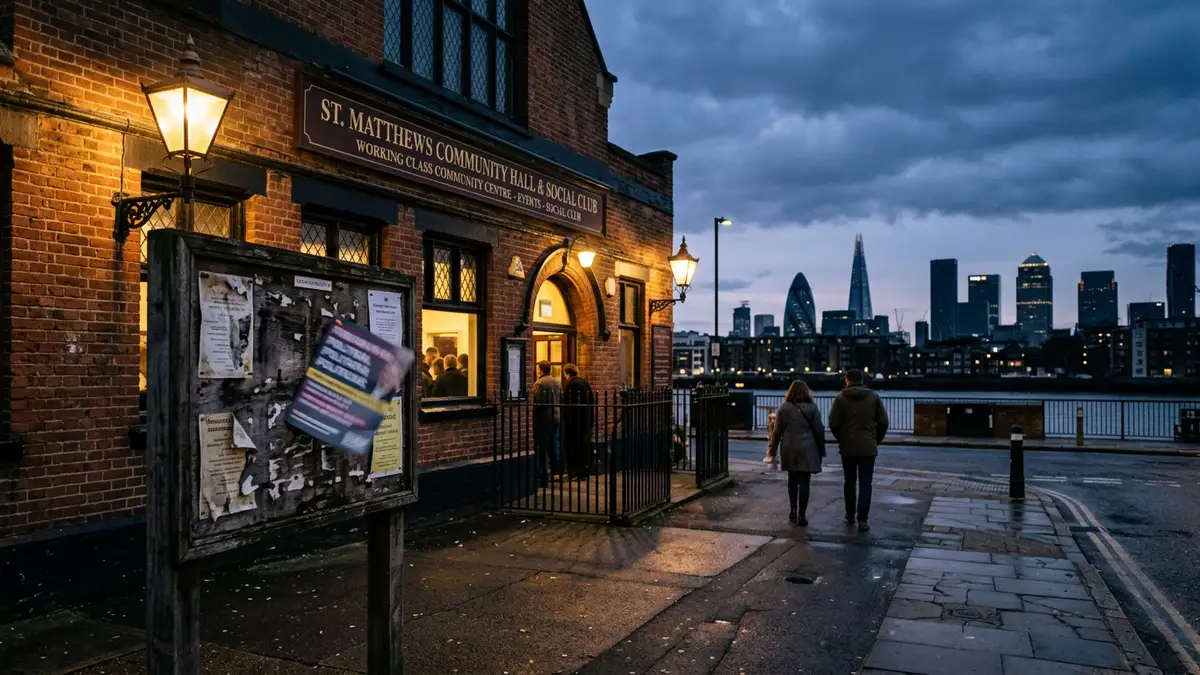
Image: Matt Weston / AI

Sarah Connor
Sir Robin Wales and Clive Furness have joined Reform UK, marking a seismic shift in the political alignment of two long-standing London Labour figures.
Sir Robin Wales steered Newham’s trajectory from 2002 until 2018. His departure with Clive Furness marks a physical and ideological rupture in the traditional Labour power base across East London.
Nigel Farage confirmed active negotiations with several other former senior Labour officials. This strategy targets veteran organisers to bolster the Reform UK ground game against the left-wing establishment.
Wales acknowledged Reform UK possesses 'a lot of rough edges' but described the party as a singular opportunity to transform British society. He framed the move as a necessary intervention against systemic failures in urban governance.
It’s sad to see that even Newham has gone completely backwards under a Labour mayor and a council that is out of touch.
Wales asserted that under London Mayor Sadiq Khan, the capital has endured soaring crime rates and failing public services. He described a city disconnected from its industrial roots, claiming the party now prioritises a wealthy elite over the working class.
Clive Furness cited the 'balkanisation of Britain' as the primary catalyst for his exit. He described a landscape where voters align along religious and racial lines rather than shared economic interests.
Furness argued that Labour abandoned its core founding principles. He stated the party no longer speaks for the specific working-class communities that formed its historical backbone.
During their tenure, these former Newham officials oversaw the borough's transition out of chronic deprivation. Furness insists this upward trend has reversed under current local and regional leadership.
'It’s sad to see that even Newham has gone completely backwards under a Labour mayor and a council that is out of touch,' Furness stated. He pointed to declining local living standards as evidence of this administrative decay.
Wales challenged critics to provide concrete evidence of prejudice within his new political organisation. He stood firm against the narrative that Reform UK harbours discriminatory or exclusionary views.
If I thought Reform was racist, or if Clive thought it was racist, we wouldn’t be in this room.
'If I thought Reform was racist, or if Clive thought it was racist, we wouldn’t be in this room,' Wales told the gathered press. He maintained the party is not bigoted and dared opponents to prove otherwise with facts.
A London Labour spokesperson dismissed the announcement, suggesting that if these two figures are the prize, Reform UK is 'scraping the barrel.' The party leadership moved to minimize the influence of the departing veterans.
The spokesperson accused Nigel Farage and his allies of attacking the success of a multicultural city. They framed the defections as a direct assault on the social fabric of the capital.
Labour officials countered by highlighting a policy platform that includes removing the two-child cap to support 240,000 children. They emphasised this commitment to social welfare as their primary response to Wales.
The party pointed to efforts to cut energy bills for 3.7 million households and the expansion of free school breakfast clubs. These measures target the lowest-income voters currently facing the Reform UK challenge.
Protections for 2.7 million renters remain a central pillar of the Labour platform. This focus on housing security targets the vital demographic of the high-cost London rental market.
GB News hosts Andrew and Miriam expressed visible surprise during the live announcement. The visual of two Labour stalwarts standing inside Reform UK headquarters marked a sharp departure from standard political expectations.
This shift reflects growing tension between the old guard of municipal Labour politics and the modern metropolitan leadership. Wales and Furness represent a generation that prioritised localism and class-based solidarity.
Future implications for the London Assembly remain uncertain as Reform UK builds a ground game in former Labour heartlands. The defection of experienced campaigners provides Nigel Farage with critical institutional knowledge.
Observers are watching to see if other veteran councillors follow this high-profile lead. The departure of Sir Robin Wales removes one of the last significant links to the New Labour era from the current party structure.