Green Party Surpasses Labour in National Poll Following By-Election Victory
Reform UK Climbs to 23 Percent as Conservative Support Drops to 16 Percent in Latest YouGov Data
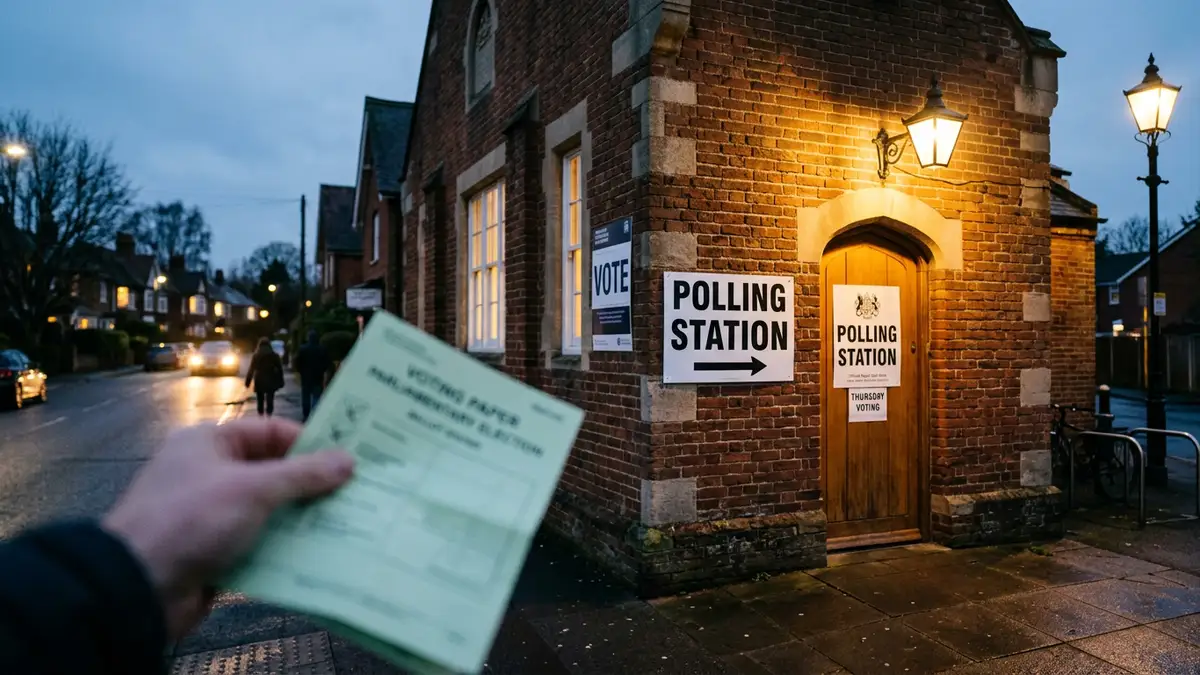
Image: Matt Weston / AI

Carla Rooney
The Green Party has overtaken Labour in the latest national polling, marking a seismic shift in British voter alignment following a decisive by-election victory.
Hannah Spencer, the Green Party’s newest Member of Parliament, walked into the Palace of Westminster to be sworn in following the declaration. Her arrival in the House of Commons marks a physical change in the electoral landscape.
Fresh data from YouGov places Reform UK at 23% of the national vote. Simultaneously, the Conservative Party has plummeted to 16%, marking one of the lowest totals for the party in modern political history.
Sends a message of hope
Zack Polanski stated the Green Party’s win 'sends a message of hope' to the country. He positioned the victory as a direct rejection of the current political status quo.
Sir Keir Starmer countered by claiming that politics is changing decisively and asserted that Labour is delivering 'progressive' policies. He described his platform as 'progressive change' with 'moral purpose.'
Beyond this rhetoric, Starmer claimed that a 'mainstream majority' of voters do not want Nigel Farage or Zack Polanski to be prime minister. He continues to defend his strategy despite mounting internal and external pressure.
Criticism emerged from within his own ranks as Sir Sadiq Khan described the current Labour strategy as 'flawed.' Khan claimed the approach is 'taking liberal, progressive voters for granted.'
The current Labour strategy is flawed. The approach is taking liberal, progressive voters for granted.
The Mayor of London called for the Government to be 'bolder' with policies regarding the high cost of living, poverty, and crime. He also cited the housing crisis and global warming as urgent priorities for the electorate.
This rise of the Green Party tracks a broader shift in voter alignment away from the two traditional major parties. Polling indicates a clear fragmentation of the previous Labour coalition.
Nigel Farage claimed Reform UK’s candidate would have won the by-election if only British citizens had voted. He has now set a goal for his party to win councils in upcoming cycles.
Reform UK’s 23% share indicates a consolidation of right-leaning voters. Farage continues to target local government structures to build a national base for future general elections.
Labour is expected to suffer heavy losses in the local elections scheduled for May. These projections follow the loss of the Gorton and Denton seat to the Greens.
Economic pressure and the housing crisis remain central drivers of voter dissatisfaction. Candidates are now focusing on these specific metrics ahead of the May contests.
The upcoming local elections will test the validity of these polling numbers across the country. Parties are currently recalibrating their strategies to address the rise of third-party challengers.
Historically, the British two-party system has relied on a consolidated block of voters that is now fracturing. The rise of the Greens and Reform UK suggests a move toward a more multi-polar political environment.
Stakeholders in the housing and environmental sectors are watching these shifts closely as policy priorities begin to pivot. The pressure on the traditional major parties to respond to these specific grievances is mounting.
The Conservative drop to 16% places the party behind both Reform UK and the Green Party in this data set. This realignment suggests a fundamental shift in the right-wing and centrist voting blocks.
Voters are increasingly prioritising immediate economic concerns over traditional party loyalty. This trend is visible in the movement of support toward parties offering alternative solutions to the cost-of-living crisis.
The Gorton and Denton result has transformed from a local upset into a national trend-setter. It has forced a re-evaluation of the electoral map ahead of the next major national test.
As the May local elections approach, the focus remains on whether the Green Party can sustain this momentum. The current data suggests the traditional dominance of Labour and the Conservatives is under its most significant threat in decades.