Eclipse Fever Grips Dublin as Hundreds Queue for Viewing Glasses
Rare celestial event sparks widespread public interest and logistical challenges for safe viewing across Ireland.
Carla Rooney
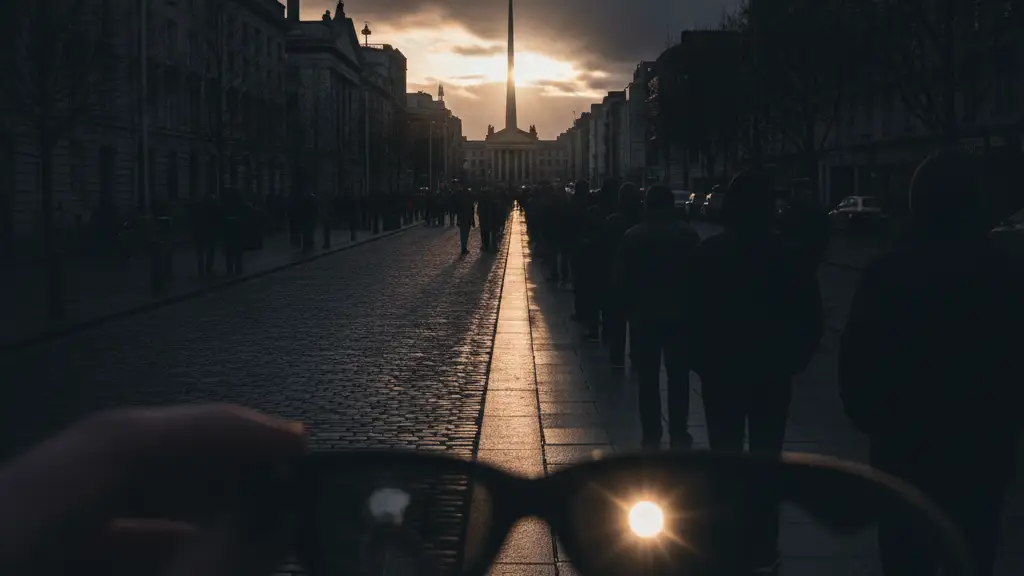
Hundreds of people queued in Dublin city centre today for glasses to view a partial solar eclipse.
Kim Olin, among those waiting, declared, "The next one won’t be until 2090 and I won’t be alive by then so this is my last chance."
The Moon was expected to pass between the Earth and the sun, obscuring approximately 94-95% of the sun in a partial solar eclipse.
The next one won’t be until 2090 and I won’t be alive by then so this is my last chance.
Professor Michael Burton explained the Moon's angular size, nearly matching the sun's, would just about block it all out, creating the eclipse.
Professor Burton further clarified this would not be a total eclipse; darkness would not fully descend, but 94 to 95% of the sun would be blocked.
The last eclipse visible in Ireland occurred in 1999.
Bobby McQuillan affirmed the wait would prove worthwhile, calling it a once-in-a-lifetime event and noting Dublin's forecast promised a good view.
The west and south of Ireland were expected to experience 98% coverage of the sun, while 94% coverage was anticipated in the east and north.
Armagh Observatory, Dunsink Observatory, and Blackrock Castle organized viewing events to accommodate public interest.
The planetarium in Armagh was reportedly packed out in anticipation of the eclipse; Queens University saw approximately 1500 people register interest to watch the partial solar eclipse.
Special solar eclipse glasses, ISO 12312-2 certified, are recommended for safe viewing.
Pointing an unfiltered smartphone or digital camera directly at the sun can reportedly damage the camera sensor.
Following the 1999 eclipse, a Royal College of Ophthalmologists report claimed around 40% of those who looked at it had done so for less than a minute.
Convenience stores, national parks, and the Royal Greenwich Observatory all reportedly exhausted their supplies of glasses ahead of the eclipse.
The National Energy System Operator (Neso) cancelled its call for the industry to generate more power during the eclipse.
Drivers may need to turn on their headlights during the eclipse, which coincides with the annual Perseid meteor shower reaching its peak on the night of August 12-13.
Related Keywords
Ireland