Denim Trends: M&S Dress Divides Opinion as Jackets Gain Traction
Consumer feedback on new denim lines reveals a split in preferences, with some items quickly becoming popular.
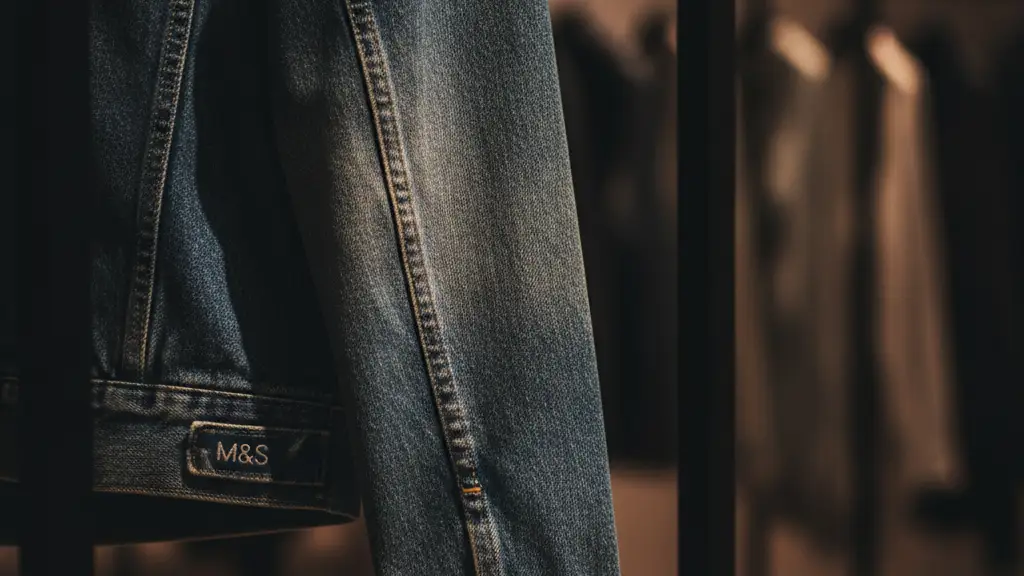
Image: Eddie Pollard / AI

Callum Smith
Marks & Spencer's new Denim Maxi Drop Waist Dress, priced at £45, is eliciting varied reactions from shoppers, contrasting with the reported fast sales of denim jackets.
Marks & Spencer currently offers its Denim Maxi Drop Waist Dress for £45, a garment spanning sizes 6 to 20, available in petite, regular, and tall lengths.
Meanwhile, a Roman website showcases a Classic Cotton Denim Jacket, presented in ten distinct colours, featuring a cotton-rich composition, a regular fit, and a collared design.
This jacket also includes a concealed button-through front, a cropped length, and two flap pockets on the chest, arriving fully lined.
Fashion enthusiasts have lauded the M&S dress as 'comfortable but stylish!', highlighting its suitability for everyday wear.
comfortable but stylish!
Shoppers also commend the dress's 'beautiful colour!', an aesthetic appeal contributing to its positive reception among consumers.
However, not all feedback for the M&S dress has been universally positive; one buyer stated the dress 'did nothing for me at all despite ordering the petite for length!', indicating fit challenges.
Another shopper suggested the dress 'would have been even better with pockets!', a comment pointing to a desire for enhanced functionality.
The denim jacket market, in stark contrast, demonstrates robust performance; the M&S website confirms its Gingham Button Through Short Jacket is selling fast, indicating strong consumer uptake.
Similarly, the New Look website flags its Light Blue Denim Jacket as 'trending!', a designation suggesting widespread consumer interest in denim outerwear.
trending!
These divergent receptions underscore the subjective nature of fashion, as consumers weigh comfort and style against practical features and individual fit, driving varied purchasing decisions.
The contrasting paths of the M&S dress and the various denim jackets illuminate shifts in consumer preferences, movements that reshape the broader apparel landscape.
Historically, denim has been a cornerstone of casual wear, evolving from its utilitarian roots in the 19th century with Levi Strauss's patent for riveted work pants to a fashion staple by the mid-20th century.
The current market dynamics reflect a continuous evolution, where the practical appeal of a jacket, offering versatility and layering options, often outweighs the singular statement of a dress.
Stakeholders across the retail sector, from design teams to marketing departments, face immense pressure to accurately predict these shifts; the economic implications of misjudging consumer sentiment can be severe, impacting inventory, sales figures, and ultimately, profitability.
Public perception, heavily influenced by social media trends and celebrity endorsements, plays a critical role, with viral moments capable of catapulting a product to success or consigning it to obscurity within weeks, a phenomenon amplified by platforms like TikTok and Instagram.
The future landscape of fashion will undoubtedly be shaped by a blend of comfort, sustainability, and multi-functionality, pushing brands to innovate beyond traditional seasonal collections and embrace a more responsive, consumer-driven model.
Retailers must now navigate an environment where a single garment, like the M&S dress, can elicit both fervent praise and sharp criticism, underscoring the fragmented nature of modern consumer tastes.
This necessitates a deeper understanding of micro-trends and niche markets, moving beyond broad demographic appeals to cater to specific aesthetic and functional demands.
The success of items like the New Look Light Blue Denim Jacket, trending across multiple platforms, signals a clear preference for adaptable, everyday pieces that integrate seamlessly into diverse personal styles.
Ultimately, the denim market's current state is a microcosm of the larger retail challenge: to anticipate, adapt, and deliver precisely what consumers desire, often before they even articulate it.