Trump Asserts Iranian Supreme Leader Mojtaba Khamenei Is Dead Following Strike
Conflicting reports emerge from Tehran and Washington regarding the physical status of the Islamic Republic's new leader.
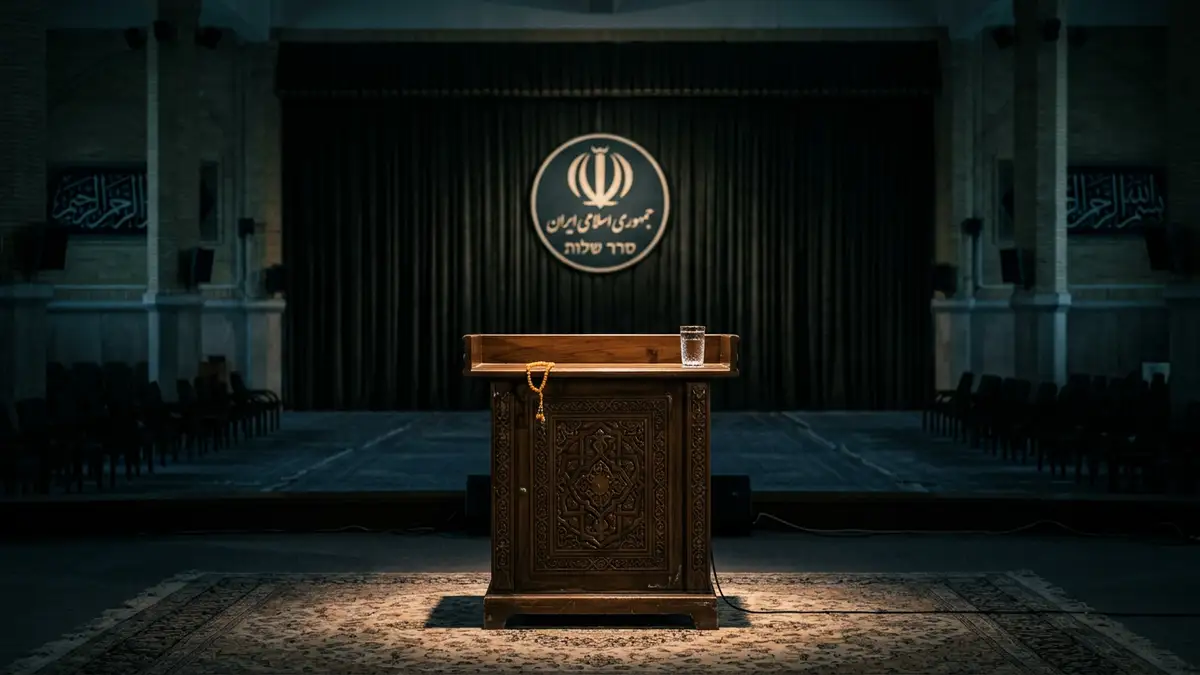
Image: Matt Weston / AI

Carla Rooney
U.S. President Donald Trump stated that Iran’s new supreme leader, Mojtaba Khamenei, is no longer alive following a period of public absence and a failed on-camera appearance.
Internal reports from Tehran indicate that Khamenei sustained severe injuries during a targeted operation conducted by either the United States or Israel.
These injuries include the loss of at least one leg and catastrophic damage to his abdomen or liver.
Khamenei undergoes medical treatment at Sina University Hospital under conditions of extreme secrecy.
Security forces have sealed off and heavily guarded a specific section of the facility located in the city's historic quarter.
Iranian state television confirmed that the supreme leader sustained injuries during the recent kinetic action.
Officials within the Iranian government move aggressively to downplay the severity of his physical condition.
There was no problem with the Islamic Republic's new leader.
Foreign Minister Abbas Araghchi insisted there was no problem with the Islamic Republic's new leader during a recent public address.
Araghchi further noted that no specific initiative has been proposed to end the war at this stage.
Turkish Foreign Minister Hakan Fidan stated that Khamenei remains alive and functioning, contradicting the American assessment.
This discrepancy exists between the intelligence gathered by regional powers and the data held by the White House.
The Institute for the Study of War observed that neither Iran nor the United States appears prepared to hold discussions for a ceasefire.
This refusal persists despite active mediation efforts led by Oman and Egypt to prevent further regional destabilization.
The Trump administration rejected these diplomatic overtures from Middle Eastern allies with absolute finality.
The White House maintains a stance of certainty regarding the leader's demise, despite the conflicting reports of his survival.
Historically, the transition of power in Iran has relied on the visibility and perceived strength of the Supreme Leader.
The current silence from Tehran coincides with the heaviest guarding of medical infrastructure in the capital's history.
Economic pressure mounts as the conflict persists without a clear diplomatic path forward for either nation.
The rejection of Omani and Egyptian mediation efforts leaves the regional landscape without a formal de-escalation mechanism.
The physical absence of Mojtaba Khamenei from the public eye carves a vacuum of verifiable information.
While Tehran insists on stability, the physical evidence at Sina University Hospital suggests a significant medical crisis.
Military analysts point to the surgical precision of the strike that targeted the leader in his secure location.
The operational reach of the strike forces penetrated the highest levels of Iranian state security.
The conflicting accounts between Trump, Hegseth, and Fidan define the fog of war surrounding the Iranian hierarchy.
Trump remains the only official to explicitly declare that Khamenei has died, a claim not yet mirrored by his own Pentagon.
The White House has not released specific intelligence to reconcile the gap between the President’s declaration and Hegseth's report of disfigurement.
This lack of consensus within the Executive Branch complicates the international response to the crisis.
Regional stakeholders in Oman and Egypt face a stalled diplomatic process as the United States maintains its refusal to negotiate.
The absence of a formal de-escalation mechanism increases the risk of further kinetic operations in the coming days.
Inside Tehran, the heavy presence of security forces at Sina University Hospital signals a high-priority internal crisis.
The historic quarter remains under a total lockdown as the government attempts to project an image of continuity to its citizens.
The Institute for the Study of War notes that the refusal to engage in ceasefire talks suggests both sides prepare for a prolonged engagement.
This posture persists even as the physical health of the Iranian leadership remains a subject of global debate.
The precision of the strike indicates a significant breach in Iranian counter-intelligence protocols and internal security.
The strike suggests a high level of real-time tracking by foreign intelligence services.
This intelligence failure leaves the Iranian state vulnerable at a moment of maximum external pressure.
The situation remains fluid as the international community awaits visual proof of Khamenei's status.
Until a public appearance occurs, the conflicting claims from Washington, Ankara, and Tehran define the current geopolitical landscape.
The world remains fixed on the barricaded gates of Sina University Hospital for the next move.