Atlantic Storm System to Bring Snow and Freezing Temperatures Across United Kingdom
Meteorological models track a moisture-laden front as temperatures plunge to 2C across major cities and the North Pennines.
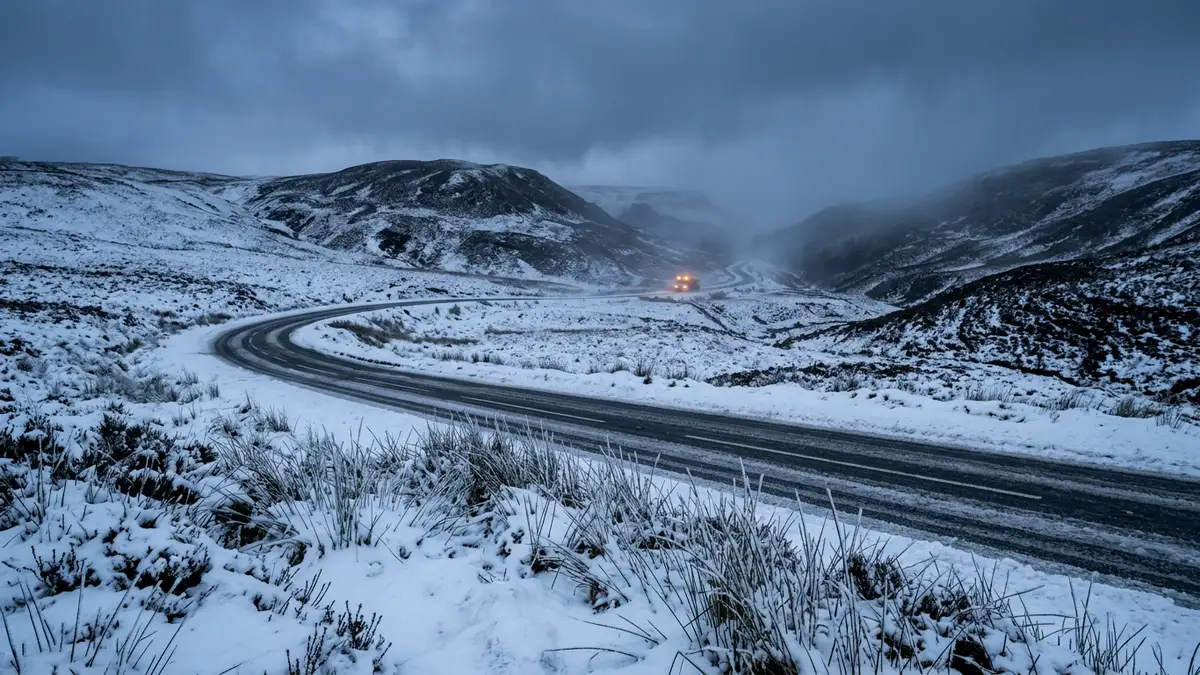
Image: Matt Weston / AI

Callum Smith
A powerful Atlantic storm system is set to collide with cold air masses over the United Kingdom, triggering a month-long period of snow and freezing temperatures.
This first wave of snowfall marks the opening chapter of a broader transformation across the early spring landscape. The Met Office confirmed showery rain will sweep eastward across the country on Sunday.
Weakening rain bands arrive from the west throughout Monday and Tuesday. Projections show temperatures plummeting to 2C or 3C across the vast majority of the country during this window.
Public infrastructure teams fortify operations for this 2C temperature floor as rain transitions into ice and sleet. Wintry conditions settle firmly over the UK this weekend as the cold front advances.
Wintry showers remain confined primarily to northern hills for the time being.
Current weather maps indicate snow descending across the nation intermittently throughout the entire month of March. The Met Office stated that wintry showers remain confined primarily to northern hills for the time being.
Major cities across the UK sit directly in the path of these incoming March snowfalls. Manchester, the North East, and the North Pennines occupy positions to receive the first significant snow flurries.
The North Pennines will see the first physical accumulation of these English flurries according to current projections. Historical weather charts illustrate snow blanketing the UK as the Atlantic system interacts with trapped cold air masses.
These chiller outbreaks persist into next month, disrupting typical seasonal expectations for the spring transition. Forecasters at BBC Weather stated it is currently too early to determine the exact severity of the cold conditions.
The GFS model shows a significant moisture-laden system approaching the coast. The interaction between Atlantic moisture and cold air creates a volatile environment for the British Isles.
It is currently too early to determine the exact severity of the cold conditions.
This specific atmospheric combination historically triggers widespread travel disruptions and severe infrastructure strain. Local councils in the North East and Manchester monitor the 2C threshold with high precision.
Gritters and emergency services remain on standby as the rain bands transition into more hazardous wintry forms. The North Pennines serves as a primary indicator for the severity of the incoming front.
As the first accumulations settle there, the rest of the country faces the advancing moisture pushing in from the west. Agricultural stakeholders observe the 2C and 3C projections with intense scrutiny.
A persistent chiller outbreak extending into April could alter planting schedules and impact early spring crop yields across England. The Met Office tracks the weakening rain bands as they migrate across the country on Monday.
While the intensity of the precipitation fluctuates, the underlying cold air remains a constant factor in the forecast. Energy providers brace for a sharp increase in demand as the 2C temperature floor reaches nationwide.
The transition from rain to sleet increases the load on heating systems and local power grids simultaneously. The GFS model remains the primary tool for tracking the March 14 storm's trajectory.
Data suggests a heavy moisture content that manifests as snow when it hits the existing cold front. Northern Scotland experiences the first physical signs of this atmospheric shift this Sunday.
This northern activity precedes the broader national impact expected as the Atlantic system matures and moves south. Weather experts note that the early March snow is not an isolated event but part of a larger atmospheric pattern.
The persistence of these conditions suggests a delayed start to the traditional spring thaw across the islands. Manchester and the North East remain high-priority areas for weather monitoring due to their geographical vulnerability.
Their urban density combined with the projected snow flurries creates specific challenges for regional transport networks. As the rain bands from the west weaken, the focus shifts to the freezing temperatures following in their wake.
The UK remains on high alert for a month defined by wintry volatility and sub-zero potential.