Arts of War Sculptures Regilded Amidst Beautification Push
Washington D.C. landmarks receive 23-carat gold leaf, sparking debate over cost and completion.
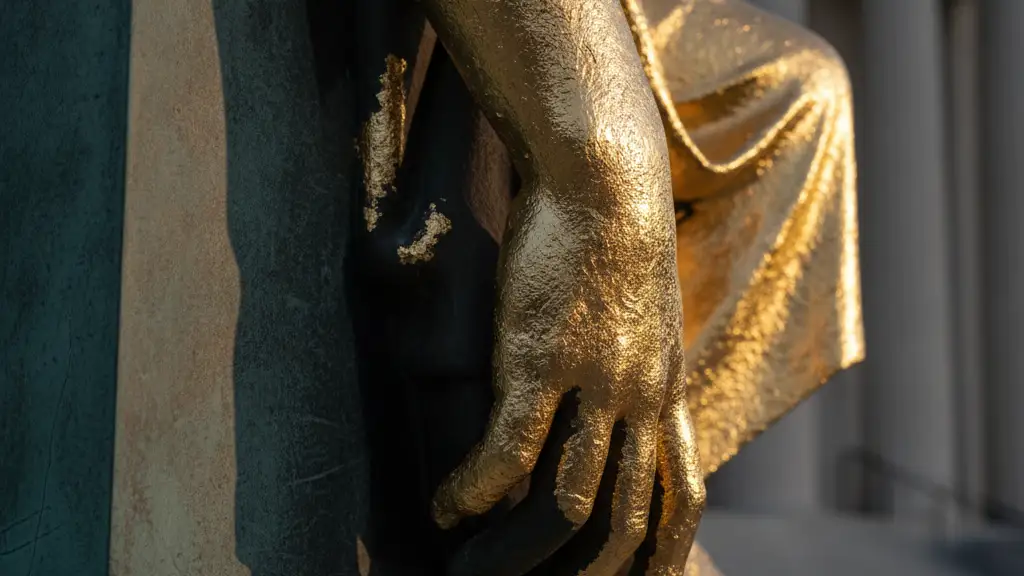
Image: Eddie Pollard / AI

Sarah Connor
The Arts of War sculptures, iconic bronze figures framing the entrance to Arlington Memorial Bridge in Washington, D.C., have undergone a significant regilding.
These monumental statues, forged from bronze and fire-gilded, last underwent major renovations in the 1970s; smaller restorative efforts followed in 1984 and again in 2005, preserving their commanding presence on the capital's landscape.
The Gilders' Studio secured a $5.1 million contract for this extensive regilding, an initiative forming a crucial component of the U.S. Department of the Interior's 'auramaxxing' effort.
This ambitious project aligns with the nation's preparations for the 250th anniversary of the Declaration of Independence, a broader commitment to national beautification.
Donald Trump unveiled images of Washington D.C.'s two Arts of War bronze horse sculptures, asserting the statues were covered in $5 million worth of 23-carat gold leaf.
Trump further stated the sculptures would achieve full regilding by July 3, establishing a clear target for the project's completion.
The $5 million work on the sculptures as 'longgggg overdue,'
A Department of the Interior spokesman declared the $5 million work on the sculptures as 'longgggg overdue,' confirming the critical need for the restoration.
Subsequently, Donald Trump announced, 'Taking down the scaffolding around the regilded Arts of War sculptures,' marking a visible milestone in the project's progress.
Historically, Donald Trump has initiated beautification efforts for other Washington, D.C. landmarks, including the Lincoln Memorial Reflecting Pool, a consistent focus on civic aesthetics.
The project's cost, reported as $5.1 million by one source and $5 million by another, shows a slight discrepancy surrounding the high-profile restoration.
The historical lens reveals a pattern of intermittent care for these significant artworks; decades passed between major overhauls, with the 1970s marking the last comprehensive effort before the current undertaking.
Stakeholders, including the U.S. Department of the Interior and Donald Trump, champion this restoration; their public statements emphasize both the necessity and the grandeur of the project.
The economic pressure of a $5.1 million contract awarded to The Gilders' Studio reflects a substantial public investment, confirming the perceived value of these cultural assets.
The landscape of Washington D.C. transforms with such projects, enhancing its monumental core; the 'auramaxxing' effort aims to elevate the capital's visual appeal for a significant national milestone.
Looking to the future, the regilding ensures the statues' brilliance for generations to come; the 250th anniversary of the Declaration of Independence provides a powerful impetus for this enduring legacy.
The use of 23-carat gold leaf, a specific material choice, speaks to the project's commitment to historical accuracy and opulence, elevating the aesthetic impact of the restored sculptures.
Taking down the scaffolding around the regilded Arts of War sculptures
Public perception undoubtedly shifts as the scaffolding comes down and the golden gleam emerges; the visual transformation reinforces a sense of national pride and renewal.
The slight discrepancy in reported costs, between $5.1 million and $5 million, remains a minor detail within the larger narrative of a successful restoration; the core investment in the Arts of War sculptures stands firm.
This project exemplifies a broader trend in preserving national monuments, ensuring that symbols of American history continue to inspire and endure.
The meticulous work by The Gilders' Studio brings a renewed vibrancy to these bronze figures; their efforts contribute directly to the visual narrative of the nation's capital.