18th-Century Indian Portrait by Scottish Artist Valued Over £100,000
Katherine Read's rediscovered work challenges art historical narratives, revealing early cross-cultural exchange.
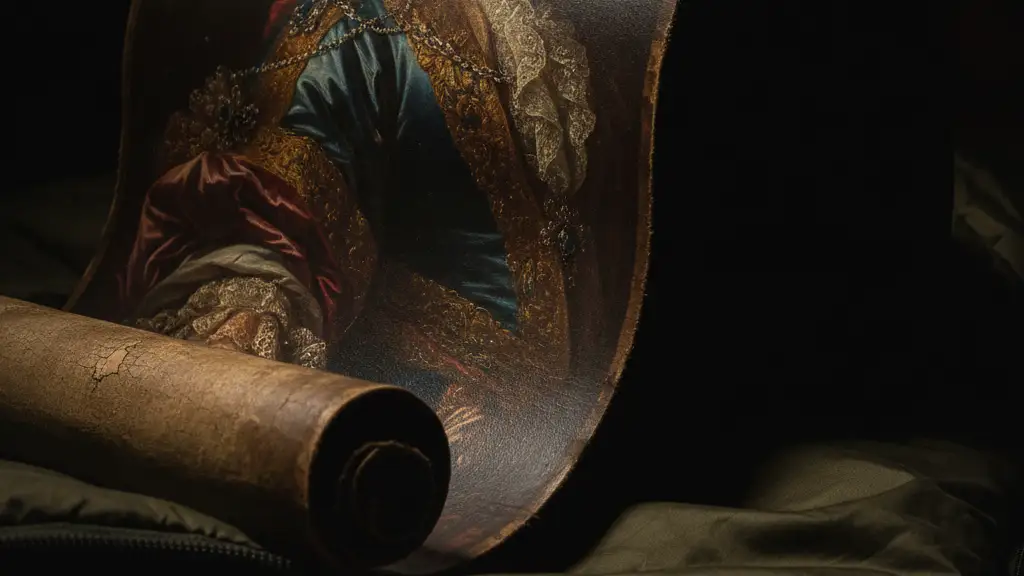
Image: Eddie Pollard / AI

Sarah Connor
An 18th-century portrait by Scottish artist Katherine Read, once transported in a sleeping bag, is now valued at over £100,000 after its historical significance was confirmed.
Katherine Read, a formidable figure, forged a successful career as a portraitist, honing her craft through extensive studies across Europe.
She moved within elite circles, often commanding higher fees than her male contemporaries, a testament to her skill and the burgeoning recognition of female artists in the 18th century.
The portrait was bequeathed to retired accountant Mary-Louise Wedderburn in her uncle’s will two decades ago, its true value and historical significance then completely unknown.
Wedderburn stated the portrait may have been painted by Katherine Read, a distant relative, a familial connection adding a personal layer to its rediscovery.
The portrait depicts an Indian woman adorned with pearls, an emerald pendant, and a distinctive nose ring, details speaking to the intricate cultural exchanges of the era.
Charles Greig, an expert, described the painting as one of the trickiest to consider due to its complex composition and challenging elements.
It is the first painting of an Indian by a European woman artist that is recorded, and that in itself is extraordinarily important.
Greig further confirmed, "It is the first painting of an Indian by a European woman artist that is recorded, and that in itself is extraordinarily important."
The investigation into the painting's authenticity involved a panel of experts, including Professor Catriona Seth, Ashvin Rajagopalan, and artist Lachlan Goudie.
Their collective expertise proved crucial, employing historical and stylistic analysis to identify specific features matching known portraits by Katherine Read, including distinctive clothing styles, facial features, and the use of particular pigments prevalent during her lifetime.
Program presenters Fiona Bruce and Philip Mould spearheaded the inquiry, meticulously tracing the painting's origins and verifying its attribution.
This revelation underscores the ongoing re-evaluation of historical narratives, particularly those concerning the contributions of women and non-European subjects in art.
The art market, often driven by rarity and historical significance, will undoubtedly see increased interest in works bridging cultural divides and offering new perspectives.
A valuation of over £100,000 places this piece firmly within the upper echelons of historical portraiture, reflecting both its artistic merit and its unique place in history.
Mary-Louise Wedderburn expressed her profound connection, stating, "It's just so important to me that it's by Katherine Read, because of the family connection, but also because of who she was."
It's just so important to me that it's by Katherine Read, because of the family connection, but also because of who she was. The more that we find out about Katherine Read, the more I think she was just a wonderful woman, she was just super.
She added, "The more that we find out about Katherine Read, the more I think she was just a wonderful woman, she was just super."
This discovery also highlights the critical role of public programs like 'Fake or Fortune' in unearthing hidden treasures and bringing them to scholarly and public attention.
The future implications for art scholarship are profound, potentially inspiring further research into the overlooked works of female artists and their engagement with global subjects.
It forces a re-examination of the 18th-century art landscape, revealing a more diverse and interconnected world than previously acknowledged.
Philip Mould predicted, "I’m sure we’re going to see more works by this pioneering woman artist in India coming out of the woodwork."