National Portrait Gallery Unveils Catherine Opie Portrait of Elton John and Family
The Windsor library serves as the backdrop for a new permanent addition to the national collection.
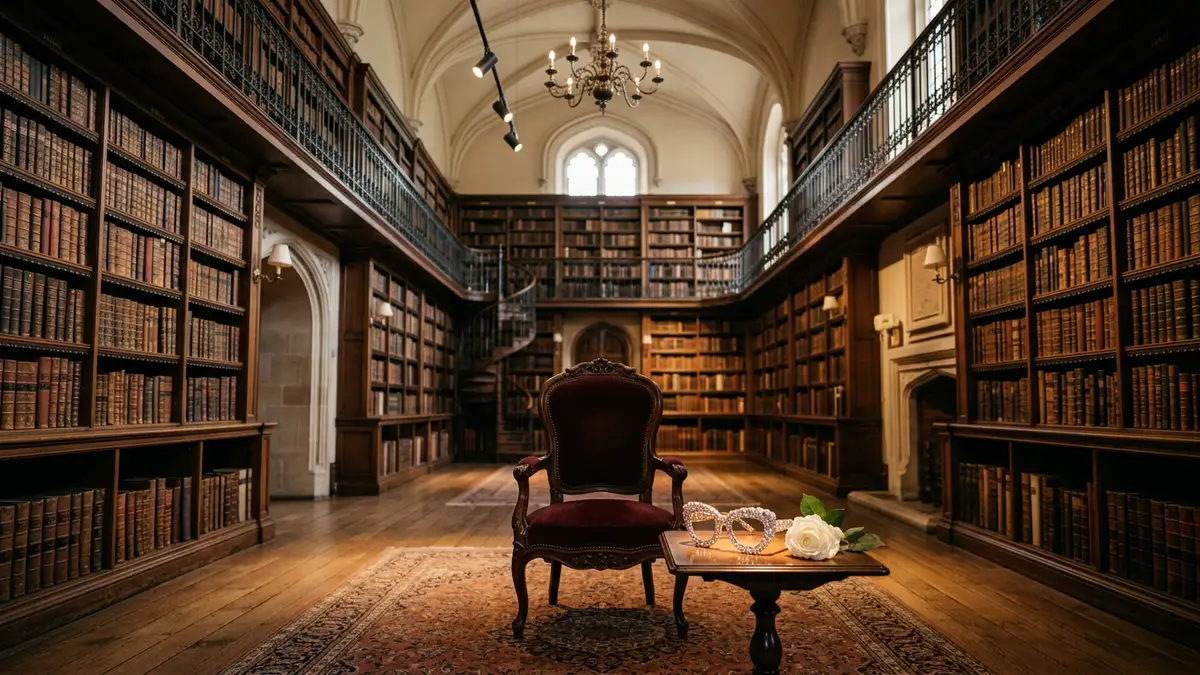
Image: Matt Weston / AI

Sarah Connor
The National Portrait Gallery has unveiled a new photographic portrait of Sir Elton John, his husband David Furnish, and their two sons, Zachary and Elijah.
The composition anchors four family members within a setting defined by rows of books and domestic architecture. This acquisition integrates the family into a historical lineage of British portraiture dating back to the gallery's founding in 1856.
The National Portrait Gallery currently manages over 250,000 portraits documenting the individuals who shaped British culture. Political and public pressure on national institutions to reflect modern family structures has intensified over the last decade.
Zachary and Elijah are co-parenting little Jacob, and have proudly declared that Elton and I are… erm… grandparents!
The Equality Act 2010 codified protections for diverse family units and now dictates how public galleries curate permanent collections. Economic investment in the National Portrait Gallery’s recent £35.5 million refurbishment prioritized works representing these contemporary social shifts.
The portrait operates as a physical record of the family's presence within the British establishment. David Furnish described the evolving dynamics within the household regarding their sons and a new addition.
"Zachary and Elijah are co-parenting little Jacob, and have proudly declared that Elton and I are… erm… grandparents!" Furnish said. This image marks a transition from Elton John’s decades of solo public life to a narrative centered on his role as a parent.
Industry shifts in photography have pivoted toward environmental portraiture where surroundings provide specific biographical data. Catherine Opie utilized the natural light and specific geometry of the Windsor library to frame the subjects.
The artist positioned the family amidst the leather-bound volumes and structured shelving of their private home. Elton John addressed the timeline of his family life and his own mortality during the unveiling process.
I will not be around to see my and David’s sons get married.
John stated that he will "not be around" to see his and David’s sons get married. The National Portrait Gallery will display the work as part of its primary collection in London.
This portrait joins several other depictions of John already held by the gallery, spanning his career from the 1970s to the present. The 1856 mandate of the gallery focused exclusively on the 'illustrious' characters of British history.
By including this domestic scene, the gallery aligns the John-Furnish family with the statesmen and monarchs of previous centuries. The £35.5 million overhaul of the St Martin's Place building provided the physical infrastructure for these new narratives.
Curators increasingly bridge the gap between traditional oil paintings and contemporary photographic methods. Catherine Opie pioneered work documenting subcultures and domesticity in the United States.
Her move into the Windsor library brings a specific American documentary lens to a quintessentially British setting. The Equality Act 2010 remains a cornerstone for these institutional shifts.
It mandates that public bodies eliminate discrimination and foster good relations between different protected groups. Public galleries now face intense scrutiny regarding the diversity of their permanent archives.
This portrait functions as a direct response to calls for broader representation within the national story. The library setting provides a sharp contrast to the high-glamour stage personas Elton John maintained for fifty years.
It replaces the sequins and stadium lights with the quiet permanence of a private archive. David Furnish noted the humor in their sons' new self-appointed roles as parents to a pet.
The family dynamic continues to shift as the children grow within the public eye. Elton John's comments on his future reflect a shift in his public messaging toward legacy and the passage of time.
He has increasingly focused on his domestic life following his retirement from touring. The National Portrait Gallery continues to expand its digital and physical reach with over a quarter-million items.
This new addition ensures the John-Furnish lineage is preserved for future generations of museum-goers. The work stands as a permanent fixture in the evolving narrative of British identity.