Swansea Chief Executive Challenges EFL Over Wrexham Broadcast Bias
Tom Gorringe targets Sky Sports and the EFL over a broadcast he claims prioritised Hollywood owners Rob McElhenney and Ryan Reynolds over sporting neutrality.
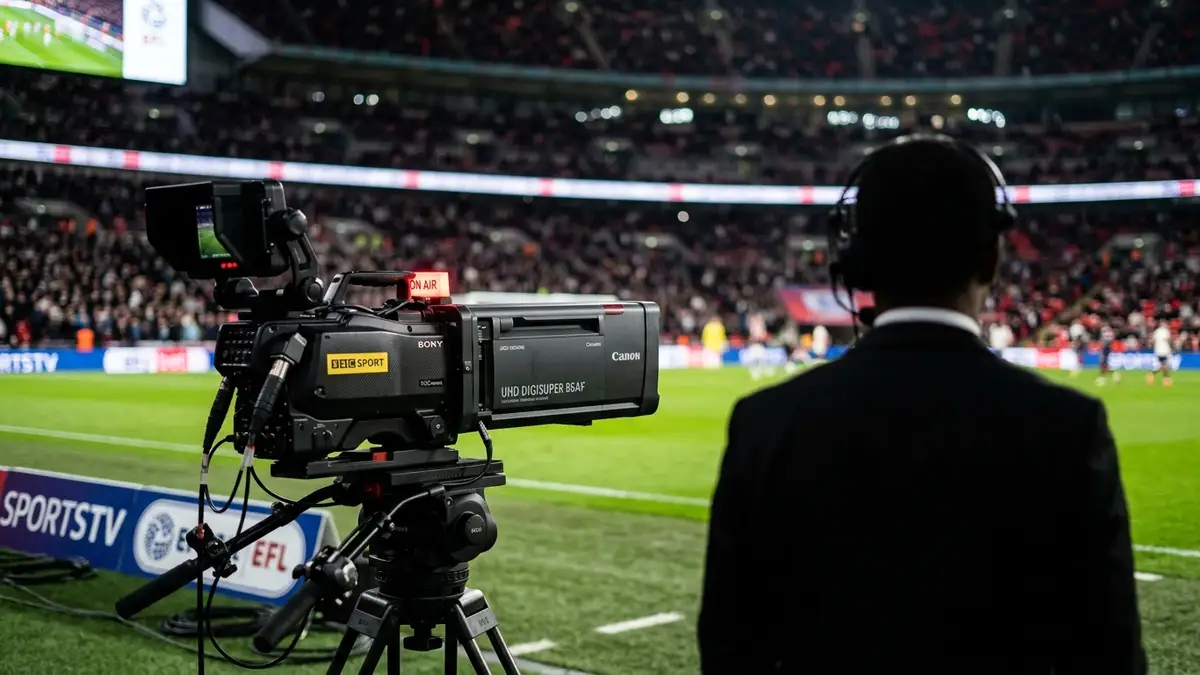
Image: Matt Weston / AI

Callum Smith
Swansea City Chief Executive Tom Gorringe has launched a formal complaint with the EFL, alleging that Sky Sports’ coverage of their recent match against Wrexham treated the club as an “afterthought” in favour of the home side’s celebrity owners.
The conflict erupted following Wrexham’s 2-0 victory, a match played under a global media spotlight that Gorringe argues was systematically tilted. This broadcast deployed an alternative commentary feed featuring Wrexham owners Rob McElhenney and Ryan Reynolds.
Gorringe contends this move fundamentally skewed the presentation, transforming a competitive fixture into a scripted narrative. The Swansea executive stated the build-up and match-day coverage ignored the visiting side entirely.
It felt to myself and a number of members of our staff that we were very much an afterthought.
He specifically cited match advertisements that failed to mention Swansea City as the opponent. This omission serves as the primary evidence in his claim that the EFL and Sky Sports prioritized celebrity metrics over sporting parity.
The 2021 acquisition of Wrexham by the Hollywood duo shifted the club’s commercial leverage into a different stratosphere. This transformation created a new economic landscape in the lower tiers of English football.
A massive social media following and a global documentary series now drive the club's valuation. Sky Sports, the producer of the controversial coverage, maintains the broadcast remained fair and balanced.
Broadcaster officials defended the production, asserting the match coverage adhered to all standard regulatory requirements. Gorringe remains unmoved, claiming Swansea suffered unfair treatment throughout the televised window.
The executive reiterated that the hosts received priority at every production milestone. 'It felt to myself and a number of members of our staff that we were very much an afterthought,' Gorringe said.
The lopsided focus persisted from the pre-match analysis through the final whistle. Historically, the EFL operates on a collective bargaining model where 72 member clubs share visibility and commercial revenue.
The rise of Wrexham as a standalone media entity threatens this traditional equilibrium. Wrexham’s commercial revenue now outpaces many clubs in the Championship, two tiers above their current standing.
This financial divergence creates friction among stakeholders who rely on equitable airtime to secure regional sponsorships. The EFL oversees all broadcasting rights, including the distribution of match-day feeds to international partners.
Any formal complaint forces the league to adjudicate the boundary between entertainment and journalism. For Swansea, the stakes involve concrete financial metrics rather than mere optics.
Television exposure links directly to kit sponsorships and regional branding value. Gorringe’s move to contact the EFL signals a push for guaranteed representation for visiting teams in high-profile slots.
Sky Sports continues to hold the primary domestic rights, producing hundreds of hours of EFL content annually. The broadcaster must now navigate the tension between competitive integrity and the commercial draw of Hollywood.
The 2-0 result on the pitch stands as the official outcome of the fixture. However, the administrative dispute over the media presentation moves to the league offices for a formal review.
Industry analysts suggest this confrontation will force stricter guidelines regarding 'alternative' commentary formats. If the EFL sides with Swansea, it may limit owner involvement in official match-day broadcasts.
The outcome of this challenge will define the limits of the 'Wrexham Effect' on the broader English football pyramid. For now, the Swansea executive remains firm that the broadcast failed the basic test of sporting neutrality.