Prince William to Attend Installation of New Archbishop of Canterbury
The Prince of Wales signals continuity in the Crown's relationship with the Church of England amid evolving spiritual practices.
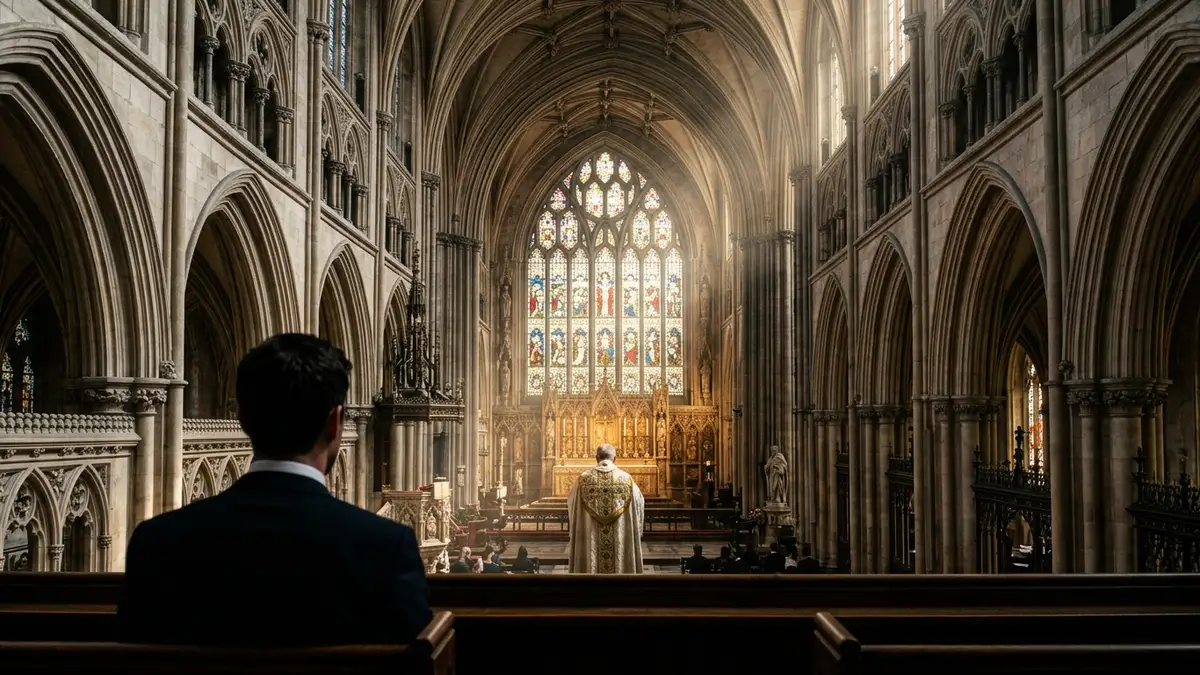
Image: Matt Weston / AI

Sarah Connor
Prince William will attend the official installation of the new Archbishop of Canterbury, placing the heir to the throne at the centre of the Church of England’s most significant ceremonial transition.
The 1534 Act of Supremacy forged this constitutional link. It transformed the monarch into the singular head of the church, a title William must eventually inherit.
Historian Tom Holland confirms that William must remain a 'believer' to legally ascend the throne. This framework manages an institutional estate valued at billions of pounds.
The church oversees thousands of parish churches across the British landscape. These physical assets represent the material weight of the monarch’s spiritual duty.
William’s commitment to the Church of England operates on a quieter frequency than public expectations.
The Prince of Wales now moves to settle long-standing inquiries regarding his personal religious convictions. He intends to draw a line in the sand regarding his faith.
A source close to the Prince stated that this period marks the end of public questioning. The Prince seeks to define his own spiritual boundaries before the crown descends.
Public scrutiny tracks the frequency of the Prince’s church attendance over the last decade. Observers measure his devotion against the requirements of his future role.
The data reveals a shift in religious participation within the House of Windsor. This change triggers debate over the Prince's readiness for the Supreme Governorship.
An aide to the Prince noted that William’s commitment to the Church of England operates on a quieter frequency than public expectations. This approach deviates from the overt religious expressions of his predecessors.
The Prince’s strategy reflects a modernized monarchy. He balances the weight of tradition against the realities of a contemporary, secular public life.
The Prince risks becoming the first British monarch in five centuries to sever official ties with the Church of England. Such a rupture would dismantle the legal framework established during the Reformation.
This potential shift threatens the very foundation of the British state. It would force a total rewrite of the coronation oath and the nation's constitutional identity.
The institution must remain practical regarding a couple raising young children.
William’s approach to churchgoing diverges sharply from the habits of previous generations. He navigates a landscape where regular attendance across the United Kingdom continues to plummet.
The Church of England faces a crisis of participation. This decline complicates the Prince’s role as the future protector of the faith.
A source close to Dame Sarah addressed the logistical friction between the Prince’s schedule and public expectations. The institution must remain practical regarding a couple raising young children.
The church desires a Supreme Governor who attends every Sunday. However, the modern reality of the royal household dictates a different pace.
The Princess of Wales increased her focus on faith following her recent medical diagnosis. This spiritual shift coincides with her ongoing recovery process.
Her personal journey adds a new dimension to the family’s relationship with the church. It reinforces the private nature of their current religious engagement.
William’s attendance at the upcoming installation solidifies the Church’s relevance in contemporary life. The event draws the highest-ranking clergy and state officials to Canterbury.
The Archbishop of Canterbury and senior ministers will witness this formal acknowledgment. It serves as a physical demonstration of the Crown’s enduring presence.
This strategic maneuver follows the Prince's efforts to modernize his public image. He balances ancient constitutional duties with the demands of a 21st-century media environment.
His presence at the ceremony confirms his participation in the traditional rituals of the state. He accepts the choreography of power that has defined the monarchy for centuries.
The transition arrives as the monarchy reconciles ancient oaths with a secularizing society. William signals his intent to uphold the 500-year-old union between church and state.
He moves through the cathedral as a symbol of continuity. The weight of the Reformation remains visible in every gesture he makes.
The Canterbury ceremony manifests the Crown’s survival through centuries of religious upheaval. It marks a pivotal moment for the heir as he carves a path within the established faith.
William defines his future reign through these actions. He remains the guardian of an institution that predates the modern world.