Prime Minister Embarks on First UK Visit to China in Eight Years
First prime ministerial visit in eight years aims to unlock economic opportunities amid security concerns.

Carla Rooney
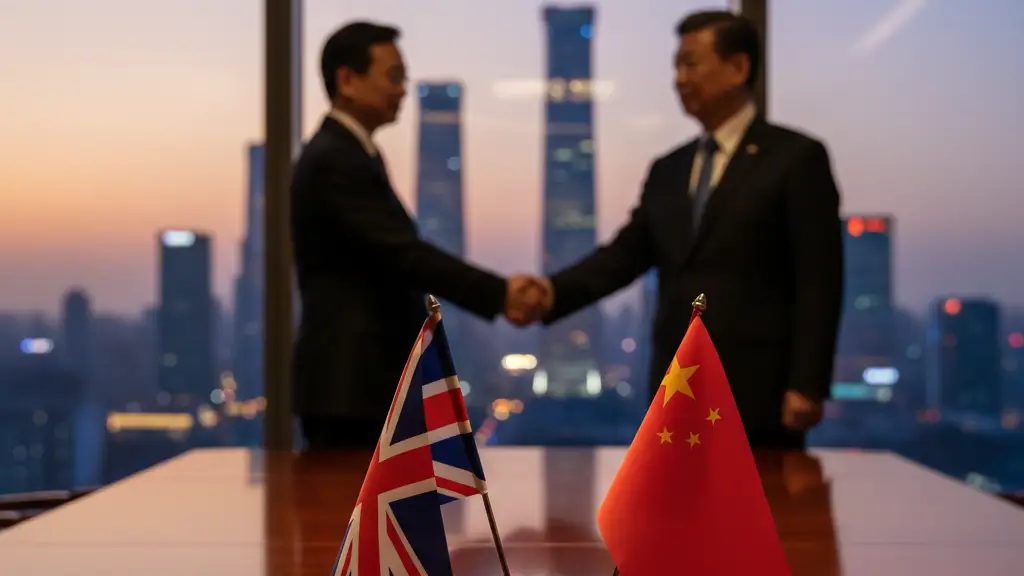
Prime Minister Sir Keir Starmer has commenced the first visit to China by a British prime minister in eight years, leading a significant delegation of over 50 business, sports, and cultural leaders.
The delegation includes leaders from major corporations such as HSBC, GSK, and Jaguar Land Rover, alongside representatives from the National Theatre. Business Secretary Peter Kyle and Economic Secretary to the Treasury Lucy Rigby are also part of the mission.
Sir Keir Starmer has emphasized that China offers 'significant opportunities' for the UK, with the potential to unlock substantial economic gains. China currently stands as the UK's third-largest trading partner.
However, the visit unfolds amid heightened concerns regarding Chinese espionage. The head of MI5 recently warned of a daily national security threat posed by Chinese state operatives.
Conservative shadow foreign secretary Priti Patel stated that China poses a serious threat to national security and argued that Starmer is visiting without leverage. She has urged the Prime Minister to adopt a firmer stance.
The Prime Minister is scheduled to meet President Xi Jinping on Thursday, where he will raise human rights abuses, including the persecution of Uyghur Muslims in Xinjiang. China continues to face accusations of committing crimes against humanity in the region.
The case of Jimmy Lai, a wrongly-imprisoned British citizen, has also been highlighted as a critical issue. Lord Chris Patten urged Starmer to raise Mr. Lai's case at the start of his meetings, calling it a test of his resolve.
Critics have expressed caution in dealings with Beijing, citing a 'wildly different world view' and a lack of trustworthiness. These concerns suggest a high potential for friction during diplomatic engagements.
Sir Keir Starmer asserted that Britain does not need to choose between China and the United States. He aims to balance strategic alliances with economic imperatives while navigating a complex web of international relations.
The British delegation has reportedly switched to burner devices for security reasons. This move underscores the perceived risks associated with digital communication during the visit.
The government has approved the construction of a new Chinese embassy in London, which will be the largest in Europe upon completion. This move reflects the ongoing need for diplomatic channels despite persistent security concerns.
The economic stakes are considerable, with China representing a vital market for British goods and services. Companies like HSBC and GSK are seeking to deepen their engagement and explore new avenues for growth.
The backdrop of geopolitical tension complicates these commercial ambitions. The UK government's dual approach seeks to leverage economic ties while safeguarding national interests.
The human rights situation in Xinjiang remains a significant point of contention. The Prime Minister's commitment to raising these issues directly with President Xi Jinping will be closely observed by international monitors.
The case of Jimmy Lai serves as a focal point for human rights advocates. His situation is widely seen as a litmus test for the UK's diplomatic effectiveness.
Past UK-China relations have fluctuated, with the previous government adopting a more confrontational stance on issues like Hong Kong. This visit signals a potential shift in diplomatic strategy.
The approval of the new Chinese embassy in London indicates a complex and multifaceted relationship. It reflects the necessity of maintaining diplomatic channels even amidst fundamental disagreements.
The long-term implications of this visit could shape future trade agreements and diplomatic protocols between the UK and China. Navigating these dynamics will be crucial for both nations in the coming years.
The delegation's composition suggests a broad strategy to engage China across multiple fronts. This comprehensive approach aims to maximize potential benefits while mitigating inherent risks.
Related Keywords
Uk PoliticsUk GovernmentInternational RelationsChinaUnited KingdomPoliticsKeir StarmerGovernmentHuman RightsEconomyCultureBusinessNational SecurityDiplomacyBeijingTradeUk-China Relations