British Patrol Orders Removal of Chagos Islands First Minister Amid Sovereignty Standoff
Misley Mandarin Vows Defiance Against UK-Mauritius Deal as Authorities Move to Clear Ile du Coin Atoll

Sarah Connor
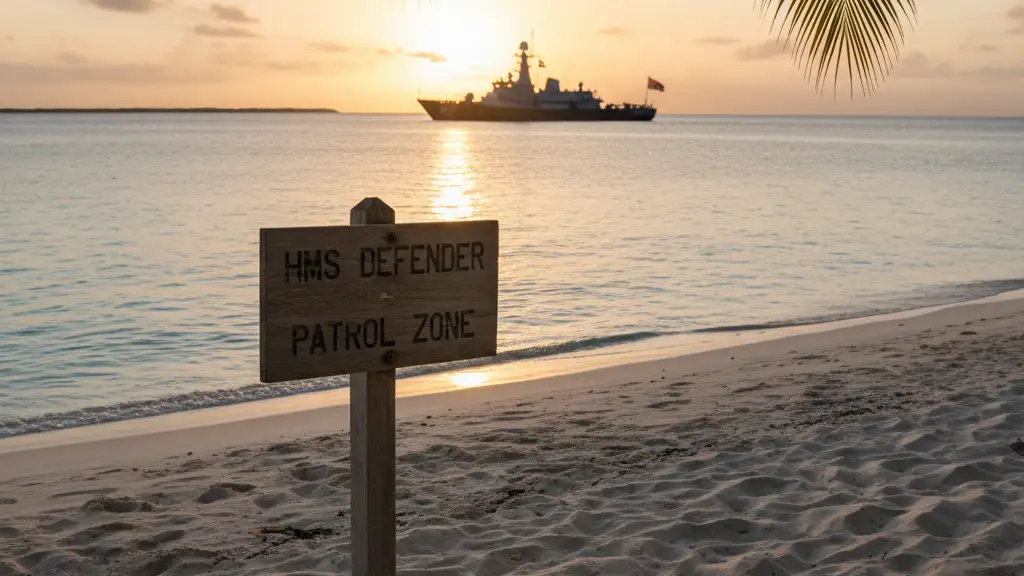
A British patrol has issued a formal order for a group of Chagossians to vacate the Ile du Coin atoll, igniting a high-stakes confrontation over the future of the disputed archipelago.
Mandarin has framed his presence on the atoll as a final, physical barricade against the administrative handover of the Chagos Islands to Mauritius. He issued a direct, visceral challenge to the British Prime Minister, signaling a categorical refusal to comply with the patrol's eviction directives.
"I dare Keir Starmer to remove us," Mandarin declared, transforming the standoff into a volatile obstacle for a diplomatic process decades in the making. This confrontation erupts following the landmark agreement to transfer sovereignty, a deal designed to purge the United Kingdom of its colonial-era censures by international courts.
I dare Keir Starmer to remove us.
Beyond the legal theater, Mandarin argues the current trajectory represents a strategic catastrophe for Western interests and a betrayal of the Chagossian soul. He maintains that the voices of those born on these shores have been ruthlessly sidelined in favor of cold, geopolitical expediency.
"Making this deal with Mauritius is a very bad deal for the UK, the US and global security," Mandarin asserted. He contends the transfer destabilizes the Indian Ocean by dismantling the legal framework that has governed the territory for generations.
The First Minister’s rhetoric has sharpened into a grim ultimatum as the deadline for the removal order looms. Mandarin claimed that British authorities will have to "kill" him before he is forcibly extracted from the territory he calls home.
Making this deal with Mauritius is a very bad deal for the UK, the US and global security.
This friction exposes the raw nerves of a community whose heritage was severed by the forced removals of the 1960s and 70s. For the displaced, Ile du Coin is no mere coordinate on a map; it is a sacred link to a history the British government seeks to finalize through paperwork.
London maintains that the sovereignty transfer offers the only viable path to securing the long-term future of the joint UK-US military base on Diego Garcia. By ceding the outer islands, the UK aims to neutralize international legal pressure while clinging to its strategic foothold.
However, Mandarin’s camp introduces a volatile variable into this transition, forcing the British administration to choose between diplomatic grace and blunt force. The order to vacate signals a clear intent to clear the path for the formal handover, regardless of the human cost.
The history of the Chagos Islands is a repetitive cycle of displacement where superpower requirements consistently override inhabitant rights. This latest directive echoes the original expulsion orders that cleared these islands to facilitate Cold War military infrastructure.
Critics argue that transferring sovereignty to Mauritius offers no genuine guarantee for the Chagossian right of return. They fear the islands are merely swapping one colonial administrator for another, leaving the actual inhabitants in a state of perpetual, stateless limbo.
The international community watches this standoff with bated breath, aware that any use of force would ignite fresh scrutiny of the UK's human rights record. The enforcement of the removal order carries legal ramifications that could ripple far beyond the Indian Ocean.
As the British patrol maintains its position, the atmosphere on Ile du Coin vibrates with the electricity of imminent intervention. The camp stands as a defiant symbol of a people who refuse to be erased from the geography of their own history.
The outcome of this confrontation will dictate the moral and political tone of the entire sovereignty transfer. If Mandarin holds his ground, the UK faces a harrowing choice between a televised forced eviction and a stalled diplomatic treaty.
For now, the First Minister remains entrenched, viewing the atoll as the last line of defense for his people's sovereignty. The world now waits to see if the British government will follow through on its directive or blink in the face of the island's most vocal resident.