New Regulations Mandate Clearer Information, Affordability Checks for Buy Now Pay Later Services
Stronger consumer protections now apply to the rapidly expanding Buy Now Pay Later sector, requiring firms to assess creditworthiness and offer support to customers facing financial difficulty.

Sarah Connor
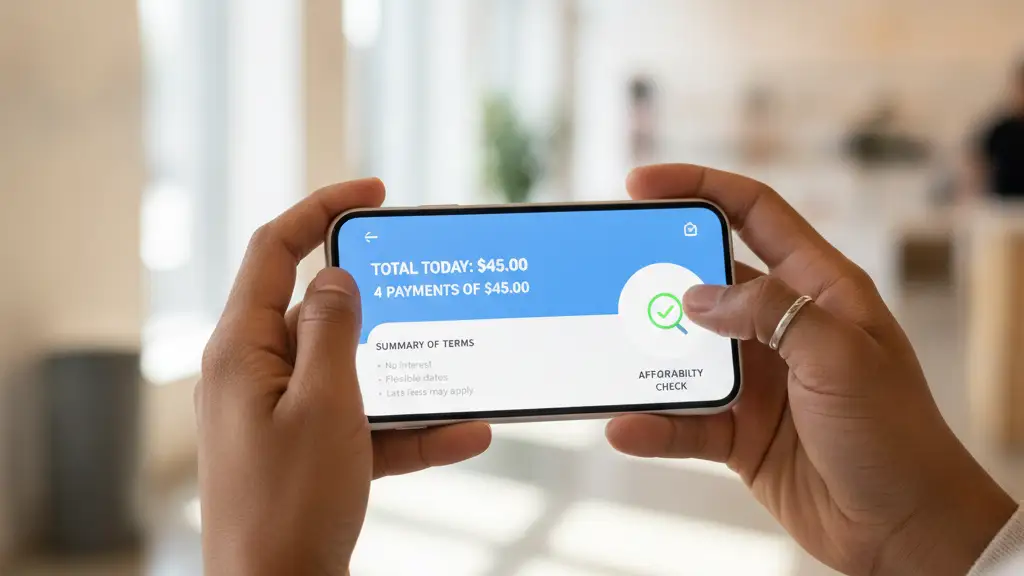
New regulations now mandate stronger protections for Buy Now Pay Later (BNPL) customers, requiring clearer information and proportionate affordability checks across the sector.
Firms must now rigorously assess consumers' creditworthiness, including their ability to afford repayments, before extending BNPL credit.
Lenders also face a mandate to offer support to customers experiencing financial difficulty, a critical safeguard for vulnerable individuals.
The Financial Conduct Authority (FCA) confirms BNPL constitutes a form of credit; users deserve protection.
Lenders must verify customers' ability to repay their loans, ensuring responsible lending practices across the board.
Historically, BNPL options allowed shoppers to spread purchase costs without incurring interest, breaking payments into manageable chunks.
For some, this flexibility led to increased spending beyond initial intentions, with multiple BNPL loans quickly consuming budgets.
This situation compels some individuals to resort to debt that incurs charges, such as overdrafts, to cover their BNPL obligations.
The Financial Ombudsman Service (FOS) projects approximately 2,000 complaints from BNPL users in the current financial year.
The Woolard Review previously found people often did not consider BNPL as borrowing, a perception Sarah Coles, Head of Personal Finance at AJ Bell, echoed.
Borrowers frequently do not consider affordability as carefully as they would for other types of debt, warning of a real risk of stacking these debts until they become unmanageable.
Coles noted borrowers frequently do not consider affordability as carefully as they would for other types of debt, warning of a real risk of stacking these debts until they become unmanageable.
Millions of customers will receive clearer information before signing up and better support if issues arise, the FCA states.
Rocio Concha, Director of Policy and Advocacy at Which?, confirms users of these services will benefit from stronger safeguards.
Dimitar Lazarov, Head of Credit Karma UK, suggested these changes could assist individuals who consistently make timely BNPL loan payments.
Lazarov also cautioned that falling behind on payments could impact a borrower's ability to secure other financial products, directly linking BNPL usage to broader credit profiles.
John Webb, Head of Consumer Affairs at Experian UK and Ireland, explained opening a new BNPL account may factor into credit reports, influencing decisions on future loan, credit card, or mortgage applications.
A Clearpay spokesperson stated the new rules will help establish a consistent operating environment and clear standards for all providers.
Millions of consumers depend on BNPL for short-term, interest-free credit to manage everyday purchases, the spokesperson highlighted.
Clearpay will maintain existing safeguards, including pausing accounts for a single missed payment and capping late fees, the spokesperson confirmed.
A Klarna spokesperson welcomed the regulation, noting Klarna has advocated for it since 2020.
The FCA's rules largely formalize Klarna's existing practices, which include affordability checks, upfront cost displays, and reporting to credit reference agencies, the spokesperson added.
Robust regulation provides consumers with added confidence and strengthens their access to protections, the Klarna spokesperson concluded.
Vikki Brownridge, Chief Executive at StepChange Debt Charity, acknowledged BNPL's utility as a short-term, interest-free credit option for spreading bulky expenses.
Brownridge emphasized the vital role of regulation in protecting customers and ensuring credit offers remain affordable, preventing debt problems.
Consumers can continue using BNPL as before, but awareness of the new protections remains important, Brownridge advised.
She urged individuals struggling with payments to seek free, impartial debt advice rather than accumulating more credit or BNPL agreements.
Fair4All Finance estimates up to 30% of current BNPL users might face rejection under the new affordability checks, indicating a significant shift in access. Nearly half of those likely to be turned down have never missed a payment, underscoring the strictness of the new criteria.
Fair4All Finance estimates up to 30% of current BNPL users might face rejection under the new affordability checks, indicating a significant shift in access.
Nearly half of those likely to be turned down have never missed a payment, underscoring the strictness of the new criteria.
Scott Dawson, CEO of payments firm DECTA, clarified Section 75 protection is not automatically guaranteed for BNPL purchases.
Its applicability depends on whether the lender is a separate business from the merchant and the agreement's start date, adding a layer of complexity for consumers.