MPs to Receive Five Percent Pay Increase as Salaries Approach Six Figures
Independent Parliamentary Standards Authority projects annual earnings will reach 110,000 pounds by 2029
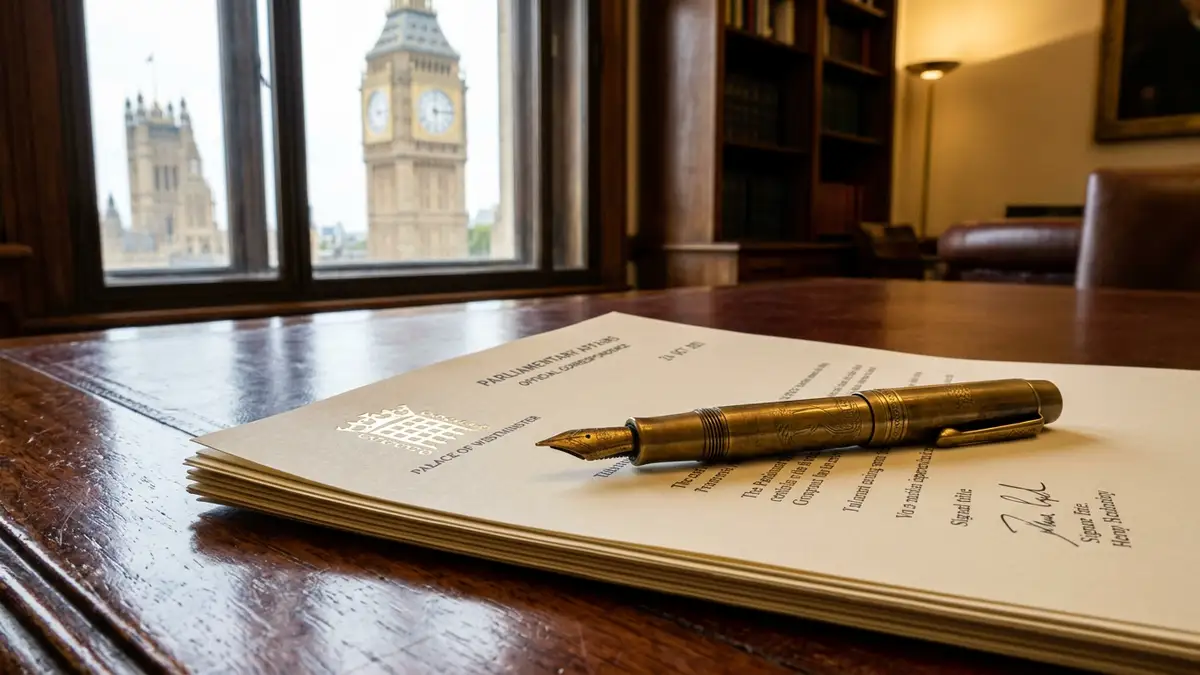
Image: Matt Weston / AI

Callum Smith
Members of Parliament will see their basic annual salaries climb to £98,599 this April following a five percent pay adjustment confirmed by the independent watchdog.
Beyond the immediate increase, IPSA projections indicate that politician salaries will reach approximately £110,000 by the year 2029.
This fiscal trajectory aligns precisely with the scheduled conclusion of the current parliament and the next electoral cycle.
The 2024 adjustment continues a long-standing policy of anchoring legislative pay to public sector averages across the United Kingdom.
Since its establishment in 2009, IPSA has managed these transitions to strip political interference from the sensitive issue of remuneration.
By utilizing a rigid formula linked to Office for National Statistics (ONS) data, the authority bypasses the need for public debate among lawmakers.
This mechanism prevents MPs from the optics of approving their own pay cheques while constituents face rising costs.
The history of parliamentary pay anchors to the 2009 reforms, which followed the systemic collapse of public trust during the expenses scandal.
Before this era, salary increases functioned as volatile flashpoints for intense political debate and sustained public outcry.
Officials at IPSA cited the increasingly complex workloads managed by representatives as a primary justification for the five percent rise.
They noted that the administrative and legislative demands of the office have intensified significantly compared to previous decades.
Taxpayers will be seething to see an inflation-busting rise.
The authority also pointed to the rising levels of abuse directed at MPs as a defining factor in the current professional landscape.
Maintaining a competitive salary remains a strategic priority for the board to attract a diverse range of candidates to Westminster.
Economic stakeholders reacted with immediate friction to the timing of the announcement. John O'Connell, Chief Executive of the TaxPayers' Alliance, stated that taxpayers will be seething to see an inflation-busting rise.
O'Connell argued that the current system insulates politicians from the direct consequences of their own fiscal decisions.
He proposed that parliamentary pay should instead be linked to real living standards as measured by GDP per capita.
The five percent hike arrives as broader economic indicators suggest a tightening financial environment for the general public.
This gap between private sector wage growth and legislative adjustments remains a significant point of contention for fiscal watchdogs.
The TaxPayers' Alliance maintains that the disconnect between political pay and the economic reality of constituents erodes the social contract.
They continue to lobby for a total overhaul of how IPSA calculates these annual increments based on ONS metrics.
Despite these objections, IPSA maintains that the salary level must reflect the heavy responsibilities of high-level public office.
The board argues that failing to keep pace with public sector earnings would limit the role to those with independent wealth.
The projected rise to £110,000 by 2029 represents a significant shift in the fiscal framework of the House of Commons.
It marks a transition into a new bracket of public service compensation, comparable to senior roles in the police or education sectors.
For years, debate has persisted regarding the parity of parliamentary pay with headteachers or senior officers in the Metropolitan Police.
The automatic nature of the April 1 increase ensures the new rate will be implemented regardless of the prevailing political climate.
This structural independence remains the cornerstone of the post-2009 regulatory environment designed to protect the integrity of the process.
As the 2029 projection looms, the debate over the value of a Member of Parliament's labour shows no signs of receding.
The tension between administrative formulas and public perception continues to define the halls of Westminster.
Related Keywords
Australia