MOMA Foods Recalls Porridge Products Over Mouse Contamination Risk
The Food Standards Agency warns of unsafe consumption risks as the British oat brand faces a major supply chain shutdown following a hygiene breach.
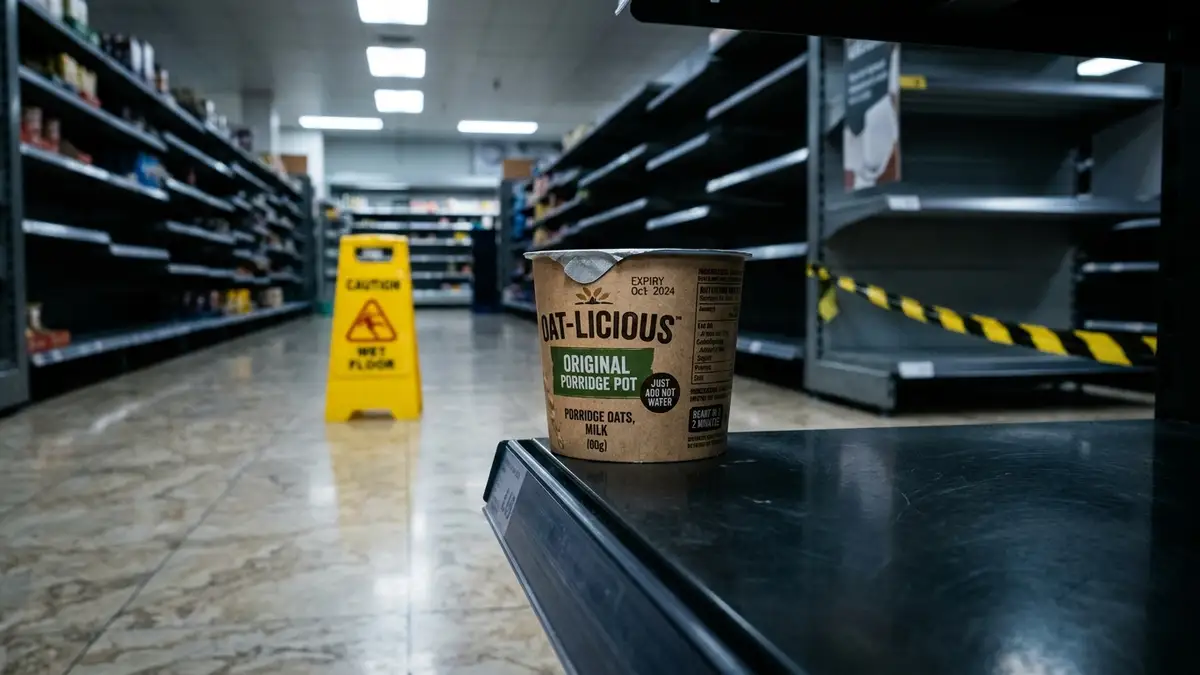
Image: Matt Weston / AI

Callum Smith
MOMA Foods has pulled its porridge products from supermarket shelves across the country after investigators discovered mouse contamination at its primary production facility.
The Food Standards Agency confirmed that the presence of rodents at the production site renders specific batches unsafe for human consumption. Officials categorized the risk as a direct threat to public health, mandating the removal of all implicated stock from retail shelves.
The Food Standards Agency stated that these products contain mouse contamination. This directive applies to specific date codes and pack sizes currently held by consumers and retailers across the United Kingdom.
These products contain mouse contamination.
Public health officials directed consumers to check cupboards for the specific MOMA porridge pots and sachets listed in the safety notice. The company advised customers to return the affected products to the point of purchase for a full refund.
This hygiene failure strikes a brand that has expanded since its launch in 2006. MOMA Foods transitioned into a new corporate phase after AG Barr secured a majority stake investment in 2021.
The manufacturing sector operates under the Food Safety Act 1990, which mandates that all food sold must meet strict safety and quality requirements. Failure to adhere to these statutory obligations triggers rigorous inspections from environmental health officers.
Environmental health officers currently scrutinize the cleaning and pest control protocols at the site to enforce compliance with the General Food Law Regulation. These inspectors verify that the facility is completely sanitised before production resumes.
Economic analysts track the impact of such recalls on mid-sized food producers, where supply chain disruptions cost firms upwards of £50,000 in immediate logistics. These costs include the physical retrieval of goods, disposal fees, and the loss of contracted shelf space.
The British oat market saw a 15% increase in demand over the last five years, placing pressure on high-volume manufacturing facilities. This surge in consumer interest in oat-based diets forced rapid scaling across the industry, testing the limits of existing infrastructure.
Retailers received instructions to remove all implicated stock from shelves to prevent further sales. Point-of-sale notices are now visible in supermarkets, detailing the risk to consumers and the process for financial reimbursement.
The Food Standards Agency oversees the withdrawal process to ensure all contaminated units are accounted for and destroyed. This oversight prevents rogue batches from entering the secondary supply chain or discount retail outlets.
The company has not provided a timeline for when the affected product lines will return to standard distribution. Operations remain paused while the firm addresses the root cause of the rodent infiltration.
Stakeholders in the agricultural and processing sectors watch the fallout, as MOMA occupies a specific position in the premium oat category. The immediate financial hit is compounded by the necessity of rebuilding consumer trust in the brand's manufacturing integrity.
The Food Safety Act 1990 serves as the primary mechanism for maintaining export standards and domestic safety for the British food industry. Any breach of this magnitude requires a comprehensive audit of the facility's structural defences against pests.
The FSA remains the final arbiter on when the facility can resume shipping goods to major supermarket chains. Until then, the recall remains the primary focus for the brand's logistics and quality assurance teams.