Meningitis Cases Drop to 20 as Health Officials Complete Contact Tracing in Kent
Mass vaccination and antibiotic distribution stabilise the Canterbury cluster as laboratory assessments reclassify infection data
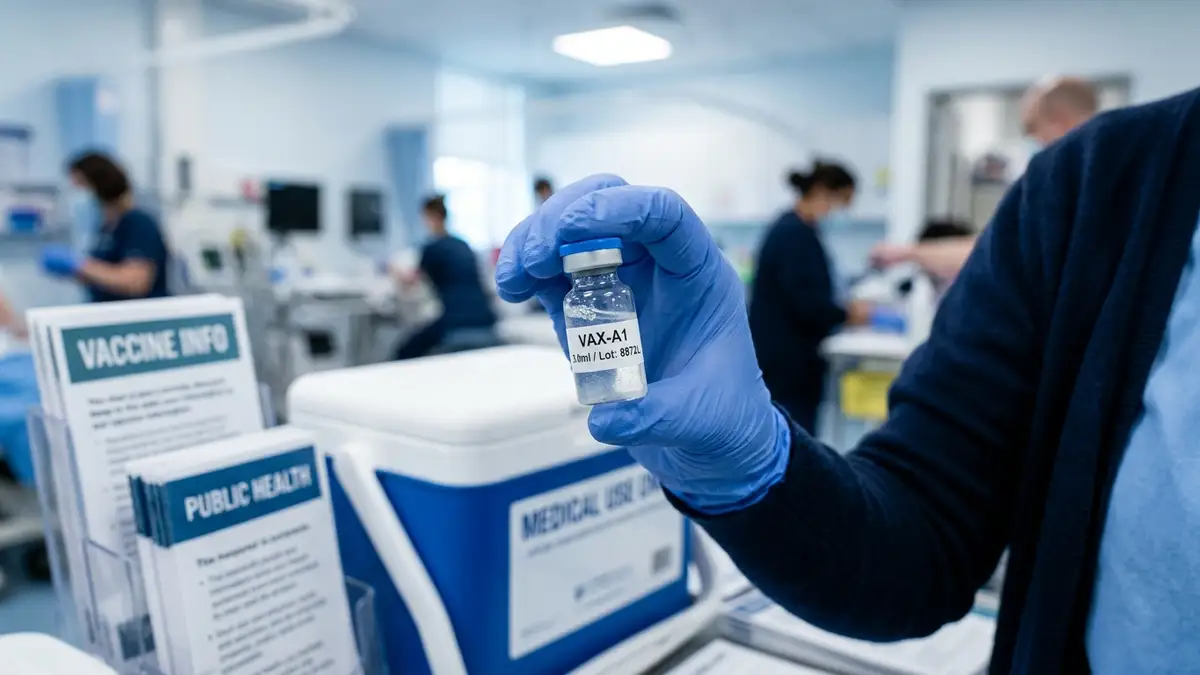
Image: Matt Weston / AI

Carla Rooney
Confirmed meningitis cases in Kent fell from 23 to 20 today as laboratory assessments downgraded previous infections following a rigorous medical intervention.
The college leadership issued a formal directive to parents and carers detailing the specific risks associated with the cluster. Simultaneously, the UKHSA dispatched urgent correspondence to the student body, mandating rigorous self-monitoring for hallmark symptoms.
This targeted vaccination drive specifically combats Meningitis B (MenB) to insulate the high-density student population. Such a strategic move mirrors a long history of localized clusters within the United Kingdom’s academic corridors.
Small, sporadic household clusters could still emerge in other regions.
Historically, university towns have functioned as epidemiological flashpoints due to the intense proximity of residents in halls and lecture theaters. These environments accelerate the spread of bacteria among young adults, many of whom carry the pathogen asymptomatically.
Dr. Anjan Ghosh, the Director of Public Health for Kent County Council, warned that small, sporadic household clusters could still emerge in other regions. This risk persists as students who have departed from Kent begin to incubate the bacteria elsewhere.
Despite these concerns, Dr. Ghosh confirmed that the infection is likely to remain contained within Kent with only minimal cases expected beyond the county borders. He maintained that existing protocols are robust enough to isolate any secondary cases that appear nationally.
Current public health data suggests the peak of this outbreak has finally passed, though officials cautioned that case numbers may still fluctuate. The UKHSA expects to downgrade more suspected cases in the coming days as laboratory assessments reach their conclusion.
This downward trend in confirmed cases reflects a systematic reclassification of infections following rigorous clinical testing. This process ensures the official tally includes only laboratory-confirmed bacterial meningitis rather than viral lookalikes.
Beyond the medical wards, economic stakeholders in Canterbury reported a palpable shift in local activity during the height of the crisis. Several businesses observed a sharp decline in footfall as students retreated to their residences to avoid exposure.
The financial strain on the local hospitality sector echoes previous public health emergencies where foot traffic evaporated during containment windows. Retailers in the city center described unusually quiet streets as the vaccination drive took precedence over commerce.
In a separate development, a specific case identified in Manchester remains unlinked to the Kent outbreak. Health officials confirmed that no other students in the Manchester region are thought to be carrying the infection at this time.
The UKHSA continues to monitor the situation in the North West to ensure no secondary clusters ignite. This geographic separation suggests the Kent cluster remains an isolated event despite the fluidity of national travel patterns.
The existing public health infrastructure possesses the capacity to manage the tail end of this medical event. The objective remains the total prevention of further transmission as the academic term proceeds under heightened watch.
Future public health strategies will likely scrutinize the data generated by this 12,000-dose antibiotic rollout. The sheer speed of the MenB vaccination campaign now serves as a definitive template for managing future outbreaks in high-density settings.
Students at EKC Canterbury College remain under strict instruction to watch for headaches, stiff necks, and light sensitivity. These physical markers serve as the primary line of defense for early detection as the incubation period reaches its end.
The conclusion of contact tracing signals a transition from active containment to a phase of passive surveillance. Health officials have now pivoted their focus toward the recovery of the infected and the final validation of pending laboratory results.
Dr. Ghosh asserted that the existing public health infrastructure possesses the capacity to manage the tail end of this medical event. The objective remains the total prevention of further transmission as the academic term proceeds under heightened watch.