Commons Rejects Social Media Ban for Under-16s in 307-173 Vote
Government secures expanded regulatory powers as MPs defeat proposed age-based restriction on digital platforms
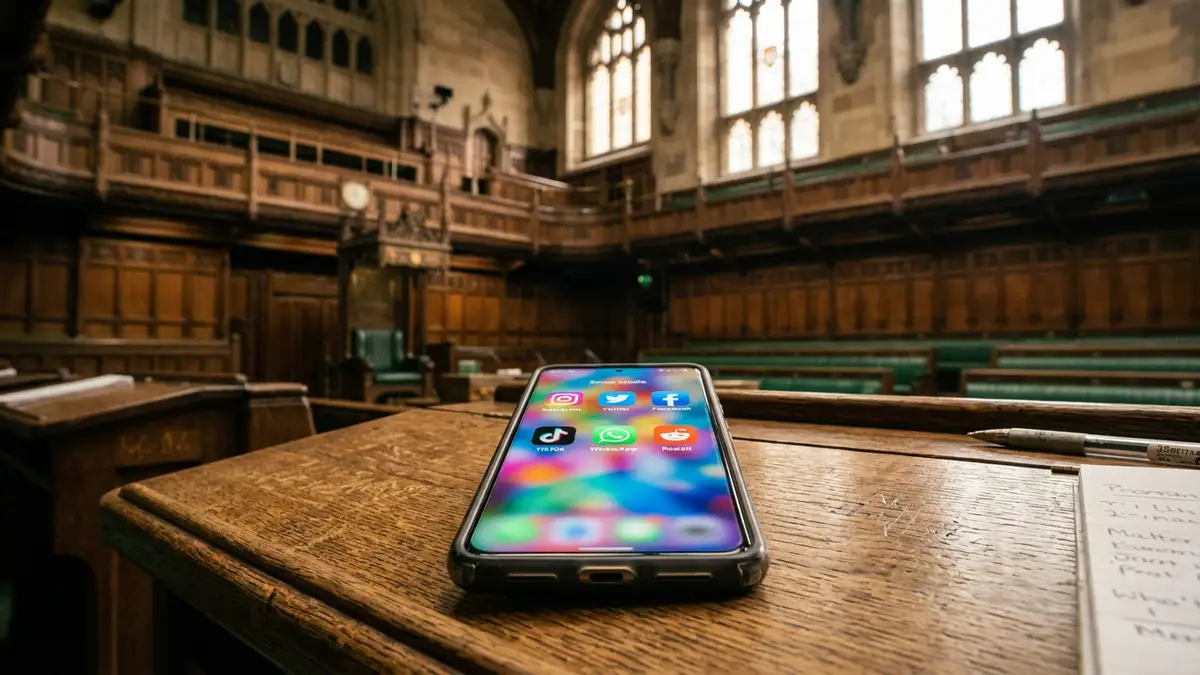
Image: Matt Weston / AI

Callum Smith
The House of Commons rejected a proposed amendment to the Children’s Wellbeing and Schools Bill on Wednesday, voting 307 to 173 against a total social media ban for children under the age of 16.
This legislative pivot follows the launch of a formal Government consultation to extract expert testimony on platform accountability.
The process demands the specific mechanics of social media regulations through public and professional cross-examination.
The Children’s Wellbeing and Schools Bill sits at the center of this fight, aiming to overhaul oversight of digital and educational environments.
Local resistance surged in the wake of the vote. In Greater Manchester, more than 2,600 residents signed a petition to block the implementation of a ban.
This local pushback exposes a national fracture between state intervention and parental autonomy.
Supporters of an Australian-style ban argued that parents occupy an impossible position against the online harms targeting their children.
Advocates for the ban characterized the current digital landscape as a lawless space where individual supervision fails.
If a drug caused measurable harm for 78% of users, health authorities would seize and withdraw it from the market.
Sadik Al-Hassan stated that parents remain locked in a daily battle against platforms engineered to keep children hooked.
The design of these algorithms creates a structural disadvantage for families. Al-Hassan compared the digital landscape to the pharmaceutical industry to expose the scale of the crisis.
He noted that if a drug caused measurable harm for 78% of users, health authorities would seize and withdraw it from the market.
Meanwhile, Kemi Badenoch demanded a cross-party effort to enforce a ban for those under 16.
She asserted that such a move remains workable and possible under current technological constraints.
Badenoch stated the government could achieve this restriction without requiring mandatory digital identification.
This position targeted privacy concerns frequently weaponized by opponents of age verification technology.
The NSPCC warned that a total ban drives teenagers into unregulated, dark corners of the internet.
The charity argued that such a move hides risks rather than eliminating them.
Children’s charities maintained that a blanket restriction leaves teenagers unprepared for digital risks when they eventually gain access.
These organizations advocated for a model built on education and resilience rather than total exclusion.
A total ban drives teenagers into unregulated, dark corners of the internet.
The Secretary of State will now weaponize newly granted powers to dismantle platform algorithms and content standards.
These actions will proceed under the existing bill structure rather than through new age-based prohibitions.
Historically, the UK has marched toward a duty-of-care model for tech giants rather than outright bans.
This vote cements that trajectory, shifting the burden of responsibility to the provider rather than the user.
Economic stakes remain high as digital platforms integrate further into the educational sector.
By rejecting the ban, Parliament maintains the flow of digital engagement while tightening the rules of engagement.
Critics of the decision warned that the Government's regulatory approach will take years to produce measurable results.
They cited the immediate nature of online harms as the primary reason for swift, drastic intervention.
Despite these concerns, the Secretary of State prepares to dictate the first set of specific algorithm requirements in the coming months.
These mandates will target features that trigger compulsive scrolling and expose minors to harmful content.
Public pressure builds as more parents report the devastating impact of social media on youth mental health.
The Government consultation remains the primary battlefield for these stakeholders as the bill progresses.
This defeat of the amendment marks a definitive moment in the struggle to define the boundaries of a digital childhood.
The responsibility for safety now shifts from a hard age limit to the technical oversight of the platforms themselves.