Cleveland Authorities Launch Investigation After Bodies of Two Girls Found in Suitcase
Forensic teams deploy DNA sequencing to identify half-sisters as police scour historical records for missing person matches
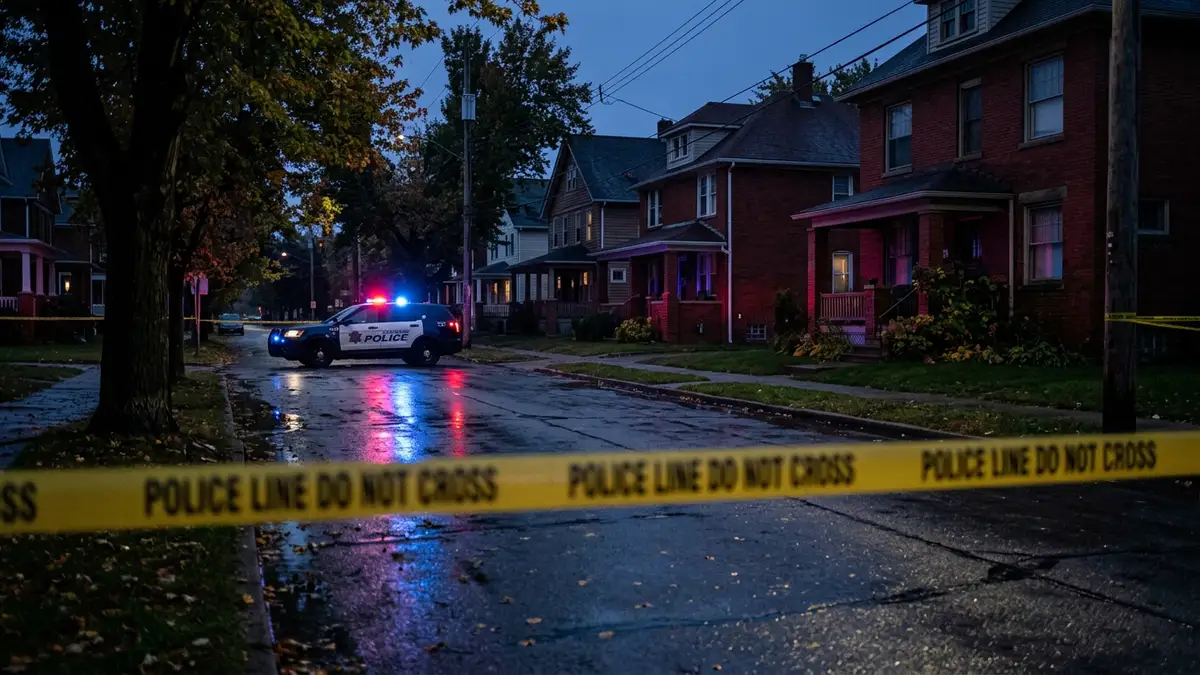
Image: Matt Weston / AI

Callum Smith
Cleveland Police have launched a high-priority investigation following the discovery of two young girls buried inside suitcases in a localized area of the city.
Cleveland Police units have cordoned off the area to prevent soil contamination at the excavation site. Officers currently canvass the neighborhood to interview long-term residents regarding unusual activity or forgotten disturbances.
Cleveland Police Chief Dorothy Todd confirmed the discovery does not match any active missing persons cases in the immediate area. This discrepancy shifts the investigative focus toward historical records and neighboring jurisdictions.
The Cuyahoga County Medical Examiner’s Office processes the remains to determine the exact cause and timing of death. Investigators scour the recovery site for physical evidence to link the suitcases to a specific timeline.
The discovery does not match any active missing persons cases in the immediate area.
Police records indicate no recent reports of missing siblings match the physical descriptions of the recovered remains. Chief Todd stated the incident does not correspond with any ongoing missing persons files currently held by the department.
Detectives now scrutinize the history of the property where the suitcases were unearthed. City records show the land underwent various changes in occupancy, creating a complex timeline for the burial.
Economic and social stakeholders in Cleveland expressed immediate concern regarding the lack of identifying information. Local advocacy groups are reviewing cold cases involving young children dating back several years to find a potential match.
The investigation remains centered on the forensic link between the two girls. DNA sequencing establishes the maternal or paternal lines connecting the half-sisters to a family tree.
Specialized recovery teams utilize ground-penetrating tools to ensure no other remains exist in the vicinity. This prompted a wider search of the immediate area for evidence overlooked during the initial excavation.
Chief Todd confirmed the department works to identify the girls through all available biological and physical markers. The investigation remains in the early stages of evidence cataloging and site analysis.
The department works to identify the girls through all available biological and physical markers. The investigation remains in the early stages of evidence cataloging and site analysis.
This discovery challenges existing safety protocols and the monitoring of vacant or transitioning land within the city. Detectives examine the chain of title and rental history for the plot to identify previous inhabitants with site access.
Community leaders noted the psychological impact on the neighborhood, where the silence of the recovery site is broken only by the sound of forensic tools. The lack of database matches suggests a potential lapse in regional reporting or a significant passage of time.
The Cuyahoga County forensic team searches for specific environmental markers within the suitcases to determine burial recency. Technicians analyze soil composition and container degradation patterns to establish a precise timeline.
Historical data from the last decade of missing persons reports across Ohio is being cross-referenced with the victims' estimated ages. This net aims to capture cases previously classified as runaways or parental abductions.
The use of advanced genetic genealogy represents a shift in how the department handles unidentified remains. By mapping the girls' DNA, authorities intend to locate distant relatives who can provide names to the victims.
Public records indicate the property saw a high turnover of residents, complicating the investigative timeline. Each previous tenant serves as a potential lead in the effort to reconstruct the site's history.
Local advocacy groups demand a more robust tracking system for children who fall out of educational or social service grids. They argue the unidentified status of these girls points to a failure in the social safety net.
The Cleveland Police Department continues to hold the scene as a restricted zone. Forensic technicians will remain on-site for several more days to extract all micro-evidence from the soil.
Future implications for the city include a potential overhaul of how historical missing persons cases are digitized and shared across county lines. This case serves as a catalyst for reviewing the backlog of cold cases involving minors in the Midwest.
Authorities have not yet released the estimated ages of the girls, pending the final report from the medical examiner. The investigation moves forward with a focus on biological markers and physical evidence recovered from the burial site.