Andrew Mountbatten-Windsor Arrested on Misconduct Charges Linked to Jeffrey Epstein
The King’s brother faces interrogation over allegations of leaking sensitive government documents during his tenure as trade envoy.

Sarah Connor
Police arrested Andrew Mountbatten-Windsor on Thursday on suspicion of misconduct in public office, marking a significant escalation in the investigation into his past associations with convicted sex offender Jeffrey Epstein.
Detectives focused their interrogation on a formal complaint alleging that Andrew weaponized his tenure as the United Kingdom’s trade envoy to funnel confidential economic and political intelligence to Jeffrey Epstein. This high-profile role granted him unfettered access to sensitive briefings, which investigators now believe may have been traded as currency within Epstein’s shadowy international network.
Newly unearthed communications from the U.S. Department of Justice's Epstein files suggest a profound breach of protocol, alleging the Duke transmitted official government documents during international deployments. These digital footprints point to a systematic mishandling of state secrets that could carry devastating legal ramifications for the former royal.
Andrew was treated like a common criminal suspect.
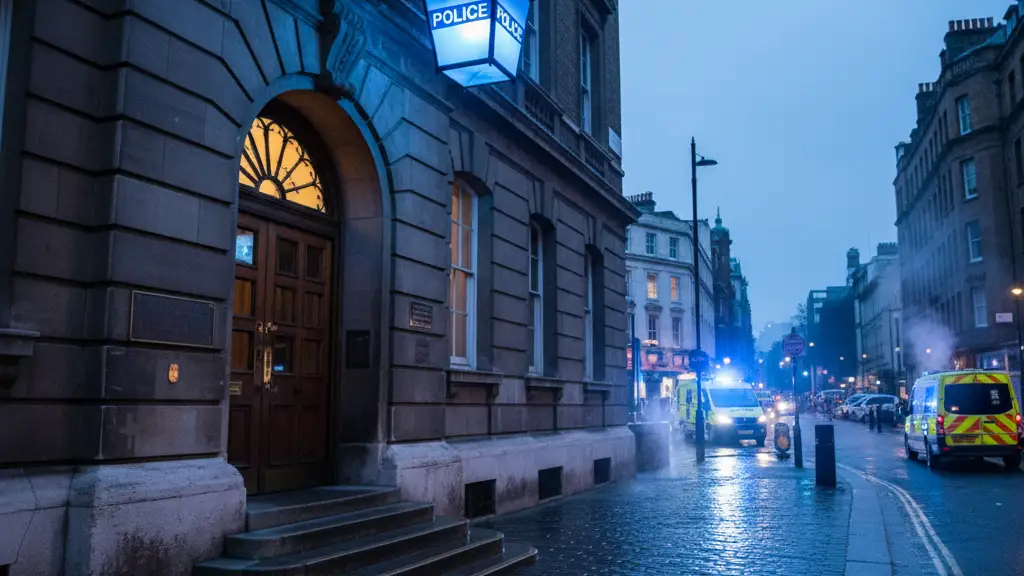
Inside the Aylsham station, the Duke was processed with the same clinical, unyielding efficiency as any other suspect, including the mandatory collection of fingerprints and a DNA saliva swab. Crime editor Mike Sullivan observed that Andrew was treated like a “common criminal suspect,” a jarring departure from the deference usually afforded to the monarchy.
This standardized procedure remains identical for every individual held under arrest at the facility, regardless of their public standing or former titles. Such procedural equality underscores the immense gravity of the misconduct charges currently being weighed by the authorities as they dismantle the Duke's former immunity.
While the former prince faced the heat of questioning, tactical teams launched extensive searches at Royal Lodge, an operation expected to churn through the estate until Monday. These units are hunting for physical and digital evidence—hidden ledgers or encrypted drives—that might corroborate the allegations of document mishandling.
Thames Valley Police expanded the dragnet to include searches at the Wood Farm residence and his former home in Windsor, signaling a widening probe. This multi-agency effort highlights the broad geographical scope of the evidence-gathering phase as investigators trace the Duke's movements across the royal estates.
The investigation is also probing claims that royal protection officers may have turned a blind eye to potential wrongdoing while escorting Andrew to Epstein’s private island and New York townhouse. This specific inquiry examines whether the security detail failed in their fundamental duty to report suspicious activities, potentially acting as silent witnesses to a crime.
Despite the mounting pressure, Andrew has consistently denied any wrongdoing or the specific accusations leveled against him regarding his conduct. His legal team maintains that his interactions with Epstein were strictly social or related to his official duties as a trade representative, dismissing the leaks as a misunderstanding of diplomatic protocol.
Public reaction to the arrest has been swift and visceral, with viewers calling for a special episode of '24 Hours in Police Custody' to feature the bodycam footage. This surge in interest reflects the unprecedented nature of a senior royal being processed through the standard criminal justice system like any other citizen.
The law must take its course.
King Charles has addressed the legal situation involving his brother with a brief but firm statement, noting that "the law must take its course." This declaration signals a clear, strategic distance between the monarchy and the personal legal battles of the former prince, effectively cutting him adrift.
The historical weight of this arrest cannot be overstated, as it represents a rare instance where a direct relative of the Sovereign has faced formal police interrogation. It mirrors past constitutional crises where the conduct of individual royals has threatened the perceived integrity and survival of the institution itself.
For the diplomatic service, these allegations raise uncomfortable questions about the vetting and oversight of high-profile envoys who operate outside traditional civil service channels. If sensitive documents were indeed leaked, it could prompt a total overhaul of how confidential briefings are handled by non-career diplomats and royal representatives.
The potential long-term consequences for the monarchy involve a further narrowing of the inner circle to mitigate reputational risks and prevent future scandals. This arrest may accelerate the transition toward a more streamlined, professionalized royal household where birthright no longer guarantees protection from the law.
As the searches at Royal Lodge continue, the focus remains on the digital trail left by the former prince during his years of international travel. Forensic experts are expected to spend the coming days analyzing seized hardware for any trace of the sensitive briefings mentioned in the DOJ files.
The investigation into the royal protection officers adds a layer of institutional scrutiny to the Home Office, which oversees these specialized units. Any evidence of complicity or negligence could lead to significant reforms within the Royalty and Specialist Protection command, shaking the foundations of royal security.
Despite the intense scrutiny, the legal process remains in its early stages as the Crown Prosecution Service awaits the full file from investigating officers. The final decision on whether to bring formal charges will depend entirely on the strength of the evidence recovered during this week's high-stakes raids.