Bourton-on-the-Water Grapples with Overtourism as Essential Services Strain
Cotswolds village faces traffic, litter, and public indecency amid tourism surge, impacting local life and care services.
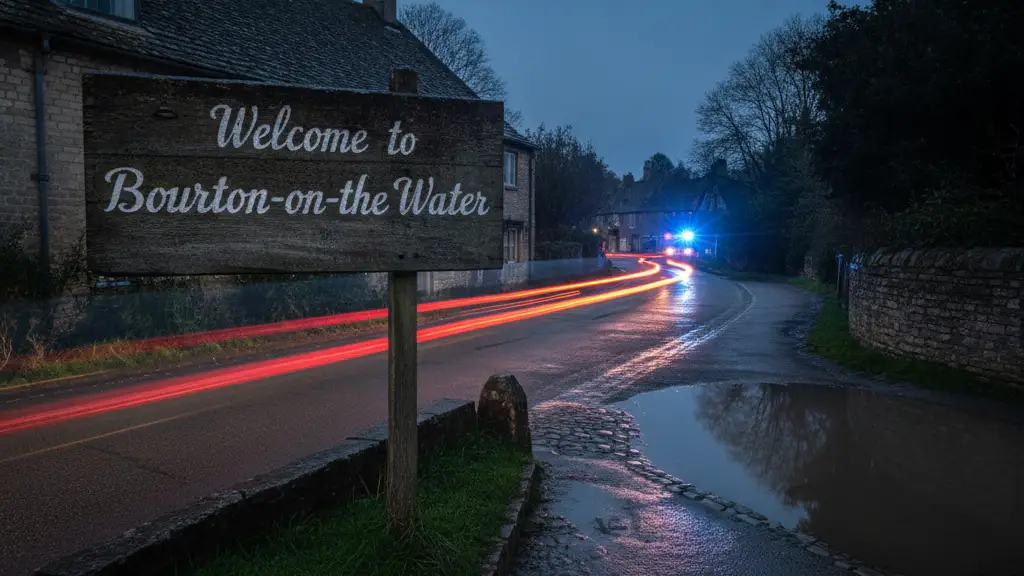
Image: Eddie Pollard / AI

Sarah Connor
Cotswolds Tourism has ceased featuring Bourton-on-the-Water on its social media channels in an effort to manage escalating visitor numbers.
A local traffic regulation order, established in 2012, strictly prohibits all vehicles except service buses from entering Bourton-on-the-Water's high street. Violations incur fines ranging from £50 to £70.
Despite these clear regulations, Jenny Coaker asserts that coach-loads of visitors, tinted-glass minivans, and relentless day-trippers now create severe traffic issues. They monopolize crucial local parking and exacerbate congestion.
This unyielding congestion directly impedes NHS staff from reaching patients, critically compromising essential care. Coaker stated, "Our nurses have 10 patients to visit a day, but because of the traffic, they’re only doing four."
Our nurses have 10 patients to visit a day, but because of the traffic, they’re only doing four.
Coaker further detailed the dire consequences, explaining that "the carers can’t get to them to dress their wounds or change their pads." The human cost escalates with every delay.
She added, "People who need insulin could go into a coma, people who are incontinent are sitting in that, and people on end-of-life care are in agony waiting for painkillers." The village faces a public health emergency.
Meanwhile, the Government's Visitor Economy Growth Strategy actively encourages tourism nationwide. This national push for increased visitor numbers starkly contrasts with Bourton-on-the-Water's immediate struggles.
Concurrently, the Government considers allowing councils to impose a tourism tax. This potential levy primarily affects overnight visitors and could generate revenue, but offers little immediate relief for day-tripper congestion.
This potential tax emerges as 38% of adults intend to take their primary holiday in the UK in 2024, an increase from 34% previously. Over half of Gen Z participants reportedly plan domestic holidays, fueling the surge.
Iain Cox confirms that post-Covid social media platforms like Instagram and TikTok heavily promoted Bourton-on-the-Water as a must-visit destination. This digital exposure directly contributes to the current tourism surge.
Charlotte Joynes reports families arrive as early as 8 am with deck chairs and picnic tables, staying all day. These visitors make few significant purchases from local businesses.
Joynes elaborated, "The problems that we’re having are the families that are coming at 8 o’clock in the morning, bringing deck chairs, picnic tables, their own food and drink, and staying for the whole day. Apart from maybe an ice cream, they’re not here to buy."
Kirsten Ng claims the village green no longer serves its intended purpose of refreshing minds and spirits. Visitors now bring garden furniture and cool boxes, transforming public spaces.
Beyond economic impact, environmental and social concerns escalate. Sue Roberts claims tourists litter the village with items such as beer cans, food packaging, wrappers, and nappies.
Darryl Jenkins reports tourists have been observed urinating and defecating in public areas. This further degrades the village environment and public hygiene.
Charlotte Joynes also claims visitors take Cotswold stones from village walls, eroding historical structures. Adam Podolski reports the roof of a model village shop suffered damage from someone leaning on it for an Instagram photo.
Robert Cooper claims elderly tourists walk long distances in extreme heat to reach parking, risking collapse. This highlights a different, yet equally critical, facet of the visitor impact on vulnerable populations.