AI Robot Teacher 'Sally' Pilot Halted Amid Privacy and Ethics Concerns in New York
Salamanca City Central School District pauses nearly $60,000 acquisition of AI educator over data privacy, instructional role, and manufacturer's ties to sex doll industry.
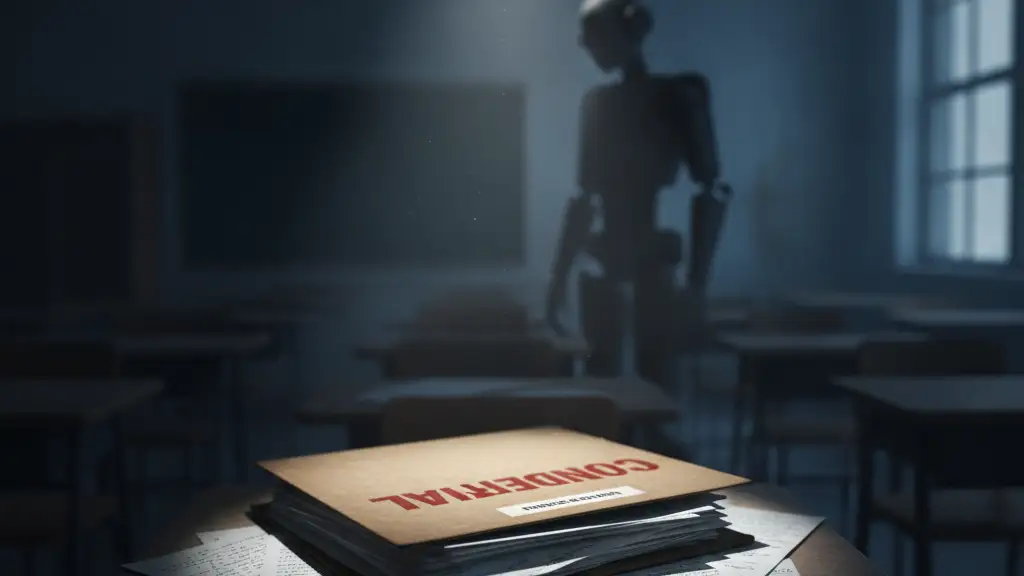
Image: Eddie Pollard / AI

Sarah Connor
Plans to introduce an AI robot teacher named Sally into classrooms within the Salamanca City Central School District have been paused.
State education commissioner Betty Rosa directly expressed her concerns to the district regarding the initiative. This intervention came swiftly, a direct challenge to the pilot's immediate implementation.
Realbotix, the company behind the robot named Sally, confirmed its ties to a maker of sex dolls. This revelation fueled significant public apprehension across the state.
A robot built by a company associated with sex dolls has no business in our classrooms.
Melinda Person, a prominent education advocate, stated, 'A robot built by a company associated with sex dolls has no business in our classrooms.' Her words captured the prevailing sentiment among many parents and educators.
The robot, described as stationary, features long brown hair and moves its arms and hands. Its legs remain nonworking, limiting its physical interaction.
School officials affirmed Sally would not replace staff, collect personal data, or record video and audio. They sought to allay fears regarding its operational scope within the classroom.
The district further confirmed the bot is blocked from searching the internet for adult topics. Mark Beehler, a district official, clarified the pilot's specific purpose.
Beehler asserted the initiative is not about replacing staff, stating, 'there is no possible way a robot can replace a human in a school.' He emphasized the irreplaceable nature of human educators.
Mark Beehler indicated that Even if replacement were possible, it would in no way be in the best interest of students, as teaching is fundamentally a human-to-human process.
He added that even if replacement were possible, it would 'in no way be in the best interest of students, as teaching is fundamentally a human-to-human process.' This statement outlined the district's philosophical stance.
'Having a difficult time programming an Arduino board? Don’t even know what an Arduino board is? Ask Sally, and she can explain it,' Beehler offered as an example. This showcased the intended interactive learning experience for students.
Unionized teachers, however, claimed the effort represented a first step toward replacing flesh-and-bone educators. Their skepticism highlighted a fundamental disagreement over the robot's long-term implications for the workforce.
Realbotix maintains student authentication would be handled through the district’s existing systems. This ensures any student-linked information would remain encrypted and under the district’s control, according to the company.
The company also claims its two subsidiaries maintain their own management, personnel, payroll, facilities, manufacturing operations, product development, and market strategies. These assurances aimed to distance Sally from its controversial corporate lineage.
Despite these claims, suggestions persist that Sally was a repurposed sex doll. This assertion continues to fuel public unease and scrutiny, complicating the pilot's future in the district.
HISTORY reveals that public trust in new educational technologies often hinges on transparency and ethical sourcing. The current controversy echoes past debates over data security and corporate influence in schools, dating back to early 2000s concerns over student data sharing with private software vendors.
In 2014, the Student Data Privacy Act (SDPA) was enacted in New York, a direct response to widespread fears about student information being exploited. This legislative precedent underscores the state's historical commitment to safeguarding children's digital footprints.
STAKEHOLDERS are applying immense pressure from multiple angles. Politically, Commissioner Rosa's direct intervention signals a high-level state concern, potentially leading to regulatory action or even a statewide moratorium on similar initiatives.
Public pressure, fueled by social media and parent groups, has intensified, with over 1,500 signatures collected on a petition demanding Sally's removal. Economically, the district faces potential legal challenges and a significant loss of public confidence, impacting future bond issues and community support.
The LANDSCAPE of educational technology is shifting rapidly, with AI integration becoming a global trend. However, this incident highlights a critical need for robust ethical frameworks and clear guidelines, especially concerning AI's role in sensitive environments like K-12 education.
Looking to the FUTURE, this pilot could set a precedent for how school districts nationwide approach AI adoption. The outcome will either validate cautious, ethical implementation or reinforce skepticism towards rapid technological integration without adequate oversight, impacting millions of students and educators.