Three Women Stabbed in Paris Attack, Suspect Detained
Conflicting reports emerge regarding the motive and mental state of the assailant armed with two knives near Porte de Clichy.
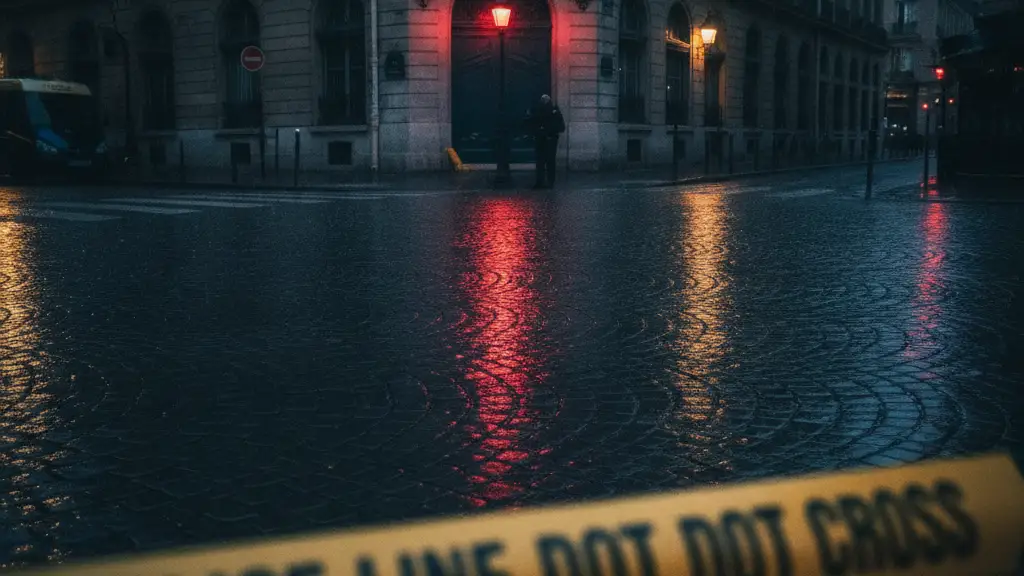
Image: Eddie Pollard / AI

Carla Rooney
Three women were stabbed near Porte de Clichy in Paris, France, on Monday morning at approximately 11:30 am, with one victim in critical condition.
Footage from the scene shows the man screaming 'Allah' and brandishing a large knife before his apprehension by an off-duty officer.
French police claim the suspect suffers from mental health issues, an assessment that aligns with details reported by other sources.
Allah ordered me to do it!
However, an unknown assailant shouted, 'Allah ordered me to do it!' during the attack, a declaration that directly contrasts the police assessment of the suspect's mental state.
Some sources describe the attack as 'random,' further complicating the understanding of its motive; the presence of two knives on the suspect suggests a degree of premeditation.
One victim is confirmed to be in critical condition, while other reports indicate two victims are in critical condition.
This incident immediately raises urgent questions about the intersection of mental health and extremist rhetoric in public safety incidents, as authorities continue to investigate the precise sequence of events.
The swift apprehension by an off-duty officer highlights immediate response capabilities within the city; the ongoing investigation will aim to reconcile the various claims regarding the suspect's state of mind.
The incident near Porte de Clichy adds to a complex landscape of urban security challenges in Paris, with the critical condition of one victim underscoring the severe impact of the morning's violence.
Historically, Paris has grappled with a series of high-profile attacks, including the November 2015 assaults that claimed 130 lives across multiple locations, events that reshaped public safety protocols and intensified surveillance efforts across the city.
The Bataclan theatre attack, a central component of the 2015 tragedy, forced a re-evaluation of emergency response times and inter-agency coordination, a historical context that frames the urgency surrounding the current investigation.
Stakeholders across the political spectrum now face renewed pressure, as public safety remains a paramount concern for Parisian citizens, influencing local and national electoral cycles.
Economic pressures also mount, given that incidents like this can deter tourism, a vital sector contributing billions to the French economy annually, with businesses near the Porte de Clichy area reporting immediate disruptions.
The incident places significant pressure on law enforcement agencies, including the Préfecture de Police, to provide clear answers; their handling of the investigation will influence public confidence and future policy decisions.
Looking to the future, this event contributes to an evolving landscape of urban security, where societal shifts include increased public vigilance and a demand for more visible policing.
Industry shifts in security technology, such as advanced CCTV networks and AI-driven threat detection, gain renewed traction, with Paris having invested millions in these systems since the 2015 attacks.
The convergence of mental health crises and potential extremist ideologies presents a persistent challenge for future policy; reconciling these complex factors demands a multi-faceted approach from authorities.
The investigation will determine if this incident represents an isolated act or signals a broader trend, with the outcome set to shape future security strategies for the French capital.