Three Migrants Dead Off Dunkirk Amid Surge in Channel Crossings
Perilous journeys claim lives as calm seas prompt increased attempts to reach UK shores.

Sarah Connor
Three migrants were found dead on a boat off the coast of Dunkirk on Thursday morning, marking a tragic escalation in Channel crossing attempts.
A small boat capsized off Hardelot late on Wednesday, resulting in one fatality; a man, estimated between 30 and 40 years old, died in the incident.
A one-year-old child was among those injured. Emergency services received an alert at approximately 9:30 p.m. on Wednesday following a passenger's cardiorespiratory arrest.
The vessel stopped near the Neufchâtel-Hardelot nautical base due to the medical emergency. Around 50 people were found on board when it reached shore.
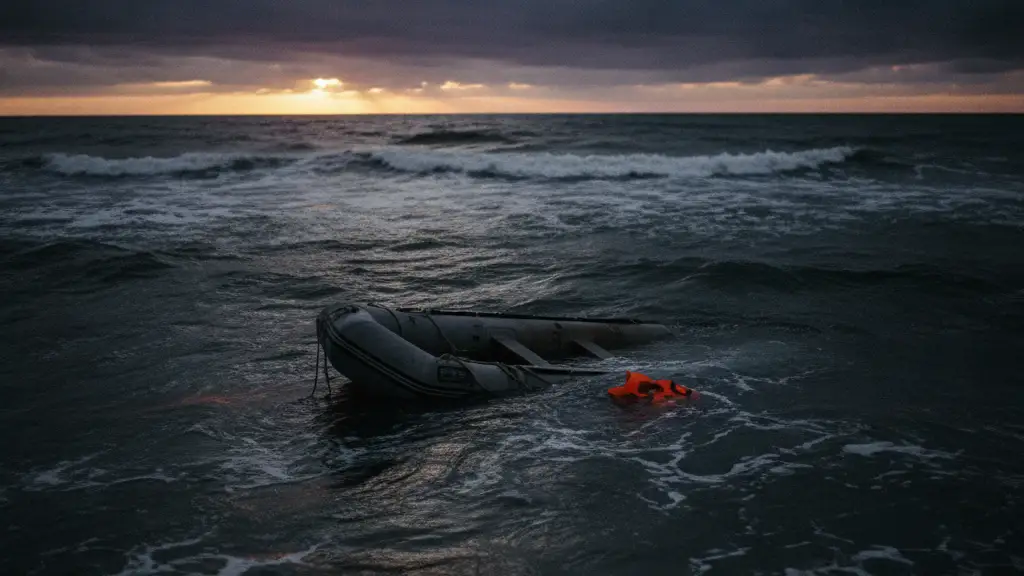
Six individuals, including a baby, were rushed to hospital after the migrant boat capsized in the Channel. A discarded life vest lay on the beach in Hardelot, France.
The group of migrants attempted to reach the UK, a journey fraught with peril. French police are not permitted to intervene once boats enter the water, a policy in place for years due to the risk of drowning.
This non-intervention policy, while aimed at preventing further tragedy, inadvertently provides a strategic advantage to smuggling gangs. They launch dinghies from Fecamp and Dieppe in northern France, exploiting both operational constraints and favorable weather windows.
A dinghy launched in Fecamp was discovered off the coast of Eastbourne. Wednesday saw a high number of Channel crossings with calm sea conditions and hot weather emboldening more dangerous attempts.
As many as 700 migrants crossed the Channel on Wednesday, with 11 boats launched from Europe's coastline heading for the UK. This occurred despite the UK agreeing to pay France an additional £662 million over three years to police its shores, allocating a portion to new tactics against 'taxi boats'.
The Home Office stated that cooperation between the UK and France prevented 46,000 attempted crossings in the past two years. The Labour Government also agreed a one-in-one-out deal with France, put sanctions on smugglers, and signed a returns deal with Iraq.
Every death in the Channel is a tragedy and a stark reminder of the dangers posed by criminal gangs exploiting vulnerable people for profit.
A UK Government spokeswoman stated, "We are deeply saddened to hear about these deaths. Every death in the Channel is a tragedy and a stark reminder of the dangers posed by criminal gangs exploiting vulnerable people for profit."
She added, "We will continue working relentlessly with the French and our partners overseas to prevent these perilous journeys. The French authorities are leading the response and investigation into this incident."
The provisional total for migrant arrivals in the UK this year stands at 14,128. Despite recent surges, the total number of crossings so far this year is down 42% compared to the same period last year.
However, four people have died attempting to cross the English Channel this week. This grim statistic persists even as overall numbers show a decline.
The historical context reveals a continuous struggle against these crossings, with policies evolving but never fully eradicating the inherent risks. Decades of attempts to control these routes highlight the enduring challenge.
Stakeholders face immense pressure: political leaders grapple with public opinion and international agreements. Economic factors drive desperate individuals to undertake these dangerous voyages, exemplified by the £662 million commitment from the UK to France.
The landscape shifts constantly, with smuggling gangs adapting their tactics to exploit policy gaps and environmental conditions. This demands innovative solutions beyond current frameworks to address both the humanitarian crisis and border security.
The discovery of a dinghy from Fecamp off Eastbourne illustrates the vast operational area these networks cover. This complicates interdiction efforts and demands a multi-faceted response.
The non-intervention policy, while intended to save lives, inadvertently creates a window for smugglers. This policy, in place for years, requires re-evaluation in light of ongoing fatalities.
The 42% reduction in crossings this year offers a glimmer of progress. Yet, the four deaths this week serve as a stark counterpoint, revealing the complex and often contradictory nature of migration control efforts.