Convicted Murderer Ian Huntley Dies Following Prison Workshop Assault
The death of the Soham killer at HMP Frankland triggers security investigations and a dispute over the disposal of his remains.
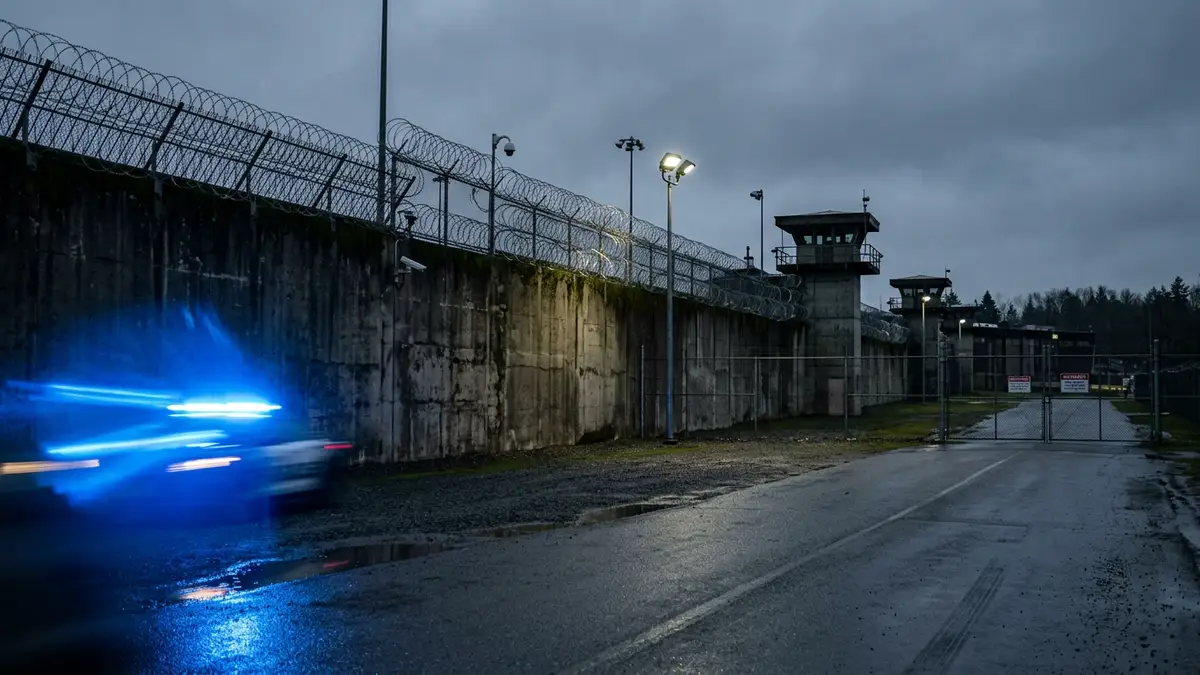
Image: Matt Weston / AI

Callum Smith
Ian Huntley, the former school caretaker convicted of the 2002 murders of Holly Wells and Jessica Chapman, has died following a violent encounter at HMP Frankland.
This violent outburst followed a lethal assault within the prison’s industrial zone, a space designed for labor that became a site of execution.
The fatal confrontation terminates a decades-long period of incarceration for Ian Huntley, who was serving a minimum 40-year life sentence.
A jury convicted Huntley for the 2002 abduction and murder of 10-year-old girls Holly Wells and Jessica Chapman in Soham.
The 2002 case remains a landmark in British criminal history, having triggered a massive police search and a fundamental overhaul of UK vetting procedures.
The subsequent Bichard Inquiry transformed how the Disclosure and Barring Service operates today, redefining national safeguarding laws.
Internal communications from HMP Frankland confirm that Ian Huntley faced escalating threats from the prison population prior to the fatal encounter.
He recently informed a female contact he was cutting ties 'for your safety,' noting he had 'a lot to deal with lately.'
I believe the devil is waiting for him.
The Ministry of Justice now faces an interrogation regarding the security lapse that allowed a high-risk offender like Anthony Russell access to Huntley.
This breach occurred within a shared workspace despite the known volatility of the inmate population and Huntley's status as a primary target.
The death reopens the history of the Soham crimes, including Huntley’s persistent, discredited claim that Holly Wells accidentally drowned in a bath.
He maintained until his final breath that he killed Jessica Chapman only while attempting to stifle her screams.
Reacting to the execution, his biological daughter, Samantha Bryan, stated her father's remains should be 'flushed down the toilet.'
She expressed relief at the death, remarking that she believes the 'devil is waiting' for him.
Her mother, Katie, originally fled Huntley’s violence after becoming pregnant at the age of 16 to escape his documented brutality.
Another victim, now 43, detailed how the killer once locked her in a room to demand sex, stating her entire life was shaped by his abuse.
A fracture has emerged among the next of kin regarding the final handling of the body and the logistics of disposal.
While some family members requested a formal funeral, others moved to distance themselves from any association with the killer.
Economic factors weigh on the proceedings, with the cost of a pauper’s service estimated at several hundred pounds.
Taxpayers will cover up to £3,000 if the family refuses to pay for the cremation, a final bill footed by the public.
The cremation will take place at an undisclosed location during an after-hours ceremony to ensure total secrecy.
Authorities mandated the event occur under the cover of darkness to maintain public order and prevent civil unrest.
Only the mother of Ian Huntley will attend the service, standing as the sole witness to the final rites.
There will be no burial or unmarked grave to prevent the site from becoming a focal point for public anger or morbid curiosity.
If his mother declines to take the ashes, prison protocols dictate they will be disposed of anonymously in an unpublicised manner.
This measure ensures no permanent physical trace of the killer remains within the public domain or the British landscape.
A spokesman for the Prison Service confirmed that 'no-one would shed tears for Ian Huntley' following the confirmation of his death.
No-one would shed tears for Ian Huntley.
Prosecutors will bring formal murder charges against Anthony Russell shortly as the investigation into the workshop killing concludes.
This incident exposes the ongoing volatility within the UK’s high-security estate, where high-profile child killers are frequently targeted by other violent offenders.
HMP Frankland houses the country's most dangerous criminals, including terrorists and serial murderers, in a state of constant friction.
Medical officials have withheld the specific cause of death pending the results of a formal post-mortem examination.
The Prisons and Probation Ombudsman will launch an independent investigation into the circumstances of the assault.
This investigation focuses on the protocols governing the movement of Category A prisoners within the facility's industrial sectors.
The findings will determine if institutional negligence facilitated the death of one of Britain's most notorious inmates.