Britain Overhauls Travel Guidance as Europe Braces for Biometric Border Shift
The Foreign Office issues a sweeping update for 29 nations as digital surveillance replaces traditional passports and Spanish rail disasters cripple regional transit.

Callum Smith
The Foreign, Commonwealth and Development Office has overhauled its travel guidance for 29 nations, signaling a tectonic shift in how British citizens will navigate European borders.
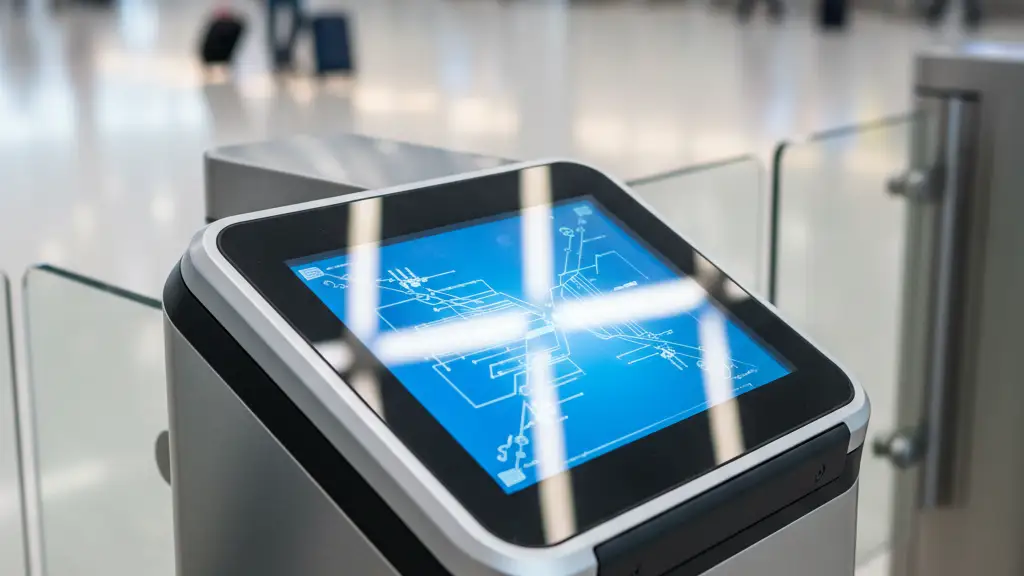
The impending Entry/Exit System (EES) represents the most aggressive transformation of European border management since the historic abolition of internal frontiers. This digital net replaces the manual ink-and-stamp method with a permanent electronic profile that shadows every traveler for three years.
Under these new protocols, travelers must surrender fingerprints and facial scans to create a non-negotiable biological signature upon entry. The Foreign Office confirmed that authorities are now executing a phased rollout of these biometric checks across all external borders.
Authorities are now executing a phased rollout of these biometric checks across all external borders.
This transition signals a decisive shift toward a high-frequency surveillance model that prioritizes data precision over the traditional fluidity of movement. Full operational capacity is currently slated for April 10, 2026, as nations scramble to install the hardware required to capture millions of unique biological profiles.
Beyond this digital horizon, immediate physical dangers have paralyzed travel across the Iberian Peninsula. A violent collision between high-speed trains near Adamuz, Spain, on January 18 has crippled regional infrastructure and halted the momentum of the RENFE network.
The impact sent shockwaves through the Spanish rail system, forcing an immediate suspension of critical services as wreckage blocked the high-speed arteries. Engineers and emergency crews continue to work around the clock to clear the lines and restore order to the logistical chaos.
While some services have resumed, the Foreign Office warned that other routes remain severely disrupted, leaving travelers to navigate a fractured transport network. This disruption highlights the inherent fragility of modern transit hubs when faced with catastrophic mechanical or human failure.
Other routes remain severely disrupted, leaving travelers to navigate a fractured transport network.
For British tourists and business travelers, the incident serves as a stark reminder that infrastructure reliability is never guaranteed. Simultaneously, the EES rollout across 29 countries creates a unified digital net that identifies overstayers with mathematical certainty.
Frequent travelers face the most significant adjustment as their biometric data becomes a prerequisite for crossing. The three-year retention period ensures that digital profiles remain active, streamlining subsequent visits while deepening the state's data reach.
Airlines and ferry operators are currently integrating booking systems with these new EU requirements to ensure compliance at the point of departure. This integration will likely spark initial friction at major hubs like Dover and St Pancras as technology is stress-tested against the reality of mass transit.
The Foreign Office update serves as a roadmap for a continent in transition, where biometric surveillance and infrastructure fragility dictate the pace of movement. It reflects a broader global trend toward the securitization of travel through biological identification.
In Spain, recovery efforts near Adamuz continue to dictate the schedule of the RENFE high-speed network. Passengers must monitor local status updates frequently, as the restoration of full service remains subject to ongoing safety inspections.
The convergence of these events—the digital hardening of borders and the physical collapse of rail links—presents a complex landscape for the modern voyager. Navigating Europe now requires both digital compliance and a high degree of logistical flexibility.
As the April 2026 deadline approaches, the friction between seamless travel and heightened security will redefine the British experience abroad. The traditional passport, once a simple booklet of paper, is fast becoming a mere physical key to a vast, invisible database.